Position: Home > > Environmental monitoring and analysis > Gas on-line monitoring > Flue gas monitoring system > TR-9300D Flue Gas Ultra-Low Emission Continuous Monitoring System

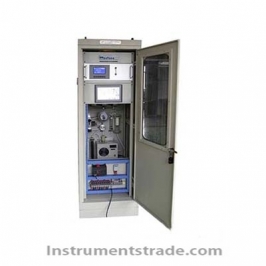
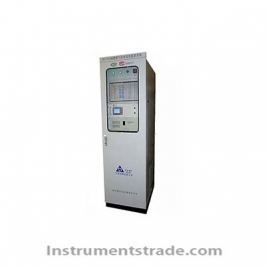
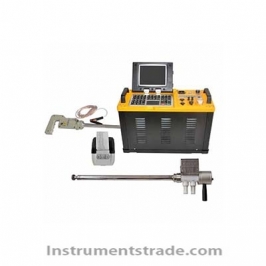
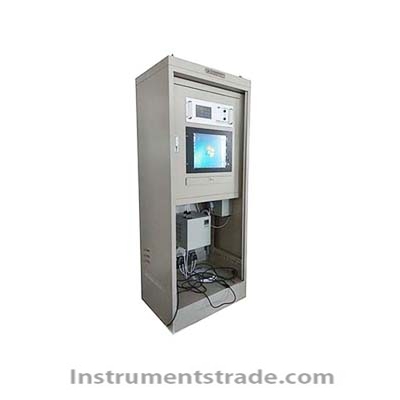
TR-9300D Flue Gas Ultra-Low Emission Continuous Monitoring System

Product ID:HQZXyanqi035

Price: US$45,280.00 ~ US$58,880.00 PDF Format
Supply Ability:50 SETS/MON
Port:SHENZHEN
  • Product Introduction
  • Other information
  • Model NumberTR-9300D
    Brand NameXIANJUNENG
    Payment TermsTT,PAYPAL,Alibaba.com Pay
    TR-9300D Flue Gas Ultra-Low Emission Continuous Monitoring System
    Product Overview
       The TR-9300D Flue Gas Ultra-Low Emission Continuous Monitoring System is a state-of-the-art solution for ultra-low emission monitoring in coal-fired power plants. Designed to comply with HJ/T76-2007, HJ/T75-2007, and other national standards, it achieves emission concentrations close to gas-fired units: particulate matter ≤5 mg/m³, SO₂ ≤35 mg/m³, NOx ≤50 mg/m³ (at 6% O₂). This represents a 50%–30% reduction compared to GB13223-2011 special emission limits, establishing a new benchmark in clean coal power generation.
     
    System Function and Monitoring Principle
    Gas Pollutant Monitoring
       •Fully extracted sampling system draws flue gas via special ultra-low emission heated probes.
       •Gas passes through heated transfer lines, dedusting units, and ultra-low emission condensers to remove moisture.
       •Processed gas enters the JNYQ-S-81 flue gas analyzer, utilizing the DOAS (Differential Optical Absorption Spectroscopy) method.
       •DOAS principle: measures narrow-band absorption characteristics of target molecules, unaffected by water vapor or other interference gases, providing stable zero-drift measurements.
       •Data is transmitted to industrial PCs and data acquisition instruments for storage and remote transmission.
     
    System Composition
       •Flue gas composition continuous monitoring system
       •Particulate matter (dust) concentration detection system
       •Flow measurement system
       •Data Acquisition System (DAS)
     
    Technical Features
       •High measurement accuracy for gas and particulate pollutants
       •UV differential spectroscopy for SO₂ and NOx, resistant to interference from water vapor
       •Measurements unaffected by light source fluctuation or attenuation
       •Instrument zero-point stability ensures minimal drift
       •German imported condensers with phosphoric acid treatment prevent SO₂ loss
       •PLC-controlled automation reduces maintenance workload
       •Modular system design allows flexible configuration
       •Strong anti-interference capabilities
       •Simple operation and maintenance
       •High-precision data acquisition
       •Low detection limits suitable for ultra-low emission monitoring
     
    Analyzer Technical Parameters
    Parameter Specification
    Measurement Range SO₂: 0–20/200 μmol/mol; NOx: 0–20/200 μmol/mol (optional); O₂: 0–25%
    Accuracy ≤ ±1% F.S
    Zero Drift ≤ ±1% F.S / 7d
    Span Drift ≤ ±1% F.S / 7d
    Sample Flow 1.5 L/min ±0.5 L/min
    Response Time T90 ≤20 s
    Gas Cell Pressure ≤ 20 KPa
    Contact Capacity 120 VAC,1A; 24 VDC,1A
    Output Signal 4–20 mA or 0–10 mA DC
    Preheat Time ≤30 min
    Operating Temperature -5℃ ~ +45℃
    Humidity ≤90% RH
    Power Supply 220 VAC ±10%, 50Hz ±5%
     
    System Monitoring Parameters
    Pollutant Measurement Method Range Zero Drift Span Drift Linearity Error Output Signal
    SO₂ DOAS 0–20/200 μmol/mol ±1%FS/7d ±1%FS/7d ≤ ±1%FS RS-232/485, 4–20mA
    NOx DOAS 0–20/200 μmol/mol ±1%FS/7d ±1%FS/7d - RS-232/485, 4–20mA
    CO NDIR 0–2000 μmol/mol ±1%FS/7d ±1%FS/7d - RS-232/485, 4–20mA
    O₂ Electrochemical / Magnetic Pressure 0–25% ±1%FS/7d ±1%FS/7d - RS-232/485, 4–20mA
    Particulate Matter Laser Forward Scattering 0–5/200 mg/m³ ±2%FS/7d ±2%FS/7d ≤ ±3%FS 4–20 mA
    Flow Differential Pressure Sensor 0–40 m/s ±5%FS/7d ±5%FS/7d ≤ ±1%FS 4–20 mA
    Pressure Differential Pressure Sensor 60–140 KPa ±2%FS/7d ±2%FS/7d ≤ ±1%FS 4–20 mA
    Temperature Thermocouple 0–500℃ ±1%FS/7d ±1%FS/7d ≤ ±1%FS 4–20 mA
    Humidity Capacitive 0–100% ±2%FS/7d ±2%FS/7d ≤ ±1.5%FS 4–20 mA
     
    Application Areas
       •Ultra-low emission monitoring for coal-fired power plants
       •Environmental regulatory compliance for SO₂, NOx, dust, CO, O₂
       •Process optimization for end-of-pipe flue gas treatment
       •Industrial continuous emission monitoring (CEMS) for power generation
       •Research in clean energy and environmental technology
     
    TR-9300D vs Conventional Flue Gas Monitoring
    Feature TR-9300D Conventional Systems
    Measurement Accuracy High Precision Moderate
    Gas Interference Resistance Excellent Limited
    Zero Drift Minimal Significant
    Automation PLC-Controlled Manual / Semi-Automatic
    Maintenance Low Workload Higher Workload
    Detection Limit Ultra-Low Higher
    Data Acquisition High Precision Basic
    System Modularity Flexible Fixed
     
    Frequently Asked Questions (FAQ)
    Q1: What pollutants does TR-9300D monitor?
    SO₂, NOx, CO, O₂, particulate matter, flow, pressure, temperature, humidity.
    Q2: What measurement principle is used for SO₂ and NOx?
    DOAS (Differential Optical Absorption Spectroscopy), unaffected by water vapor or other gases.
    Q3: Can the system handle ultra-low emission monitoring?
    Yes. TR-9300D is specifically designed for ultra-low emission standards, achieving SO₂ ≤35 mg/m³, NOx ≤50 mg/m³, dust ≤5 mg/m³.
    Q4: How is the flue gas sampled?
    Fully extracted system with heated probe, dedusting, condensers, and heated transfer lines.
    Q5: Is the system easy to maintain?
    Yes. Modular design and PLC automation minimize maintenance workload.
    Q6: What is the response time?
    T90 ≤20 seconds for direct gas flow through the analyzer.
    Q7: What outputs are available for integration?
    RS-232/485, 4–20 mA, or 0–10 mA DC.


  • Frequently Asked Questions (FAQ)
    Q1: What pollutants does TR-9300D monitor?
    SO₂, NOx, CO, O₂, particulate matter, flow, pressure, temperature, humidity.
    Q2: What measurement principle is used for SO₂ and NOx?
    DOAS (Differential Optical Absorption Spectroscopy), unaffected by water vapor or other gases.
    Q3: Can the system handle ultra-low emission monitoring?
    Yes. TR-9300D is specifically designed for ultra-low emission standards, achieving SO₂ ≤35 mg/m³, NOx ≤50 mg/m³, dust ≤5 mg/m³.
    Q4: How is the flue gas sampled?
    Fully extracted system with heated probe, dedusting, condensers, and heated transfer lines.
    Q5: Is the system easy to maintain?
    Yes. Modular design and PLC automation minimize maintenance workload.
    Q6: What is the response time?
    T90 ≤20 seconds for direct gas flow through the analyzer.
    Q7: What outputs are available for integration?
    RS-232/485, 4–20 mA, or 0–10 mA DC.
Products
Analytical instruments
Physical property test
Environmental monitoring and analysis
Lab general equipment
About us
About this website
Our service
Product purchase
Contact Us

Newsletter

Make Sure you dont miss interesting happenings by joining our newsletter program.

Contact Us
+86-18620722006
instruments@instrumentstrade.com