Position: Home > > Industry specific instrument > Special equipment for packaging industry > Oxygen permeation meter > VAC-V3 High-Efficiency Oxygen Transmission Rate Tester

VAC-V3 High-Efficiency Oxygen Transmission Rate Tester

Product ID:HZBZtyy0003

Price: Please inquire PDF Format
Supply Ability:50SETS/MON
Port:SHENZHEN
  • Product Introduction
  • Other information
  • Model NumberVAC-V3
    Brand NameJNLANGUANG
    Payment TermsTT,PAYPAL,Alibaba.com Pay
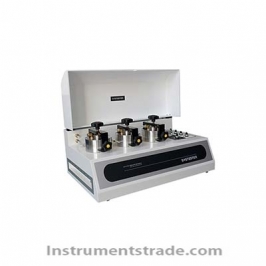
    VAC-V3 High-Efficiency Oxygen Transmission Rate Tester
     
    Product Introduction
    The VAC-V3 Oxygen Transmission Rate (OTR) Tester is a professional gas permeability testing instrument based on the differential pressure method. It is designed to evaluate the gas barrier properties of plastic films, composite films, high-barrier materials, sheets, and metal foils under controlled temperature conditions.
    The VAC-V3 measures gas transmission rate and can determine gas solubility and diffusion coefficients. Its six fully independent test cells allow simultaneous testing of up to six identical or different specimens. Two groups of test cells provide different measurement ranges and vacuum resolutions, supporting both routine and high-precision barrier testing.
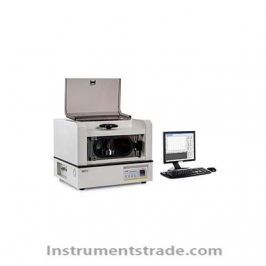
    With computer-controlled automatic operation, adjustable test pressure, temperature control, standard-film calibration, and an RS232 data interface, the VAC-V3 is suitable for packaging research, material development, and quality control laboratories.


    Performance Features
    •  Six independent test cells: Tests up to six specimens simultaneously, with independent measurement data for each cell.
    • Dual-precision configuration: Three A-group cells support routine and extended-volume testing, while three B-group cells provide higher-resolution measurements.
    • Multiple gas property measurements: Measures gas transmission rate and supports determination of solubility and diffusion coefficients.
    • High-resolution pressure monitoring: Vacuum resolution is 0.1 Pa for the A group and 0.01 Pa for the B group.
    •  Wide temperature control: Adjustable test temperature from 5°C to 95°C, with a specified control accuracy of ±0.1°C.
    • Flexible test range: Supports routine, extended-volume, and low-transmission-rate testing configurations.
    •  Automatic computer control: Automates the test process and data collection.
    • Flexible data analysis: Supports data fitting at different temperatures to estimate performance under other temperature conditions.
    •  Standard-film calibration: Enables rapid calibration using standard films.
    • RS232 communication: Simplifies data transfer to compatible computer systems.
    • Special-gas adaptability: Testing with toxic, flammable, or explosive gases is possible after appropriate instrument modification and safety assessment.


    Working Principle

    The VAC-V3 uses the differential pressure method to measure gas transmission through a specimen.
    1. Specimen installation: A prepared film or sheet is clamped between the upper and lower test chambers.
    2. Vacuum preparation: The lower-pressure chamber and the overall test system are evacuated until the specified vacuum condition is reached.
    3.Test gas introduction: The test gas is introduced into the high-pressure chamber, creating a controlled pressure difference across the specimen.
    4. Gas permeation: Gas molecules pass through the specimen from the high-pressure side to the low-pressure side under the pressure gradient.
    5. Pressure monitoring: The instrument monitors the pressure change in the low-pressure chamber and processes the measurement data.
    6. Result calculation: The system calculates the gas transmission rate and, where supported by the test method and data, the relevant gas solubility and diffusion parameters.
    By controlling temperature and test conditions, the VAC-V3 helps users compare the gas barrier performance of packaging films and other materials.


    Technical Specifications
    Parameter Specification
    Model VAC-V3
    Product Type High-efficiency oxygen transmission rate tester
    Test Principle Differential pressure method
    A-Group Test Range, Standard Volume 0.1–50,000 cm³/(m²·24 h·0.1 MPa)
    A-Group Test Range, Extended Volume 1.00–500,000 cm³/(m²·24 h·0.1 MPa)
    B-Group Test Range 0.01–1,000 cm³/(m²·24 h·0.1 MPa)
    Number of Test Cells 6 independent cells
    Cell Configuration 3 A-group cells and 3 B-group cells
    Vacuum Resolution, A Group 0.1 Pa
    Vacuum Resolution, B Group 0.01 Pa
    Test Chamber Vacuum Less than 20 Pa
    Temperature Control Range 5°C–95°C
    Temperature Control Accuracy ±0.1°C
    Specimen Diameter 97 mm
    Test Area 38.48 cm²
    Test Gases O₂, N₂, CO₂, and other compatible gases
    Test Gas Supply User-provided
    Test Pressure −0.1 MPa to +0.1 MPa, standard configuration
    Gas Supply Pressure 0.4–0.6 MPa
    Gas Connection 6 mm polyurethane tubing
    Data Interface RS232
    Power Supply AC 220 V, 50 Hz
    Dimensions 1370 × 575 × 450 mm (L × W × H)
    Net Weight 160 kg


    Application Scenarios
    The VAC-V3 oxygen transmission rate tester is suitable for material evaluation, packaging development, and laboratory quality control.
    •   Food packaging: Evaluating oxygen barrier performance in packaging films to support product shelf-life development.
    • Pharmaceutical packaging: Testing gas barrier properties of flexible packaging materials.
    • Plastic film manufacturing: Comparing OTR performance across film formulations and production batches.
    •   Composite and high-barrier materials: Evaluating multilayer films and other barrier structures.
    •   Metal foil and sheet materials: Testing the gas barrier properties of suitable specimens.
    •  Packaging research and development: Comparing materials under different controlled temperatures.
    • Quality assurance laboratories: Conducting routine incoming-material inspection and production quality checks.
    •  Material science research: Studying gas transmission, solubility, and diffusion characteristics.


    Comparison with Other Gas Permeability Testing Solutions
    Feature VAC-V3 Differential Pressure Tester Single-Cell OTR Tester General Gas Permeability Tester
    Test Cells 6 independent cells Typically one cell Model-dependent
    Simultaneous Specimens Up to 6 Usually one Model-dependent
    Measurement Configuration Dual-precision A/B groups Depends on model Depends on model
    Lowest Specified Test Range 0.01 cm³/(m²·24 h·0.1 MPa), B group Model-dependent Model-dependent
    Temperature Control 5°C–95°C Model-dependent Model-dependent
    Gas Testing O₂, N₂, CO₂, and compatible gases Model-dependent Model-dependent
    Automatic Operation Computer-controlled Model-dependent Model-dependent
    Data Interface RS232 Model-dependent Model-dependent
    Typical Use High-throughput, multi-range film barrier testing Routine OTR testing General gas permeability evaluation


    Frequently Asked Questions
    Q1: What is the VAC-V3 oxygen transmission rate tester used for?
    It measures gas transmission through films, composite materials, high-barrier materials, sheets, and metal foils to evaluate their gas barrier properties.
    Q2: What test method does the VAC-V3 use?
    It uses the differential pressure method, measuring pressure changes on the low-pressure side as gas permeates through the specimen.
    Q3: How many specimens can be tested at once?
    The VAC-V3 has six independent test cells, with three cells in the A group and three in the B group. It can test up to six specimens simultaneously.
    Q4: Which gases can be tested?
    Specified test gases include oxygen (O₂), nitrogen (N₂), and carbon dioxide (CO₂). Other gases require compatibility confirmation.
    Q5: What is the temperature control range?
    The specified temperature control range is 5°C to 95°C, with a control accuracy of ±0.1°C.
    Q6: What is the difference between the A and B test groups?
    The A group provides routine and extended-volume measurement ranges, while the B group supports lower transmission rates and higher vacuum resolution, specified at 0.01 Pa.
    Q7: Can the VAC-V3 test toxic or flammable gases?
    The source indicates that testing with toxic, flammable, or explosive gases is possible after instrument modification. Such applications require manufacturer approval, suitable system configuration, and appropriate safety controls.
    Q8: Does the VAC-V3 support data transfer to a computer?
    Yes. It uses computer-controlled testing and provides an RS232 interface for data transfer.
    Q9: Can the instrument measure diffusion and solubility coefficients?
    Yes. In addition to gas transmission rate, it supports determination of solubility and diffusion coefficients using the applicable test method and data-processing model.


  • Frequently Asked Questions
    Q1: What is the VAC-V3 oxygen transmission rate tester used for?
    It measures gas transmission through films, composite materials, high-barrier materials, sheets, and metal foils to evaluate their gas barrier properties.
    Q2: What test method does the VAC-V3 use?
    It uses the differential pressure method, measuring pressure changes on the low-pressure side as gas permeates through the specimen.
    Q3: How many specimens can be tested at once?
    The VAC-V3 has six independent test cells, with three cells in the A group and three in the B group. It can test up to six specimens simultaneously.
    Q4: Which gases can be tested?
    Specified test gases include oxygen (O₂), nitrogen (N₂), and carbon dioxide (CO₂). Other gases require compatibility confirmation.
    Q5: What is the temperature control range?
    The specified temperature control range is 5°C to 95°C, with a control accuracy of ±0.1°C.
    Q6: What is the difference between the A and B test groups?
    The A group provides routine and extended-volume measurement ranges, while the B group supports lower transmission rates and higher vacuum resolution, specified at 0.01 Pa.
    Q7: Can the VAC-V3 test toxic or flammable gases?
    The source indicates that testing with toxic, flammable, or explosive gases is possible after instrument modification. Such applications require manufacturer approval, suitable system configuration, and appropriate safety controls.
    Q8: Does the VAC-V3 support data transfer to a computer?
    Yes. It uses computer-controlled testing and provides an RS232 interface for data transfer.
    Q9: Can the instrument measure diffusion and solubility coefficients?
    Yes. In addition to gas transmission rate, it supports determination of solubility and diffusion coefficients using the applicable test method and data-processing model.
Products
Analytical instruments
Physical property test
Environmental monitoring and analysis
Lab general equipment
About us
About this website
Our service
Product purchase
Contact Us

Newsletter

Make Sure you dont miss interesting happenings by joining our newsletter program.

Contact Us
+86-18620722006
instruments@instrumentstrade.com