Position: Home > > Sensors and Transmitters > Other sensor > PQM-10 Online Lubricating Oil Wear Particle Sensor

PQM-10 Online Lubricating Oil Wear Particle Sensor

Product ID:CHGOTHER002

Price: Please inquire PDF Format
Supply Ability:50 SETS/MON
Port:SHENZHEN
  • Product Introduction
  • Other information
  • Model NumberPQM-10
    Brand NameSZXIANBO
    Payment TermsTT,PAYPAL,Alibaba.com Pay
    PQM-10 Online Lubricating Oil Wear Particle Sensor
    Product Introduction
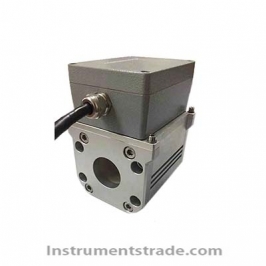
    The PQM-10 Online Lubricating Oil Wear Particle Sensor is an industry-leading intelligent sensor designed for continuous, full-flow monitoring of metallic wear debris in lubricating oil. It provides reliable early warning of abnormal wear in critical mechanical components such as gearboxes, bearings, turbines, hydraulic equipment, and other rotating machinery.
    Using advanced electromagnetic detection technology, the PQM-10 accurately detects both ferrous and non-ferrous wear particles flowing through the lubrication system. It measures particle size, quantity, mass, generation rate, and cumulative trends, enabling predictive maintenance, equipment health assessment, and remaining service life estimation. The sensor effectively suppresses false alarms caused by air bubbles and water bubbles, ensuring highly reliable monitoring in demanding industrial environments.


    Key Features
    • Continuous 100% full-flow online monitoring of lubricating oil
    • Detects both ferrous and non-ferrous wear particles
    • Early detection of abnormal gearbox, bearing, and transmission wear
    • Monitors particle quantity, size, mass, generation rate, and cumulative trends
    • Intelligent trend analysis for predictive maintenance
    • Eliminates false alarms caused by air bubbles and water contamination
    • Rugged industrial construction for harsh operating environments
    • Supports direct installation in the main oil circuit or bypass installation
    • Digital communication output for seamless integration with monitoring systems
    • Improves equipment reliability while reducing maintenance costs and unexpected downtime


    Working Principle
    The PQM-10 operates using a high-sensitivity electromagnetic sensing principle. As lubricating oil passes through the sensor's magnetic detection zone, metallic wear particles disturb the magnetic flux generated within the sensing field. These disturbances are precisely measured and converted into particle information.
    The sensor distinguishes ferrous and non-ferrous particles by analyzing the opposite phase characteristics of their electromagnetic signals. Signal amplitude is used to determine particle size, while advanced algorithms calculate particle count, mass, appearance rate, and long-term wear trends. Bubble suppression technology minimizes false alarms caused by air or water bubbles, ensuring stable and reliable monitoring.


    Technical Specifications
    Parameter Specification
    Model PQM-10
    Through Hole Diameter Φ7 mm
    Minimum Detectable Ferrous Particle ≥100 μm
    Minimum Detectable Non-Ferrous Particle ≥300 μm
    Flow Rate 0.9–30 L/min
    Weight 3 kg
    Dimensions (L × W × H) 115 × 125 × 90 mm
    Connection Type SAE Flange
    Detection Method Electromagnetic Wear Particle Detection
    Output Digital Communication
    Installation Main Oil Line or Bypass Line
     

    Typical Applications
    The PQM-10 is suitable for continuous wear monitoring in numerous lubrication systems, including:
    • Industrial gearboxes
    • Bearings
    • Wind turbine gearboxes
    • Steam and gas turbines
    • Hydraulic systems
    • Marine propulsion systems
    • Construction machinery
    • Mining equipment
    • Industrial compressors
    • Heavy-duty vehicles
    • Power generation equipment
    • Manufacturing production lines
    • Lubrication circulation systems
    • Condition monitoring and predictive maintenance platforms


    Comparison with Conventional Wear Monitoring Methods
    Feature PQM-10 Online Wear Particle Sensor Conventional Oil Sampling
    Monitoring Method Continuous online monitoring Periodic laboratory testing
    Oil Coverage 100% full-flow monitoring Sample-based analysis only
    Wear Detection Real-time Delayed detection
    Ferrous & Non-Ferrous Identification Yes Usually requires laboratory analysis
    Particle Size Analysis Automatic Manual or laboratory equipment
    Trend Analysis Continuous Limited historical data
    False Alarm Suppression Bubble rejection technology Not applicable
    Remaining Life Estimation Supported Limited
    Equipment Protection Early warning Delayed maintenance decisions
     

    Frequently Asked Questions (FAQ)
    1. What types of particles can the PQM-10 detect?
    The sensor detects both ferrous and non-ferrous metallic wear particles circulating in lubricating oil.
    2. What is the minimum detectable particle size?
    The PQM-10 detects ferrous particles as small as 100 μm and non-ferrous particles as small as 300 μm.
    3. Can the sensor distinguish between ferrous and non-ferrous particles?
    Yes. It identifies particle type by analyzing the phase characteristics of the electromagnetic detection signals.
    4. Can the sensor be installed without modifying the lubrication system?
    Yes. It supports installation directly in the main oil line or through a bypass loop, providing flexible integration into existing lubrication systems.
    5. How does the sensor avoid false alarms?
    Advanced signal processing filters out interference caused by air bubbles and water bubbles, greatly improving monitoring reliability.
    6. What information does the sensor provide?
    The PQM-10 reports particle count, particle size, particle mass, generation rate, cumulative wear data, and long-term wear trends for equipment health evaluation.
    7. Which equipment is best suited for the PQM-10?
    It is ideal for gearboxes, bearings, turbines, compressors, hydraulic systems, marine equipment, heavy machinery, mining equipment, and other rotating mechanical systems.
    8. How does online wear particle monitoring benefit predictive maintenance?
    Continuous monitoring enables early detection of abnormal component wear before catastrophic failure occurs, allowing maintenance teams to schedule repairs, reduce downtime, extend equipment life, and optimize maintenance costs.


    Why Choose the PQM-10 Online Wear Particle Sensor?
    The PQM-10 Online Lubricating Oil Wear Particle Sensor delivers reliable, real-time detection of metallic wear debris using advanced electromagnetic sensing technology. By continuously monitoring ferrous and non-ferrous particles throughout the entire oil flow, it provides early fault warning, trend analysis, and equipment life estimation. Designed for harsh industrial environments, the PQM-10 is an ideal solution for predictive maintenance, machinery condition monitoring, and intelligent lubrication management across industries.


  • Frequently Asked Questions (FAQ)
    1. What types of particles can the PQM-10 detect?
    The sensor detects both ferrous and non-ferrous metallic wear particles circulating in lubricating oil.
    2. What is the minimum detectable particle size?
    The PQM-10 detects ferrous particles as small as 100 μm and non-ferrous particles as small as 300 μm.
    3. Can the sensor distinguish between ferrous and non-ferrous particles?
    Yes. It identifies particle type by analyzing the phase characteristics of the electromagnetic detection signals.
    4. Can the sensor be installed without modifying the lubrication system?
    Yes. It supports installation directly in the main oil line or through a bypass loop, providing flexible integration into existing lubrication systems.
    5. How does the sensor avoid false alarms?
    Advanced signal processing filters out interference caused by air bubbles and water bubbles, greatly improving monitoring reliability.
    6. What information does the sensor provide?
    The PQM-10 reports particle count, particle size, particle mass, generation rate, cumulative wear data, and long-term wear trends for equipment health evaluation.
    7. Which equipment is best suited for the PQM-10?
    It is ideal for gearboxes, bearings, turbines, compressors, hydraulic systems, marine equipment, heavy machinery, mining equipment, and other rotating mechanical systems.
    8. How does online wear particle monitoring benefit predictive maintenance?
    Continuous monitoring enables early detection of abnormal component wear before catastrophic failure occurs, allowing maintenance teams to schedule repairs, reduce downtime, extend equipment life, and optimize maintenance costs.

     
Products
Analytical instruments
Physical property test
Environmental monitoring and analysis
Lab general equipment
About us
About this website
Our service
Product purchase
Contact Us

Newsletter

Make Sure you dont miss interesting happenings by joining our newsletter program.

Contact Us
+86-18620722006
instruments@instrumentstrade.com