Position: Home > > Sensors and Transmitters > Other sensor > NS-SS682 Digital Suspended Solids Sensor for Wastewater Treatment

NS-SS682 Digital Suspended Solids Sensor for Wastewater Treatment

Product ID:CHGOTHER036

Price: Please inquire PDF Format
Supply Ability:50 SETS/MON
Port:SHENZHEN
  • Product Introduction
  • Other information
  • Model NumberNS-SS682
    Brand NameSHANGHAINUOBO
    Payment TermsT/T, paypal,Alibaba.com Pay
    NS-SS682 Digital Suspended Solids Sensor for Wastewater Treatment
     
    Product Introduction
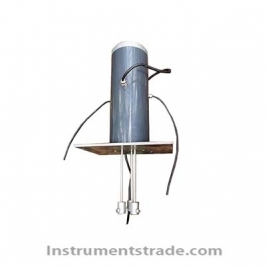
    The NS-SS682 Digital Suspended Solids Sensor is a submersible optical sensor designed for measuring suspended solids (SS) concentrations in wastewater and other water-based solutions. Using infrared light detection, it measures suspended particles such as soil, sludge, organic matter, microorganisms, and colloids.
    With a measuring range of 0–10,000 mg/L, automatic wiper cleaning, and RS485 and 4–20 mA outputs, the NS-SS682 supports online suspended solids monitoring in wastewater treatment and industrial water processes. Its IP68-rated housing makes it suitable for field and on-site applications.


    Performance Features
    •  Infrared optical measurement: Uses a stable, near-monochromatic infrared light source to reduce interference from water color and ambient visible light.
    •  Wide measuring range: Standard range of 0–10,000 mg/L, with customizable ranges available.
    •  Automatic wiper cleaning: Built-in automatic cleaning reduces fouling and maintenance requirements. The cleaning interval is adjustable from 1 to 30,000 minutes.
    • Dual signal output: Provides 4–20 mA analog output and RS485 communication using a partially compatible MODBUS-RTU protocol.
    •  Optical compensation: Built-in light intensity compensation and quartz glass lenses help improve measurement stability.
    • Five-point calibration: Supports five-point calibration for measurement adjustment.
    •  Flexible configuration: RS485 communication allows users to configure the address, baud rate, calibration, output range, measurement range, and compensation parameters.
    •  Reliable operation: Watchdog function helps prevent system lockups, while power-loss data protection exceeds 10 years.
    •  Submersible design: IP68 protection and 304 stainless steel plus ABS housing support use in wastewater and field environments.


    Working Principle
    The NS-SS682 uses the optical properties of suspended particles to determine their concentration in water. Its infrared emitter sends light through the sample. Suspended particles absorb, reflect, and scatter the light, and a detector receives the resulting light at a specific angle.
    The sensor’s internal processing unit analyzes the detected light intensity using a dedicated algorithm to calculate the suspended solids concentration. Infrared illumination, optical compensation, and ambient-light interference reduction help maintain stable measurements under varying water conditions.


    Technical Specifications
    Parameter Specification
    Model NS-SS682
    Measurement Parameter Suspended Solids (SS)
    Measuring Range 0–10,000 mg/L; customizable
    Accuracy ±1.0% FS
    Repeatability ±1.0%
    Measurement Method Infrared optical measurement
    Signal Output 4–20 mA and RS485
    Communication Protocol Partially compatible with MODBUS-RTU
    Output Protection Magnetic isolation
    4–20 mA Load <500 Ω
    Operating Voltage DC 12 V ±10% or DC 24 V ±10%
    Operating Temperature 0–60°C
    Pressure Resistance ≤0.6 MPa
    Cleaning Automatic wiper
    Cleaning Interval 1–30,000 minutes, adjustable
    Calibration Five-point calibration
    Dimensions Length: 210 mm; maximum diameter: 50 mm
    Installation Submersible
    Mounting Thread G3/4 pipe thread
    Weight 1.5 kg
    Protection Rating IP68
    Housing Material 304 stainless steel and ABS


    Application Scenarios
    The NS-SS682 digital suspended solids sensor is suitable for online SS monitoring in:
    • Wastewater treatment plants: Monitoring suspended solids in treatment processes and effluent.
    • Environmental water treatment: Measuring suspended solids in water treatment engineering and environmental protection projects.
    •  Chemical industry: Monitoring suspended particles in industrial process water and wastewater.
    •  Electroplating industry: Supporting wastewater process monitoring.
    •  Paper manufacturing: Measuring suspended solids in papermaking wastewater.
    •  Pharmaceutical and food industries: Monitoring suspended solids in process liquids and wastewater.
    •  Municipal water systems: Supporting suspended solids measurement in water treatment applications.


    NS-SS682 vs. Conventional Suspended Solids Monitoring Methods
    Comparison NS-SS682 Digital Sensor Conventional Manual Sampling
    Measurement In-situ infrared optical measurement Laboratory analysis of collected samples
    Monitoring Supports online measurement Requires periodic sampling
    Signal Output 4–20 mA and RS485 Usually requires manual data recording
    Cleaning Built-in automatic wiper Manual cleaning and maintenance
    Installation Submersible, G3/4 thread Depends on sampling equipment
    Field Use IP68-rated for field installation Requires sample collection and transport
    Maintenance Adjustable automatic cleaning interval Regular manual handling
    The NS-SS682 is designed for automated, on-site suspended solids monitoring, while manual sampling is suitable for laboratory testing and applications requiring offline analysis.


    Frequently Asked Questions
    1.  What does the NS-SS682 measure?
    It measures suspended solids (SS) concentration in wastewater and other water-based solutions.
    2. What is the measuring range of the NS-SS682?
    The standard range is 0–10,000 mg/L. Other ranges can be customized.
    3. How does the sensor measure suspended solids?
    It uses infrared light. The sensor analyzes light scattered, absorbed, and reflected by suspended particles to calculate their concentration.
    4. Does the NS-SS682 support online monitoring?
    Yes. It provides 4–20 mA and RS485 outputs for integration with compatible monitoring and control systems.
    5. Does the sensor clean itself?
    Yes. It has a built-in automatic wiper, and the cleaning interval can be set from 1 to 30,000 minutes.
    6. Is the sensor suitable for submerged installation?
    Yes. It uses a submersible design with IP68 protection and a G3/4 mounting thread.
    7. What communication protocol does it use?
    The sensor supports RS485 communication with partial compatibility with the MODBUS-RTU protocol.
    8. What is the operating temperature and pressure range?
    The operating temperature is 0–60°C, and the pressure resistance is ≤0.6 MPa.
    9. Can the sensor be calibrated or configured remotely?
    Yes. RS485 communication supports settings such as calibration, device address, baud rate, output range, and compensation parameters.


  • Frequently Asked Questions
    1.  What does the NS-SS682 measure?
    It measures suspended solids (SS) concentration in wastewater and other water-based solutions.
    2. What is the measuring range of the NS-SS682?
    The standard range is 0–10,000 mg/L. Other ranges can be customized.
    3. How does the sensor measure suspended solids?
    It uses infrared light. The sensor analyzes light scattered, absorbed, and reflected by suspended particles to calculate their concentration.
    4. Does the NS-SS682 support online monitoring?
    Yes. It provides 4–20 mA and RS485 outputs for integration with compatible monitoring and control systems.
    5. Does the sensor clean itself?
    Yes. It has a built-in automatic wiper, and the cleaning interval can be set from 1 to 30,000 minutes.
    6. Is the sensor suitable for submerged installation?
    Yes. It uses a submersible design with IP68 protection and a G3/4 mounting thread.
    7. What communication protocol does it use?
    The sensor supports RS485 communication with partial compatibility with the MODBUS-RTU protocol.
    8. What is the operating temperature and pressure range?
    The operating temperature is 0–60°C, and the pressure resistance is ≤0.6 MPa.
    9. Can the sensor be calibrated or configured remotely?
    Yes. RS485 communication supports settings such as calibration, device address, baud rate, output range, and compensation parameters.
Products
Analytical instruments
Physical property test
Environmental monitoring and analysis
Lab general equipment
About us
About this website
Our service
Product purchase
Contact Us

Newsletter

Make Sure you dont miss interesting happenings by joining our newsletter program.

Contact Us
+86-18620722006
instruments@instrumentstrade.com