Position: Home > > Sensors and Transmitters > Other sensor > NS-CODB02 COD Digital Sensor

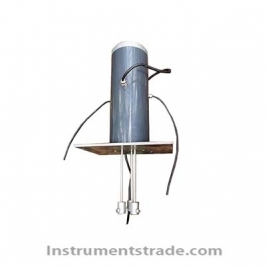
NS-CODB02 COD Digital Sensor

Product ID:CHGOTHER037

Price: Please inquire PDF Format
Supply Ability:50 SETS/MON
Port:SHENZHEN
  • Product Introduction
  • Other information
  • Model NumberNS-CODB02
    Brand NameSHANGHAINUOBO
    Payment TermsT/T, paypal,Alibaba.com Pay
    NS-CODB02 COD Digital Sensor
     
    Product Introduction
    The NS-CODB02 COD Digital Sensor is an intelligent water quality monitoring sensor designed for measuring chemical oxygen demand (COD), turbidity, and temperature. It uses 254 nm ultraviolet (UV) absorption technology to estimate dissolved organic pollution in water without conventional chemical digestion.
    The sensor features a dual-light-source optical system. One UV light path measures organic matter absorption, while a reference light path monitors turbidity. A dedicated compensation algorithm corrects optical attenuation and helps reduce interference from suspended particles, providing stable and reliable measurements.
    With an integrated RS485 digital interface, the NS-CODB02 can connect directly to computers, PLCs, and compatible industrial control systems without a separate meter. Its IP68-rated housing supports installation in demanding water monitoring environments.


    Performance Features
    • UV absorption measurement: Uses 254 nm ultraviolet light to measure dissolved organic matter and estimate COD.
    •   Dual optical paths: UV measurement and reference light help compensate for turbidity interference.
    •   Multi-parameter monitoring: Measures COD, turbidity, and temperature.
    •  Direct RS485 output: Connects to computers, PLCs, and other devices with RS485 interfaces without an additional meter.
    • Industrial communication: Supports IoT integration and partial MODBUS protocol compatibility.
    •   Mobile configuration: Supports data acquisition, debugging, and maintenance through a mobile app using wired OTG/RS485-to-USB connections or compatible wireless networks.
    • Flexible parameter settings: Supports slave address, baud rate, online calibration, factory reset, proportional coefficient, and incremental compensation settings.
    • Two-point calibration: Supports two-point correction for measurement adjustment.
    •   IP68 protection: Designed for submerged water monitoring applications.
    •   Wide operating temperature: Suitable for ambient temperatures from 0 to 60°C.


    Working Principle
    The NS-CODB02 uses ultraviolet absorption to estimate the concentration of dissolved organic pollutants in water. Many organic compounds absorb UV light at a wavelength of 254 nm. The sensor measures the attenuation of this light as it passes through the water sample and uses the resulting signal to calculate a COD-equivalent value.
    A second reference light path measures turbidity-related optical changes. The sensor's compensation algorithm uses this reference signal to correct optical attenuation and reduce the influence of suspended particles.
    The processed measurement data is transmitted digitally through the RS485 interface. The sensor can also measure turbidity and temperature, providing additional information for water quality monitoring.


    Technical Specifications
    Parameter Specification
    Model NS-CODB02
    Sensor Type Digital COD sensor
    Measurement Principle 254 nm UV absorption with reference-light compensation
    Measurement Parameters COD, turbidity, temperature
    COD Measurement Range 0–200 mg/L or 0–500 mg/L (KHP equivalent)
    Turbidity Measurement Range 0–100 NTU or 0–200 NTU
    COD Resolution 0.1 mg/L
    Turbidity Resolution 0.1 NTU
    COD Accuracy ±5% F.S.
    Turbidity Accuracy ±5% F.S.
    Communication Interface RS485
    Communication Protocol Partial MODBUS compatibility
    Input Impedance ≥1 × 10¹² Ω
    Operating Voltage 12–24 VDC
    Operating Temperature 0–60°C
    Protection Rating IP68
    Calibration Two-point calibration
    Configuration RS485 communication and mobile app
    Note: The COD and turbidity ranges are selectable configurations. Confirm the required range when ordering. COD values are expressed as KHP equivalents.


    Application Scenarios
    The NS-CODB02 COD Digital Sensor is suitable for:
    •   Wastewater treatment plants: Continuous monitoring of organic pollution and turbidity.
    •   Industrial wastewater monitoring: Water quality monitoring in manufacturing and industrial discharge systems.
    •   Environmental water monitoring: Monitoring of rivers, lakes, and other surface water bodies.
    • Online water quality systems: Integration with PLCs, computers, and IoT monitoring platforms.
    •  Water pollution control: Supporting ongoing observation of changes in COD and turbidity.
    •  Automated monitoring stations: Digital data acquisition and remote sensor configuration.


    Comparison with Conventional COD Monitoring Methods
    Feature NS-CODB02 Digital COD Sensor Conventional Laboratory COD Testing
    Measurement Method 254 nm UV absorption Typically chemical digestion and analysis
    Measurement Type Online optical monitoring Laboratory-based testing
    Chemical Reagents No digestion reagents required for UV measurement Usually requires chemical reagents
    Measurement Parameters COD, turbidity, temperature Primarily COD
    Communication RS485 digital output Depends on laboratory instrument
    PLC Connectivity Direct RS485 connection Usually requires data integration
    Turbidity Compensation Dual optical paths and algorithm Depends on method
    Installation IP68 sensor for submerged monitoring Typically requires sample collection
    Calibration Two-point calibration Method-specific
    Application Continuous monitoring Laboratory analysis and reference testing
    The UV method provides a COD-equivalent estimate based on UV-absorbing organic matter. Results may differ from chemical digestion methods depending on sample composition.


    FAQ
    1.  What parameters does the NS-CODB02 measure?
    The sensor measures COD, turbidity, and temperature.
    2. How does the NS-CODB02 measure COD?
    It uses 254 nm UV absorption to estimate dissolved organic matter concentration and convert the optical signal into a COD-equivalent reading.
    3. Does the sensor require chemical reagents?
    The UV absorption measurement does not require the chemical digestion reagents used in conventional COD testing.
    4. Why does the sensor use two light sources?
    One UV light path measures organic matter absorption, while the reference light path monitors turbidity-related optical changes. The compensation algorithm helps reduce interference from suspended particles.
    5. What COD measurement ranges are available?
    The sensor supports 0–200 mg/L and 0–500 mg/L, expressed as KHP equivalents.
    6. Can the NS-CODB02 connect directly to a PLC?
    Yes. Its RS485 interface allows direct connection to compatible PLCs, computers, and industrial control systems without a separate meter.
    7. Does the sensor support MODBUS?
    It supports partial MODBUS protocol compatibility. Confirm compatibility with the intended monitoring system before integration.
    8. Can the sensor be configured using a mobile phone?
    Yes. A mobile app can be used for data acquisition, debugging, and maintenance through a wired OTG/RS485-to-USB connection or a compatible wireless network.
    9. Is the NS-CODB02 suitable for submerged installation?
    Yes. Its IP68 protection rating makes it suitable for submerged water monitoring applications when installed according to the manufacturer's instructions.


  • FAQ
    1.  What parameters does the NS-CODB02 measure?
    The sensor measures COD, turbidity, and temperature.
    2. How does the NS-CODB02 measure COD?
    It uses 254 nm UV absorption to estimate dissolved organic matter concentration and convert the optical signal into a COD-equivalent reading.
    3. Does the sensor require chemical reagents?
    The UV absorption measurement does not require the chemical digestion reagents used in conventional COD testing.
    4. Why does the sensor use two light sources?
    One UV light path measures organic matter absorption, while the reference light path monitors turbidity-related optical changes. The compensation algorithm helps reduce interference from suspended particles.
    5. What COD measurement ranges are available?
    The sensor supports 0–200 mg/L and 0–500 mg/L, expressed as KHP equivalents.
    6. Can the NS-CODB02 connect directly to a PLC?
    Yes. Its RS485 interface allows direct connection to compatible PLCs, computers, and industrial control systems without a separate meter.
    7. Does the sensor support MODBUS?
    It supports partial MODBUS protocol compatibility. Confirm compatibility with the intended monitoring system before integration.
    8. Can the sensor be configured using a mobile phone?
    Yes. A mobile app can be used for data acquisition, debugging, and maintenance through a wired OTG/RS485-to-USB connection or a compatible wireless network.
    9. Is the NS-CODB02 suitable for submerged installation?
    Yes. Its IP68 protection rating makes it suitable for submerged water monitoring applications when installed according to the manufacturer's instructions.
Products
Analytical instruments
Physical property test
Environmental monitoring and analysis
Lab general equipment
About us
About this website
Our service
Product purchase
Contact Us

Newsletter

Make Sure you dont miss interesting happenings by joining our newsletter program.

Contact Us
+86-18620722006
instruments@instrumentstrade.com