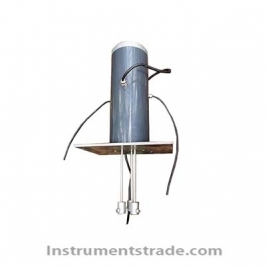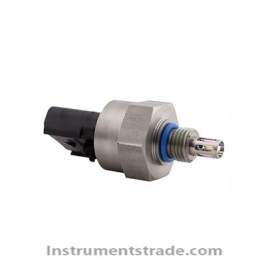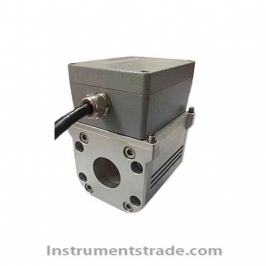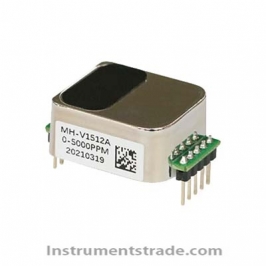
Position: Home > > Sensors and Transmitters > Other sensor > NS-BGA802 Digital Blue-Green Algae Sensor

NS-BGA802 Digital Blue-Green Algae Sensor

Product ID:CHGOTHER050

Price: Please inquire PDF Format
Supply Ability:50 SETS/MON
Port:SHENZHEN
  • Product Introduction
  • Other information
  • Model NumberNS-BGA802
    Brand NameSHANGHAINUOBO
    Payment TermsT/T, paypal,Alibaba.com Pay
    NS-BGA802 Digital Blue-Green Algae Sensor
     
    Product Introduction
    The NS-BGA802 Digital Blue-Green Algae Sensor is an intelligent optical sensor designed for continuous monitoring of blue-green algae and microalgae concentrations in water. It uses the characteristic spectral absorption and emission peaks of algae to determine algae concentration through fluorescence detection.
    During measurement, monochromatic excitation light corresponding to the algae absorption peak is emitted into the water. Blue-green algae absorb the excitation light energy and release light at another characteristic emission wavelength. The intensity of the emitted light is related to the concentration of blue-green algae in the water, allowing the sensor to calculate the corresponding algae concentration.
    The NS-BGA802 provides direct RS485 digital output and can be integrated with computers, PLCs, industrial control systems, and compatible IoT platforms. It is suitable for monitoring algae concentrations in marine bays, rivers, lakes, reservoirs, and algae cultivation or treatment systems.


    Performance Features
    •Optical fluorescence measurement: Uses the characteristic spectral absorption and emission properties of blue-green algae.
    • Direct RS485 output: Provides digital measurement data through the RS485 interface.
    • No external meter required: Can connect directly to compatible computers, PLCs, and industrial control systems.
    • IoT integration: Supports integration with applicable IoT and remote water monitoring systems.
    • Mobile app support: Data acquisition, configuration, calibration, and maintenance can be performed through compatible wired or wireless connections.
    • Flexible parameter configuration: RS485 communication supports slave address, baud rate, online calibration, factory reset, proportional coefficient, and incremental compensation settings.
    • Two-point calibration: Supports two-point correction for measurement calibration.
    • IP68 protection: Suitable for submerged water quality monitoring environments.


    Working Principle
    The NS-BGA802 uses the optical fluorescence characteristics of blue-green algae for concentration measurement. Blue-green algae have specific absorption and emission peaks in their optical spectrum.
    The sensor emits monochromatic excitation light at a characteristic absorption wavelength into the water. Blue-green algae absorb this light and emit fluorescence at another characteristic wavelength. The sensor detects the emitted fluorescence, and its intensity changes according to the concentration of blue-green algae in the water.
    The sensor processes the optical signal and converts it into a blue-green algae concentration value. The result is transmitted digitally through RS485 communication for connection to monitoring, control, and IoT systems.


    Technical Specifications
    Parameter Specification
    Model NS-BGA802
    Measurement Principle Optical fluorescence method
    Measurement Parameter Blue-green algae concentration
    Measurement Range 0–300.0 Kcells/mL
    Resolution 0.1 Kcells/mL (100 cells/mL)
    Accuracy ±3%; ±0.3°C
    Communication Interface RS485; partially compatible with MODBUS
    Operating Temperature 0–60°C
    Input Impedance ≥1 × 10¹² Ω
    Operating Voltage 12–24 VDC
    Protection Rating IP68
    Calibration Two-point calibration
    Recommended Turbidity <50 NTU
    Monitoring Condition Multiple-point monitoring recommended where algae distribution is uneven


    Application Scenarios
    • Marine Bay Monitoring: Monitoring microalgae and blue-green algae concentrations in coastal and marine environments.
    •  River Monitoring: Continuous algae monitoring in rivers and other surface water environments.
    • Lake and Reservoir Monitoring: Detecting changes in blue-green algae concentration in lakes and reservoirs.
    • Water Quality Monitoring: Integration into online water quality monitoring systems.
    •  Algae Cultivation Systems: Monitoring green algae concentration in algae cultivation equipment and related treatment processes.
    •  IoT Water Monitoring: RS485 communication supports integration with digital and IoT-based monitoring platforms.


    Comparison: NS-BGA802 vs. Conventional Algae Monitoring
    Feature NS-BGA802 Digital Algae Sensor Conventional Algae Testing
    Measurement Method Optical fluorescence Depends on testing method
    Measurement Range 0–300.0 Kcells/mL Depends on method
    Measurement Mode Continuous online monitoring Often periodic sampling
    Output RS485 digital signal Depends on instrument
    IoT Integration Supported through RS485 systems Depends on equipment
    Calibration Two-point calibration Depends on method
    Direct System Connection Computer / PLC / compatible IoT systems Depends on instrument
    Protection Rating IP68 Depends on equipment
    Turbidity Requirement Recommended <50 NTU Depends on method


    FAQ
    1.  What does the NS-BGA802 measure?
    The NS-BGA802 measures the concentration of blue-green algae and applicable microalgae in water.
    2. What measurement principle does the sensor use?
    It uses the characteristic optical absorption and fluorescence emission properties of blue-green algae to determine their concentration.
    3. What is the measurement range?
    The specified range is 0–300.0 Kcells/mL.
    4. What is the resolution of the NS-BGA802?
    The resolution is 0.1 Kcells/mL, equivalent to 100 cells/mL.
    5. Can the sensor connect directly to a PLC or computer?
    Yes. The sensor provides RS485 output and can directly connect to compatible computers, PLCs, and industrial control systems.
    6. Does the NS-BGA802 support MODBUS?
    Yes. The RS485 interface is partially compatible with the MODBUS protocol.
    7. Can the sensor parameters be configured remotely?
    Through compatible RS485 and mobile/IoT systems, users can perform data acquisition, calibration, and parameter settings such as slave address, baud rate, factory reset, proportional coefficient, and incremental compensation.
    8. What water conditions are recommended for the sensor?
    The source specifies that when blue-green algae are unevenly distributed in water, multiple monitoring points are recommended. Water turbidity should preferably be below 50 NTU.
    9. Is the sensor suitable for submerged monitoring?
    Yes. The IP68 protection rating supports applicable submerged water quality monitoring applications.


  • FAQ
    1.  What does the NS-BGA802 measure?
    The NS-BGA802 measures the concentration of blue-green algae and applicable microalgae in water.
    2. What measurement principle does the sensor use?
    It uses the characteristic optical absorption and fluorescence emission properties of blue-green algae to determine their concentration.
    3. What is the measurement range?
    The specified range is 0–300.0 Kcells/mL.
    4. What is the resolution of the NS-BGA802?
    The resolution is 0.1 Kcells/mL, equivalent to 100 cells/mL.
    5. Can the sensor connect directly to a PLC or computer?
    Yes. The sensor provides RS485 output and can directly connect to compatible computers, PLCs, and industrial control systems.
    6. Does the NS-BGA802 support MODBUS?
    Yes. The RS485 interface is partially compatible with the MODBUS protocol.
    7. Can the sensor parameters be configured remotely?
    Through compatible RS485 and mobile/IoT systems, users can perform data acquisition, calibration, and parameter settings such as slave address, baud rate, factory reset, proportional coefficient, and incremental compensation.
    8. What water conditions are recommended for the sensor?
    The source specifies that when blue-green algae are unevenly distributed in water, multiple monitoring points are recommended. Water turbidity should preferably be below 50 NTU.
    9. Is the sensor suitable for submerged monitoring?
    Yes. The IP68 protection rating supports applicable submerged water quality monitoring applications.
Products
Analytical instruments
Physical property test
Environmental monitoring and analysis
Lab general equipment
About us
About this website
Our service
Product purchase
Contact Us

Newsletter

Make Sure you dont miss interesting happenings by joining our newsletter program.

Contact Us
+86-18620722006
instruments@instrumentstrade.com