Position: Home > > Analytical instruments > Spectroscopy Equipment > Fiber optic spectrometer > HP250 Fiber Optic Spectrometer

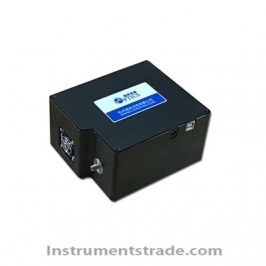
HP250 Fiber Optic Spectrometer

Product ID:FGgx044

Price: Please inquire PDF Format
Supply Ability:50 SETS/MON
Port:SHENZHEN
  • Product Introduction
  • Other information
  • Model NumberHP250
    Brand NameHZSHUANGSE
    Payment TermsTT,PAYPAL,Alibaba.com Pay
    HP250 Fiber Optic Spectrometer
     

    Product Overview
    The HP250 Fiber Optic Spectrometer is a compact optical measurement instrument designed for spectral data acquisition and analysis. It combines a high-speed STM32 processor running FreeRTOS with a 3648-pixel linear CCD optical sensor and a long-focal-length asymmetric crossed optical system. With high measurement linearity, stable performance, and PC software support, it enables efficient spectral analysis in laboratory and field environments.
    The HP250 supports optical input through a direct slit connection or fiber optic coupling. Depending on the configuration and accessories, it can be used to analyze light sources and measure the spectral characteristics of materials and liquids, including transmittance, absorbance, and reflectance.
    Its compact size makes it suitable for research laboratories, universities, industrial quality control, lighting evaluation, and optical product development.


    Key Features
    • Compact and Portable Design: Small dimensions make the instrument convenient for laboratory use and on-site measurements.
    • High-Speed Data Acquisition: Millisecond-level integration times support rapid spectral signal collection.
    • High-Resolution CCD Sensor: A 3648-pixel linear CCD enables detailed spectral data acquisition.
    • Flexible Optical Input: Supports direct optical input through the slit or connection via a fiber optic cable.
    • High-Performance Optical System: Uses a 72.5 mm focal-length optical design and an imported blazed grating.
    • Configurable Wavelength Selection: Long-pass filters or linear variable filters can be installed, with wavelength ranges configurable through software where supported.
    • Multiple Communication Options: Supports USB, RS-485, RS-232, and Bluetooth communication protocols, depending on the configuration.


    Working Principle
    The HP250 Fiber Optic Spectrometer collects light through a direct optical input or a fiber optic cable. The incoming light enters the spectrometer's optical system, where a diffraction grating separates it into its component wavelengths.
    The dispersed light is detected by a linear CCD sensor, which converts the optical signal into electrical data. The instrument's processor acquires and processes the detector signals, while the accompanying PC software supports spectral visualization, data analysis, and result evaluation.
    With suitable optical accessories and calibration, the system can be configured for applications such as emission spectrum analysis and measurements of transmittance, absorbance, and reflectance.


    Technical Specifications
    Parameter Specification
    Model HP250 / HP-250 Series
    Wavelength Range Selectable configurations from 200 to 1050 nm
    Spectral Resolution 0.2 nm
    Optical Detector 3648-pixel linear CCD sensor
    Processor STM32 series processor
    Operating System FreeRTOS
    Focal Length 72.5 mm
    Optical Input Direct slit input or fiber optic coupling
    Fiber Optic Connector SMA 905
    Stray Light Less than 0.1%
    Data Acquisition Millisecond-level integration time
    Communication Interfaces USB, RS-485, RS-232, Bluetooth, depending on configuration
    Optical Filters Long-pass filter or linear variable filter, depending on configuration
    Software PC-based spectral analysis software
    Dimensions 80 × 60 × 40 mm
    Note: Confirm the wavelength configuration, optical path description, communication interfaces, filter options, and measurement performance with the supplier before ordering. The listed wavelength range may depend on the selected configuration.
     

    Applications
    • Laboratory Research: Spectral measurements and optical experiments in universities, research institutes, and testing laboratories.
    • Light Source Evaluation: Spectral analysis of lamps, LEDs, and other optical radiation sources.
    • Industrial Quality Control: Spectral inspection and production quality monitoring for optical products and lighting equipment.
    • Optical Material Analysis: Transmittance, absorbance, and reflectance measurements for suitable materials and liquids.
    • Chemical and Pharmaceutical Research: Spectroscopic analysis in chemical processing, pharmaceutical development, and biomedical research.
    • Environmental and Biological Studies: Optical measurements for environmental science, biochemistry, and related research.
    • Textile and Food Industries: Spectral testing for material characterization and selected quality assessment applications.
    • Jewelry and Eyewear Industries: Optical inspection and spectral evaluation when paired with suitable measurement accessories and methods.


    Applicable Standards
    The supplied product information does not specify particular regulatory or testing standards for the HP250 Fiber Optic Spectrometer.
    Applicable standards depend on the intended measurement, sample type, wavelength range, and testing procedure. Users should confirm calibration requirements and relevant industry standards before selecting the instrument for regulated testing or compliance assessment.


    Comparison
    Comparison Item HP250 Fiber Optic Spectrometer General Laboratory Spectrometer
    Form Factor Compact, portable design Varies from compact to benchtop
    Optical Input Direct slit or fiber optic coupling Depends on the optical configuration
    Spectral Resolution Specified as 0.2 nm Varies by model
    Wavelength Range Configurations available from 200 to 1050 nm Depends on detector and optical design
    Data Processing PC software supported PC software or integrated interface
    Connectivity USB, RS-485, RS-232, or Bluetooth, depending on configuration Varies by model
    Typical Use Portable spectral measurements, laboratory research, and optical product testing General-purpose or specialized spectral analysis
    The HP250 is worth considering when compact dimensions and flexible optical coupling are priorities. For applications requiring verified performance across a specific wavelength range, compare detector sensitivity, wavelength accuracy, spectral resolution, stray light, and calibration specifications before purchasing.
     

    FAQ
    1. What is the wavelength range of the HP250 Fiber Optic Spectrometer?
    The HP250 series offers selectable wavelength configurations within the stated range of 200–1050 nm. Confirm the exact wavelength range of the model being purchased.
    2. What is the spectral resolution of the HP250?
    The supplied specifications list a spectral resolution of 0.2 nm. Buyers should confirm the test conditions and whether this value applies across the selected wavelength range.
    3. Can the HP250 measure transmittance, absorbance, and reflectance?
    Yes, these measurements are possible with suitable optical accessories, reference measurements, calibration, and compatible software workflows. The required configuration depends on the sample and measurement method.
    4. Does the HP250 require a computer?
    The instrument is supplied with PC software for spectral data analysis. A computer is therefore used for the software-based workflow; confirm the supported operating system and connection requirements with the supplier.
    5. Which communication interfaces are supported?
    The supplied information lists USB, RS-485, RS-232, and Bluetooth communication protocols. Availability may vary by configuration.
    6. What is the purpose of the SMA 905 connector?
    SMA 905 is a common fiber optic connector used to couple light into compatible optical instruments. Ensure that the fiber, connector, and optical accessories match the selected configuration.
    7. What should be considered when selecting an HP250 configuration?
    Key considerations include the required wavelength range, spectral resolution, light source, optical fiber, sample characteristics, measurement mode, software compatibility, and calibration requirements.
    8. Is the HP250 suitable for field measurements?
    Its compact dimensions support portable use. Actual field suitability depends on the power supply, computer requirements, environmental conditions, and the optical accessories used.


  • FAQ
    1. What is the wavelength range of the HP250 Fiber Optic Spectrometer?
    The HP250 series offers selectable wavelength configurations within the stated range of 200–1050 nm. Confirm the exact wavelength range of the model being purchased.
    2. What is the spectral resolution of the HP250?
    The supplied specifications list a spectral resolution of 0.2 nm. Buyers should confirm the test conditions and whether this value applies across the selected wavelength range.
    3. Can the HP250 measure transmittance, absorbance, and reflectance?
    Yes, these measurements are possible with suitable optical accessories, reference measurements, calibration, and compatible software workflows. The required configuration depends on the sample and measurement method.
    4. Does the HP250 require a computer?
    The instrument is supplied with PC software for spectral data analysis. A computer is therefore used for the software-based workflow; confirm the supported operating system and connection requirements with the supplier.
    5. Which communication interfaces are supported?
    The supplied information lists USB, RS-485, RS-232, and Bluetooth communication protocols. Availability may vary by configuration.
    6. What is the purpose of the SMA 905 connector?
    SMA 905 is a common fiber optic connector used to couple light into compatible optical instruments. Ensure that the fiber, connector, and optical accessories match the selected configuration.
    7. What should be considered when selecting an HP250 configuration?
    Key considerations include the required wavelength range, spectral resolution, light source, optical fiber, sample characteristics, measurement mode, software compatibility, and calibration requirements.
    8. Is the HP250 suitable for field measurements?
    Its compact dimensions support portable use. Actual field suitability depends on the power supply, computer requirements, environmental conditions, and the optical accessories used.
Products
Analytical instruments
Physical property test
Environmental monitoring and analysis
Lab general equipment
About us
About this website
Our service
Product purchase
Contact Us

Newsletter

Make Sure you dont miss interesting happenings by joining our newsletter program.

Contact Us
+86-18620722006
instruments@instrumentstrade.com