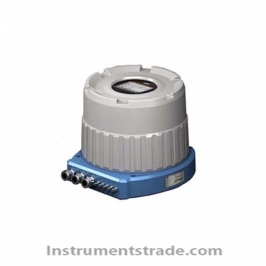
Position: Home > > Industrial on-line and process control > Industrial chromatograph > On-line gas chromatography > GC-9760A Portable Gas Chromatograph for Transformer Oil Analysis

GC-9760A Portable Gas Chromatograph for Transformer Oil Analysis

Product ID:GYSP004

Price: Please inquire PDF Format
Supply Ability:50SETS/MON
Port:SHENZHEN
  • Product Introduction
  • Other information
  • Model NumberGC-9760A
    Brand NameSHHUAAI
    Payment TermsTT,PAYPAL,Alibaba.com Pay
    GC-9760A Portable Gas Chromatograph for Transformer Oil Analysis
     
    Product Introduction
    The GC-9760A Portable Gas Chromatograph is designed for rapid on-site analysis of dissolved gases in transformer insulating oil. Its compact, modular structure makes it suitable for field testing, helping electrical maintenance teams obtain timely analytical data for transformer condition monitoring and fault assessment.
    Using a classic three-detector analytical workflow, the GC-9760A performs gas component analysis from a single sample injection. The listed target gases include hydrogen (H₂), oxygen (O₂), methane (CH₄), ethylene (C₂H₄), ethane (C₂H₆), acetylene (C₂H₂), carbon monoxide (CO), and carbon dioxide (CO₂).
    Digital pressure and temperature displays allow users to monitor operating conditions through the workstation. The instrument also features digital FID signal zero adjustment and an explosion-proof FID detector design to support stable measurement and safer operation.
    With its portable format and field-oriented workflow, the GC-9760A helps reduce the need to transport samples to a central laboratory for every routine analysis.


    Performance Features
    •  On-site transformer oil DGA: Designed for rapid analysis of dissolved gases in transformer insulating oil.
    • Single-injection analysis: Uses a three-detector workflow to analyze the listed gas components from one sample injection.
    •Compact and lightweight design: Modular construction supports transportation and field testing.
    •  Digital gas pressure monitoring: Pressure sensors provide digital readings of gas-path pressures, including nitrogen, hydrogen, and air.
    •  Digital temperature monitoring and control: The workstation displays and controls temperatures for the column oven, detectors, conversion furnace, and other relevant components.
    •  Digital FID zero adjustment: Electronic baseline compensation helps reduce interference associated with mechanical potentiometer wiring.
    •  Enclosed FID detector: The explosion-proof detector housing is designed to contain an internal ignition or explosion under specified design conditions.
    •  Computer-based operation: The workstation provides access to operating parameters for convenient monitoring and adjustment.


    Working Principle
    The GC-9760A uses gas chromatography to separate dissolved gas components extracted from transformer insulating oil. After sample introduction, the gas components pass through the chromatographic separation system and are directed to the appropriate detectors in the three-detector workflow.
    The instrument uses a thermal conductivity detector (TCD) and a flame ionization detector (FID) as part of its detection system. The detector signals are processed to generate chromatographic results that support identification and quantification of the target gases according to the applicable analytical method.
    Digital pressure and temperature monitoring helps operators maintain suitable analytical conditions. Electronic FID zero adjustment compensates for baseline signals through digital circuitry, helping improve signal stability and reduce electrical interference.


    Technical Specifications
    General Specifications
    Parameter Specification
    Model GC-9760A
    Product Type Portable gas chromatograph
    Primary Application On-site dissolved gas analysis of transformer insulating oil
    Analytical Workflow Three-detector workflow
    Sample Injection Single injection for the listed gas analysis workflow
    Target Gas Components H₂, O₂, CH₄, C₂H₄, C₂H₆, C₂H₂, CO, CO₂
    Gas Pressure Display Digital pressure-sensor readings
    Temperature Monitoring Digital display and workstation control
    FID Signal Adjustment Digital electronic zero adjustment
    FID Design Enclosed explosion-proof detector housing
    Dimensions 450 × 430 × 230 mm
    Weight Less than 15 kg
    Thermal Conductivity Detector (TCD)
    Parameter Specification
    Detector Type Thermal Conductivity Detector
    Baseline Noise ≤20 μV
    Baseline Drift ≤100 μV/30 min
    Linearity ≥10⁴
    Flame Ionization Detector (FID)
    Parameter Specification
    Detector Structure Semi-diffusion structure
    Collector Cylindrical collector design
    Nozzle Quartz nozzle
    Power Supply Constant-current control
    Ignition Automatic ignition
    Stabilization Time 10 minutes
    Sensitivity ≥2500 mV·mL/mg (n-hexadecane/isooctane)
    Detection Limit ≤8 × 10⁻¹² g/s (n-hexadecane/isooctane)
    Baseline Noise ≤2 × 10⁻¹³ A
    Baseline Drift ≤2 × 10⁻¹² A/30 min
    Linearity ≥10⁶
    Note: Detector performance values are reproduced from the supplied specifications. Confirm the applicable test method and units with the manufacturer before using them for procurement or method validation.


    Application Scenarios
    •   Transformer maintenance: Field testing of dissolved gases in insulating oil.
    •   Electrical utilities and substations: Routine transformer condition monitoring and maintenance inspections.
    • Transformer fault assessment: Supporting the evaluation of gas patterns associated with possible internal faults.
    • Power equipment service providers: Portable gas analysis during inspections and maintenance operations.
    • Transformer manufacturing and testing: Supporting oil testing and quality assessment.
    •Electrical laboratories: Supplementing laboratory-based dissolved gas analysis with on-site measurements.


    GC-9760A vs. Conventional Laboratory Gas Chromatographs
    Comparison Item GC-9760A Portable Gas Chromatograph Conventional Laboratory Gas Chromatograph
    Primary Use Transformer oil dissolved gas analysis in the field General laboratory gas analysis, depending on configuration
    Portability Compact design, less than 15 kg Depends on instrument size and configuration
    Sample Analysis Single-injection, three-detector workflow Depends on analytical configuration
    Pressure Monitoring Digital pressure readings through workstation Depends on model
    Temperature Control Digital monitoring and workstation control Common on many laboratory systems, with features varying by model
    FID Signal Adjustment Digital electronic zero adjustment Depends on detector electronics
    Typical Users Transformer maintenance teams and field testing personnel Laboratory analysts and centralized testing facilities


    Frequently Asked Questions
    Q1: What is the GC-9760A used for?
    It is designed for on-site dissolved gas analysis of transformer insulating oil to support transformer condition monitoring and fault assessment.
    Q2: Which gases can the GC-9760A analyze?
    The supplied list includes H₂, O₂, CH₄, C₂H₄, C₂H₆, C₂H₂, CO, and CO₂. Confirm the validated analytical configuration for each target gas with the manufacturer.
    Q3: Can it perform analysis with one sample injection?
    Yes. The supplied description states that its three-detector workflow supports analysis of the listed gas components from a single injection.
    Q4: What are the advantages of its portable design?
    Its compact modular construction and weight of less than 15 kg make it easier to transport to substations, transformer service locations, and other field-testing sites.
    Q5: How are gas pressure and temperature monitored?
    Gas-path pressures are digitally displayed through pressure sensors. Relevant temperatures, including those for the column oven, detectors, and conversion furnace, can be viewed and controlled through the workstation.
    Q6: What is the purpose of digital FID zero adjustment?
    It uses electronic baseline compensation to adjust the FID output signal, helping reduce interference associated with mechanical adjustment components and their wiring.
    Q7: Does the GC-9760A include an explosion-proof FID detector?
    The supplied specifications describe an enclosed explosion-proof FID detector housing. Users should confirm the applicable explosion-proof certification, hazardous-area classification, and installation requirements before use in hazardous locations.
    Q8: What is the instrument's size and weight?
    The stated dimensions are 450 × 430 × 230 mm, and the weight is less than 15 kg.
    Q9: Is the GC-9760A a replacement for all laboratory DGA systems?
    It is designed to support on-site transformer oil analysis. Whether it can replace a particular laboratory workflow depends on the required gases, validated methods, quality-control requirements, and applicable standards.

     
  • Frequently Asked Questions
    Q1: What is the GC-9760A used for?
    It is designed for on-site dissolved gas analysis of transformer insulating oil to support transformer condition monitoring and fault assessment.
    Q2: Which gases can the GC-9760A analyze?
    The supplied list includes H₂, O₂, CH₄, C₂H₄, C₂H₆, C₂H₂, CO, and CO₂. Confirm the validated analytical configuration for each target gas with the manufacturer.
    Q3: Can it perform analysis with one sample injection?
    Yes. The supplied description states that its three-detector workflow supports analysis of the listed gas components from a single injection.
    Q4: What are the advantages of its portable design?
    Its compact modular construction and weight of less than 15 kg make it easier to transport to substations, transformer service locations, and other field-testing sites.
    Q5: How are gas pressure and temperature monitored?
    Gas-path pressures are digitally displayed through pressure sensors. Relevant temperatures, including those for the column oven, detectors, and conversion furnace, can be viewed and controlled through the workstation.
    Q6: What is the purpose of digital FID zero adjustment?
    It uses electronic baseline compensation to adjust the FID output signal, helping reduce interference associated with mechanical adjustment components and their wiring.
    Q7: Does the GC-9760A include an explosion-proof FID detector?
    The supplied specifications describe an enclosed explosion-proof FID detector housing. Users should confirm the applicable explosion-proof certification, hazardous-area classification, and installation requirements before use in hazardous locations.
    Q8: What is the instrument's size and weight?
    The stated dimensions are 450 × 430 × 230 mm, and the weight is less than 15 kg.
    Q9: Is the GC-9760A a replacement for all laboratory DGA systems?
    It is designed to support on-site transformer oil analysis. Whether it can replace a particular laboratory workflow depends on the required gases, validated methods, quality-control requirements, and applicable standards.
Products
Analytical instruments
Physical property test
Environmental monitoring and analysis
Lab general equipment
About us
About this website
Our service
Product purchase
Contact Us

Newsletter

Make Sure you dont miss interesting happenings by joining our newsletter program.

Contact Us
+86-18620722006
instruments@instrumentstrade.com