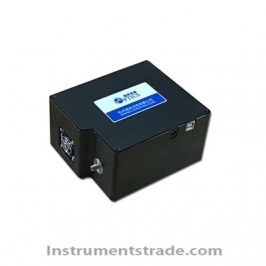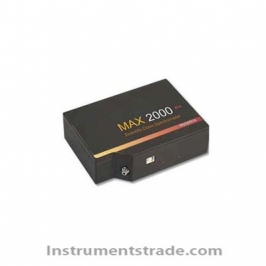
Position: Home > > Analytical instruments > Spectroscopy Equipment > Fiber optic spectrometer > EK2000 Pro-TEC Passive-Cooled High-Sensitivity Array Fiber Optic Spectrometer

EK2000 Pro-TEC Passive-Cooled High-Sensitivity Array Fiber Optic Spectrometer

Product ID:FGgx061

Price: Please inquire PDF Format
Supply Ability:50 SETS/MON
Port:SHENZHEN
  • Product Introduction
  • Other information
  • Model NumberEK2000 Pro-TEC
    Brand NameSHCHENCHANG
    Payment TermsTT,PAYPAL,Alibaba.com Pay
    EK2000 Pro-TEC Passive-Cooled High-Sensitivity Array Fiber Optic Spectrometer
    Product Introduction
    The EK2000 Pro-TEC is a high-sensitivity array fiber optic spectrometer designed for scientific research and industrial applications. Featuring a passively cooled, back-illuminated CCD detector with 2048 × 64 pixels, it delivers excellent sensitivity across the ultraviolet and near-infrared regions.
    Its integrated passive cooling system reduces the detector temperature by up to 30°C below ambient temperature, helping improve signal-to-noise ratio and response uniformity. Combined with dual-blazed gratings, higher-order diffraction suppression filters, and flexible external triggering, the EK2000 Pro-TEC is well suited for weak-light measurements, fluorescence analysis, Raman spectroscopy, and synchronized industrial monitoring.


    Performance Features
    • High UV sensitivity: CCD quantum efficiency reaches 70% in the ultraviolet region.
    • Passive CCD cooling: Reduces detector temperature by up to 30°C below ambient temperature, with a minimum operating temperature of 5°C.
    • Smooth spectral output: Improved etalon characteristics help reduce interference effects.
    • Wide spectral coverage: Measures wavelengths from 190 to 1100 nm using dual-blazed gratings and wavelength-matched order-sorting filters.
    •  High-quality optical performance: Typical optical resolution of 0.12 nm FWHM, depending on the selected wavelength range.
    • Flexible triggering: Supports free-run, level-triggered, edge-triggered, and synchronous-triggering modes.
    •  Multiple interfaces: USB, serial, SPI, and a 30-pin Chenchang GPIO interface.
    • Software development support: ChNetDriver SDK supports multiple programming languages and enables integration with laboratory and industrial systems.


    Working Principle
    The EK2000 Pro-TEC uses a grating-based optical system to separate incoming light into its component wavelengths. The dispersed light is detected by a passively cooled, back-illuminated CCD array, which converts optical signals into electrical signals for digital processing.
    The integrated cooling system helps reduce detector noise and improve measurement stability, particularly under weak-light conditions. Dual-blazed gratings and suitable order-sorting filters support efficient spectral measurement across the 190–1100 nm range. External triggering and software integration enable synchronized acquisition for automated testing and online monitoring.


    Technical Parameters
    Parameter Specification
    Detector First-order passive-cooled, back-illuminated array CCD
    CCD Pixel Array 2048 × 64
    Maximum Cooling Difference Up to 30°C below ambient temperature
    Minimum Operating Temperature 5°C
    Entrance Slit Width 5, 10, 25, 50, 100, 200, 250 μm
    Grating Grating 2; configuration-dependent
    Order-Sorting Filter Selected according to the wavelength range
    Wavelength Range 190–1100 nm
    Optical Resolution 0.12 nm FWHM, typical; wavelength-dependent
    Wavelength Resolution 0.07 nm, typical; wavelength-dependent
    Linearity >99%
    Integration Time 7.2 ms–180 s
    Dark Noise 20 RMS counts
    Dynamic Range 7000:1 typical; 20000:1
    Signal-to-Noise Ratio 900:1 typical
    A/D Conversion 16-bit or 18-bit
    Standard Interfaces USB, serial, SPI
    External Trigger Interface 30-pin Chenchang GPIO; supports compatible expansion acquisition cards
    Trigger Modes Free-run, level trigger, edge trigger, synchronous trigger
    Power Consumption 250 mA at 5 VDC
    Optical System 100 mm focal length, F/4.5, symmetrical crossed CT optical design
    Fiber Connector SMA905
    Dimensions (L × W × H) 187 × 115 × 43 mm
    Weight 2.8 kg
     

    Application Scenarios
    •   Fluorescence spectroscopy: Sensitive detection of weak fluorescence signals in chemical, biological, and materials research.
    •   Raman spectroscopy: Spectral acquisition for material identification, molecular analysis, and laboratory research.
    •  UV-Vis-NIR analysis: Spectral characterization of samples across ultraviolet, visible, and near-infrared wavelengths.
    • Industrial online monitoring: Real-time spectral acquisition and synchronization with external equipment.
    • Scientific research: Optical experiments, spectral response studies, and customized measurement systems.
    •  Automated testing systems: Integration with instruments, external triggers, and custom data acquisition software.


    EK2000 Pro-TEC vs. Conventional Fiber Optic Spectrometers
    Feature EK2000 Pro-TEC Conventional Spectrometers
    Detector Passively cooled, back-illuminated CCD Depends on detector configuration
    UV Sensitivity CCD quantum efficiency up to 70% in UV Depends on detector type
    Cooling Up to 30°C below ambient temperature Depends on model
    Spectral Coverage 190–1100 nm Model-dependent
    Typical Optical Resolution 0.12 nm FWHM Model-dependent
    Triggering Four trigger modes Depends on model
    Software Integration Multi-language SDK support Depends on manufacturer
    Best-Suited Applications Weak-light detection, research, and synchronized industrial acquisition Depends on configuration
     

    Frequently Asked Questions
    1. What is the wavelength range of the EK2000 Pro-TEC spectrometer?
    It covers 190–1100 nm, spanning ultraviolet, visible, and near-infrared wavelengths.
    2. What detector does the EK2000 Pro-TEC use?
    It uses a passively cooled, back-illuminated CCD array with 2048 × 64 pixels.
    3. How does passive cooling improve spectral measurements?
    The integrated cooling system reduces detector temperature by up to 30°C below ambient temperature, helping improve signal-to-noise ratio and detector response uniformity.
    4. Is the EK2000 Pro-TEC suitable for fluorescence and Raman spectroscopy?
    Yes. Its high sensitivity and low-noise characteristics make it suitable for weak-light applications, including fluorescence and Raman spectral measurements.
    5. What is its typical optical resolution?
    The typical optical resolution is 0.12 nm FWHM, while the wavelength resolution is typically 0.07 nm. Actual performance depends on the wavelength range and optical configuration.
    6. Which interfaces and trigger modes are supported?
    The instrument supports USB, serial, and SPI interfaces, along with a 30-pin GPIO external trigger interface. Trigger modes include free-run, level trigger, edge trigger, and synchronous trigger.
    7. Can the spectrometer be integrated into custom software?
    Yes. The ChNetDriver SDK supports C#, C/C++, Java, Delphi, MATLAB, LabVIEW, VB, VBA, Python, and other supported development environments. Function libraries are also available for Linux and macOS.
    8. What fiber connection does the EK2000 Pro-TEC use?
    It uses an SMA905 fiber connector.
    9. What are the dimensions and power requirements?
    The instrument measures 187 × 115 × 43 mm, weighs 2.8 kg, and has a specified power consumption of 250 mA at 5 VDC.


  • Frequently Asked Questions
    1. What is the wavelength range of the EK2000 Pro-TEC spectrometer?
    It covers 190–1100 nm, spanning ultraviolet, visible, and near-infrared wavelengths.
    2. What detector does the EK2000 Pro-TEC use?
    It uses a passively cooled, back-illuminated CCD array with 2048 × 64 pixels.
    3. How does passive cooling improve spectral measurements?
    The integrated cooling system reduces detector temperature by up to 30°C below ambient temperature, helping improve signal-to-noise ratio and detector response uniformity.
    4. Is the EK2000 Pro-TEC suitable for fluorescence and Raman spectroscopy?
    Yes. Its high sensitivity and low-noise characteristics make it suitable for weak-light applications, including fluorescence and Raman spectral measurements.
    5. What is its typical optical resolution?
    The typical optical resolution is 0.12 nm FWHM, while the wavelength resolution is typically 0.07 nm. Actual performance depends on the wavelength range and optical configuration.
    6. Which interfaces and trigger modes are supported?
    The instrument supports USB, serial, and SPI interfaces, along with a 30-pin GPIO external trigger interface. Trigger modes include free-run, level trigger, edge trigger, and synchronous trigger.
    7. Can the spectrometer be integrated into custom software?
    Yes. The ChNetDriver SDK supports C#, C/C++, Java, Delphi, MATLAB, LabVIEW, VB, VBA, Python, and other supported development environments. Function libraries are also available for Linux and macOS.
    8. What fiber connection does the EK2000 Pro-TEC use?
    It uses an SMA905 fiber connector.
    9. What are the dimensions and power requirements?
    The instrument measures 187 × 115 × 43 mm, weighs 2.8 kg, and has a specified power consumption of 250 mA at 5 VDC.
Products
Analytical instruments
Physical property test
Environmental monitoring and analysis
Lab general equipment
About us
About this website
Our service
Product purchase
Contact Us

Newsletter

Make Sure you dont miss interesting happenings by joining our newsletter program.

Contact Us
+86-18620722006
instruments@instrumentstrade.com