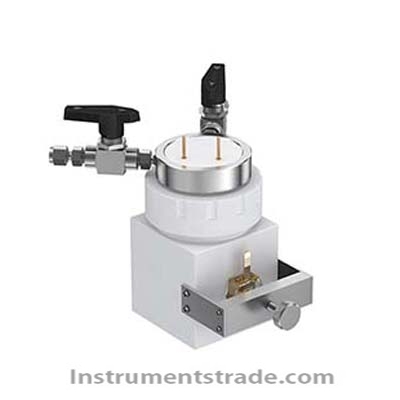
C026-2 All-PTFE Photoelectrochemical Cell

Product ID:FDgzz034

Price: Please inquire PDF Format
Supply Ability:50 SETS/MON
Port:SHENZHEN
  • Product Introduction
  • Other information
  • Model NumberC026-2
    Brand NameGAOSHIRUILIAN
    Payment TermsTT,PAYPAL,Alibaba.com Pay
    C026-2 All-PTFE Photoelectrochemical Cell
    Product Introduction
    The C026-2 All-PTFE Photoelectrochemical Cell is a sealed three-electrode electrochemical cell designed for photoelectrochemical and electrochemical research. It features a chemically resistant PTFE cell body and a detachable quartz window with light transmittance above 95%, providing an effective optical path for photoelectrochemical measurements.
    The standard working area is 1 cm², while customized working areas and cell volumes from 30 mL to 500 mL are available. The working electrode is secured against the defined-area opening by a rear screw, providing reliable compression and sealing.
    The C026-2 Photoelectrochemical Cell supports customized auxiliary and reference electrodes, liquid-level gas bubbling, optional sampling ports, and replaceable quartz windows, making it suitable for a wide range of photoelectrochemical and electrochemical experiments.


    Performance Features
    • All-PTFE construction: Provides excellent chemical resistance for a wide range of electrolyte systems.
    • High-transmittance quartz window: Quartz window provides light transmittance above 95% for photoelectrochemical measurements.
    • 1 cm² standard working area: The defined working area can also be customized according to experimental requirements.
    • Three-electrode configuration: Supports working, auxiliary, and reference electrode systems.
    • Reliable sealing structure: Rear screw compression securely fixes the working sample and seals the defined working area.
    • Flexible gas and sampling options: Supports liquid-level gas bubbling and optional sampling ports.
    • Replaceable quartz window: The detachable quartz window allows quick replacement when required.


    Working Principle
    The C026-2 Photoelectrochemical Cell operates by applying an external potential or current to an electrolyte through a three-electrode system. The working electrode is the primary reaction surface, the reference electrode provides a stable reference potential, and the auxiliary electrode completes the electrical circuit.
    During photoelectrochemical measurements, light passes through the high-transmittance quartz window and reaches the working electrode or photoactive sample. When illuminated, the photoactive material generates charge carriers that participate in oxidation-reduction reactions at the electrode/electrolyte interface. The resulting electrochemical response is measured using a potentiostat or electrochemical workstation.
    The PTFE sealing structure helps reduce electrolyte leakage and external interference, while the gas bubbling system can provide a controlled experimental atmosphere when required.


    Technical Parameters
    Parameter Specification
    Model C026-2
    Cell Type Photoelectrochemical Cell
    Cell Material PTFE (Polytetrafluoroethylene)
    Electrode Configuration Three-electrode system
    Standard Working Area 1 cm²
    Custom Working Area Available
    Quartz Window Detachable quartz glass
    Quartz Light Transmittance >95%
    Cell Volume 30–500 mL
    Working Electrode Standard or non-standard sample
    Auxiliary Electrode Customized
    Reference Electrode Customized
    Sealing Method Rear screw compression and PTFE sealing
    Electrode Connection Internal plug-in connection through top connector
    Gas Introduction Liquid-level bubbling available
    Sampling Port Optional
    Cell Body Connection External threaded design
    Electrode Alignment 360° rotatable PTFE inner core
    Optical Window Replacement Detachable and replaceable
    Customization Available according to experimental requirements
     

    Application Scenarios
    The C026-2 All-PTFE Photoelectrochemical Cell is suitable for:
    •Photoelectrochemical research: Photoelectrochemical reactions and photoactive material studies.
    •Semiconductor photoelectrodes: Evaluation of semiconductor photoelectrodes and light-responsive materials.
    • Electrode and catalyst research: Testing electrode materials, catalysts, coatings, and functional materials.
    •Three-electrode electrochemical measurements: Cyclic voltammetry, chronoamperometry, and other electrochemical techniques.
    • Controlled-atmosphere experiments: Electrochemical and photoelectrochemical testing requiring gas bubbling.
    • Energy and materials research: Research on photoelectrodes, catalytic materials, and electrochemical energy conversion.
    • Laboratory electrochemical testing: Sealed electrochemical experiments requiring optical access and chemical resistance.


    Comparison: C026-2 vs. Conventional Electrochemical Cells
    Feature C026-2 All-PTFE Photoelectrochemical Cell Conventional Electrochemical Cell
    Main Application Photoelectrochemical and electrochemical research General electrochemical testing
    Cell Material PTFE Glass or other materials
    Optical Window Quartz, >95% transmittance May not have a dedicated optical window
    Working Area Standard 1 cm², customizable Usually fixed or application-dependent
    Electrode Configuration Three-electrode system Depends on cell design
    Sealing PTFE compression sealing Varies by design
    Gas Bubbling Available Configuration-dependent
    Sampling Port Optional Configuration-dependent
    Quartz Window Detachable and replaceable Not always replaceable
    Customization Working area, volume, electrodes, and ports Depends on design
     

    FAQ
    1. What is the C026-2 Photoelectrochemical Cell used for?
    The C026-2 is designed for photoelectrochemical and electrochemical experiments involving photoelectrodes, semiconductor materials, catalysts, and three-electrode electrochemical systems.
    2. What is the standard working area?
    The standard working area is 1 cm². Other working areas can be customized according to the sample and experimental requirements.
    3. Can non-standard working electrode samples be used?
    Yes. Non-standard samples can be used when they adequately cover the defined working-area opening to ensure proper sealing.
    4. What is the light transmittance of the quartz window?
    The quartz window provides more than 95% light transmittance, making it suitable for photoelectrochemical experiments requiring optical illumination.
    5. Can the auxiliary and reference electrodes be customized?
    Yes. The auxiliary and reference electrodes need to be customized to match the C026-2 Photoelectrochemical Cell and the user's experimental configuration.
    6. Can the cell volume be customized?
    Yes. The standard cell volume ranges from 30 mL to 500 mL, with customized volumes available upon request.
    7. Can gas bubbling and a sampling port be added?
    Yes. A liquid-level gas bubbling system can be configured according to the experimental atmosphere requirements. A sampling port can also be added as an optional feature.
    8. Can the quartz window be replaced?
    Yes. The quartz window is detachable and can be quickly removed and replaced when necessary.


  • FAQ
    1. What is the C026-2 Photoelectrochemical Cell used for?
    The C026-2 is designed for photoelectrochemical and electrochemical experiments involving photoelectrodes, semiconductor materials, catalysts, and three-electrode electrochemical systems.
    2. What is the standard working area?
    The standard working area is 1 cm². Other working areas can be customized according to the sample and experimental requirements.
    3. Can non-standard working electrode samples be used?
    Yes. Non-standard samples can be used when they adequately cover the defined working-area opening to ensure proper sealing.
    4. What is the light transmittance of the quartz window?
    The quartz window provides more than 95% light transmittance, making it suitable for photoelectrochemical experiments requiring optical illumination.
    5. Can the auxiliary and reference electrodes be customized?
    Yes. The auxiliary and reference electrodes need to be customized to match the C026-2 Photoelectrochemical Cell and the user's experimental configuration.
    6. Can the cell volume be customized?
    Yes. The standard cell volume ranges from 30 mL to 500 mL, with customized volumes available upon request.
    7. Can gas bubbling and a sampling port be added?
    Yes. A liquid-level gas bubbling system can be configured according to the experimental atmosphere requirements. A sampling port can also be added as an optional feature.
    8. Can the quartz window be replaced?
    Yes. The quartz window is detachable and can be quickly removed and replaced when necessary.


Products
Analytical instruments
Physical property test
Environmental monitoring and analysis
Lab general equipment
About us
About this website
Our service
Product purchase
Contact Us

Newsletter

Make Sure you dont miss interesting happenings by joining our newsletter program.

Contact Us
+86-18620722006
instruments@instrumentstrade.com