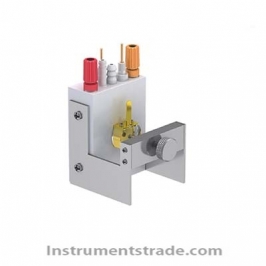
Position: Home > > Analytical instruments > Electrochemical Equipment > Electrochemical workstation/ constant potential instrument > C007-1 Relative-Sealing Replaceable-Membrane H-Type Electrolytic Cell

C007-1 Relative-Sealing Replaceable-Membrane H-Type Electrolytic Cell

Product ID:FDgzz031

Price: Please inquire PDF Format
Supply Ability:50 SETS/MON
Port:SHENZHEN
  • Product Introduction
  • Other information
  • Model NumberC007-1
    Brand NameGAOSHIRUILIAN
    Payment TermsTT,PAYPAL,Alibaba.com Pay
    C007-1 Relative-Sealing Replaceable-Membrane H-Type
    Electrolytic Cell

     
    Product Introduction
    The C007-1 H-Type Electrolytic Cell is a laboratory H-type electrochemical cell designed for electrolysis, electrochemical analysis and three-electrode experiments. It adopts a relative-sealing structure with the cathode chamber and anode chamber separated by a user-supplied ion membrane.
    The working electrode, counter electrode and reference electrode can be configured according to experimental requirements. The reference electrode and working electrode are positioned in the same chamber, helping reduce iR drop during electrochemical measurements.
    The cell body is made of high-borosilicate glass with a suspended-layer design that helps minimize hidden solution volume. The replaceable membrane structure, precision electrode alignment, liquid-submerged gas inlet and optional sampling port make the C007-1 suitable for a wide range of electrochemical research applications.
    The C007-1 is available in single-layer and double-layer versions. The double-layer version adds a thermostatic water-jacket function for temperature-controlled electrochemical experiments.


    Performance Features
    •  H-type two-chamber design: Separates the cathode and anode chambers using a replaceable ion membrane.
    •  Relative sealing structure: The two chambers are connected and sealed through a chain structure for convenient membrane replacement.
    • High-borosilicate glass body: Provides a suitable transparent reaction environment for laboratory electrochemical experiments.
    • Three-electrode configuration: Supports working, counter and reference electrodes according to experimental requirements.
    •  Reduced iR drop: The reference electrode and working electrode are located in the same chamber.
    •  Precision electrode alignment: A 360° rotatable PTFE inner core helps align electrodes accurately with the corresponding channels.
    •  Secure electrode sealing: PTFE plugs and sealing screws provide sealing around the electrode ports.
    •  Submerged gas bubbling: Supports controlled gas atmospheres according to experimental requirements.
    •  Optional sampling port: A sampling port can be added to the cell body at additional cost.
    • Single- and double-layer versions: The double-layer version provides circulating thermostatic water for temperature control.
    • Customizable volume: Standard configurations cover 30–500 mL, with customized volumes available.


    Working Principle
    An electrolytic cell converts electrical energy into chemical energy by passing current through an electrolyte solution or molten electrolyte. Oxidation and reduction reactions occur at the anode and cathode, respectively.
    In the C007-1 H-type cell, the cathode chamber containing the working electrode and the anode chamber containing the counter electrode are separated by an ion membrane. The membrane allows ionic conduction between the two chambers while helping maintain separation of the reaction environments.
    For three-electrode measurements, the working electrode and reference electrode are installed in the same chamber, while the counter electrode is positioned in the opposite chamber. The electrode configuration and applied electrical conditions can therefore be adjusted according to the experimental system.
    The built-in gas inlet allows gas to be introduced below the liquid surface to establish a required experimental atmosphere. In the double-layer version, thermostatic water continuously circulates through the jacket to maintain a controlled temperature inside the reaction cell.


    Technical Parameters
    Parameter Specification
    Model C007-1
    Cell Type H-Type Electrolytic Cell
    Sealing Type Relative sealing
    Cell Body Material High-borosilicate glass
    Chamber Structure Cathode chamber + anode chamber
    Membrane Replaceable ion membrane, user supplied
    Electrode Configuration Three-electrode system
    Working Electrode Extended type, configurable
    Counter Electrode Extended type, configurable
    Reference Electrode Extended type, configurable
    Reference Electrode Position Same chamber as working electrode
    Standard Volume 30–500 mL
    Custom Volume Available upon request
    Electrode Alignment 360° rotatable PTFE inner core
    Electrode Sealing PTFE plug + sealing screw
    Gas Inlet Submerged gas bubbling
    Sampling Port Optional
    Cell Structure Single-layer / double-layer
    Temperature Control Optional circulating thermostatic water jacket for double-layer version


    Application Scenarios
    The C007-1 H-Type Electrolytic Cell is suitable for:
    •  Electrochemical research
    •  Electrolysis experiments
    •  Three-electrode electrochemical measurements
    •  Electrocatalysis research
    •  Electrochemical synthesis
    •  Redox reaction studies
    •  Controlled-atmosphere electrochemical experiments
    •  Ion membrane-related electrochemical research
    •  Electrode performance evaluation
    •  Laboratory catalyst and material evaluation
    •  Temperature-controlled electrochemical experiments
    The submerged gas inlet can be configured according to experimental requirements. For example, a straight-type gas inlet can be used for carbon reduction experiments, while an L-type gas inlet can be used for nitrogen reduction experiments.


    C007-1 vs. Other Electrochemical Cell Configurations
    Feature C007-1 H-Type Cell Conventional Single-Chamber Cell C007-2 Absolute-Sealing H-Type Cell
    Chamber Structure Two chambers Single chamber Two chambers
    Membrane Replaceable Usually not applicable Replaceable
    Sealing Relative sealing General sealing Absolute sealing
    Working/Reference Electrode Same chamber Depends on design Depends on configuration
    Counter Electrode Separate chamber Same chamber in many designs Separate chamber
    Gas Bubbling Submerged gas inlet Depends on design Depends on design
    Membrane Replacement Convenient Not applicable Available
    Temperature Control Optional double-layer version Depends on design Depends on configuration
    Typical Use H-type electrochemical research General electrochemical testing Experiments requiring absolute sealing


    FAQ
    1.  What is the C007-1 H-Type Electrolytic Cell used for?
    It is designed for electrolysis, electrochemical analysis, three-electrode experiments, electrocatalysis and other laboratory electrochemical research.
    2. What does “relative sealing” mean?
    The C007-1 uses a relative-sealing structure in which the cathode and anode chambers are connected and sealed while remaining separated by an ion membrane. It is different from the absolute-sealing structure of the C007-2.
    3. Is the ion membrane included?
    The ion membrane is user supplied and can be quickly replaced according to experimental requirements.
    4. What electrodes can be installed?
    The working, counter and reference electrodes can be configured according to the experiment. The cell requires extended-type electrodes.
    5. Why are the working and reference electrodes installed in the same chamber?
    This configuration helps reduce the iR drop between the working and reference electrodes during electrochemical measurements.
    6. What volume is available for the C007-1?
    The standard volume range is 30–500 mL, and customized volumes can be provided according to requirements.
    7. Can the C007-1 control reaction temperature?
    Yes. The double-layer version has a water-jacket structure through which thermostatic circulating water can be continuously passed to maintain the desired solution temperature.
    8. Can gas be introduced into the electrolyte?
    Yes. The cell is equipped with a submerged gas-bubbling structure for establishing different experimental atmospheres.
    9. Can a sampling port be added?
    Yes. An optional sampling port can be added to the cell body according to experimental requirements.

     
  • FAQ
    1.  What is the C007-1 H-Type Electrolytic Cell used for?
    It is designed for electrolysis, electrochemical analysis, three-electrode experiments, electrocatalysis and other laboratory electrochemical research.
    2. What does “relative sealing” mean?
    The C007-1 uses a relative-sealing structure in which the cathode and anode chambers are connected and sealed while remaining separated by an ion membrane. It is different from the absolute-sealing structure of the C007-2.
    3. Is the ion membrane included?
    The ion membrane is user supplied and can be quickly replaced according to experimental requirements.
    4. What electrodes can be installed?
    The working, counter and reference electrodes can be configured according to the experiment. The cell requires extended-type electrodes.
    5. Why are the working and reference electrodes installed in the same chamber?
    This configuration helps reduce the iR drop between the working and reference electrodes during electrochemical measurements.
    6. What volume is available for the C007-1?
    The standard volume range is 30–500 mL, and customized volumes can be provided according to requirements.
    7. Can the C007-1 control reaction temperature?
    Yes. The double-layer version has a water-jacket structure through which thermostatic circulating water can be continuously passed to maintain the desired solution temperature.
    8. Can gas be introduced into the electrolyte?
    Yes. The cell is equipped with a submerged gas-bubbling structure for establishing different experimental atmospheres.
    9. Can a sampling port be added?
    Yes. An optional sampling port can be added to the cell body according to experimental requirements.


Products
Analytical instruments
Physical property test
Environmental monitoring and analysis
Lab general equipment
About us
About this website
Our service
Product purchase
Contact Us

Newsletter

Make Sure you dont miss interesting happenings by joining our newsletter program.

Contact Us
+86-18620722006
instruments@instrumentstrade.com