Position: Home > > Analytical instruments > Spectroscopy Equipment > Fiber optic spectrometer > BIM-66 Series High Resolution Fiber Spectrometer

BIM-66 Series High Resolution Fiber Spectrometer

Product ID:FGgx004

Price: Please inquire PDF Format
Supply Ability:50SETS/MON
Port:SHENZHEN
  • Product Introduction
  • Other information
  • Model NumberBIM-66
    Brand NameYIMA
    Payment TermsT/T, paypal,Alibaba.com Pay
    BIM-66 Series High Resolution Fiber Spectrometer
     
    Product Introduction
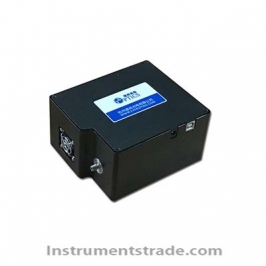
    The BIM-66 Series High Resolution Fiber Spectrometer is a miniature fiber optic spectrometer designed for compact and flexible spectral analysis. With a palm-sized structure measuring only 137 × 110 × 46 mm and weighing approximately 0.7 kg, the BIM-66 series is easy to carry and can be readily integrated into optical measurement and spectrum analysis systems.
    The series uses a CT crossover asymmetric optical structure to reduce coma at intermediate wavelengths and suppress stray light in the focal plane, helping minimize the influence of secondary diffraction. An interference filter further suppresses secondary diffraction light and supports high-resolution spectral measurement.
    Two models are available: BIM-6601 with a 300–1100 nm detector response and BIM-6602 with a 200–1000 nm response.


    Key Features
    Palm-sized compact design: Easy to carry and integrate into analytical instruments.
    •  High-resolution optical system: Optical resolution of ≤0.3 nm.
    •  CT crossover asymmetric optical structure: Helps reduce intermediate-wavelength coma.
    •  Stray-light suppression: Reduces the influence of secondary diffraction.
    •  Interference filter: Suppresses secondary diffraction light.
    •  USB 2.0 interface: Provides both data transmission and power supply.
    •  External trigger: Supports synchronized measurement with external systems.
    •  SMA905 fiber connector: Compatible with standard fiber-optic configurations.
    Professional customization: Customized configurations and integration services are available.


    Working Principle
    The BIM-66 fiber spectrometer receives optical signals through an SMA905 fiber-optic connector. The incoming light is dispersed by the spectrometer's optical system and projected onto a linear CCD detector.
    The CT crossover asymmetric optical structure improves optical performance by reducing coma, while the optical design and interference filter help suppress stray light and secondary diffraction. The detector converts the dispersed optical spectrum into electrical signals, which are digitized by a 12-bit A/D converter and transferred to a computer or integrated measurement system through USB 2.0.
    The integration time can be adjusted from 4 ms to 10 s, allowing the spectrometer to accommodate different light intensities and measurement conditions.


    Technical Specifications
    Parameter BIM-6601 BIM-6602
    Dimensions 137 × 110 × 46 mm 137 × 110 × 46 mm
    Weight 0.7 kg 0.7 kg
    Detector Spectral Response 300–1100 nm 200–1000 nm
    Optical Resolution ≤0.3 nm ≤0.3 nm
    Fiber-Optic Connector SMA905 SMA905
    Detector TOSHIBA TCD1304 linear CCD 2048 linear CCD
    Pixel 3648 pixels 2048 pixels
    Detector Size 8 × 200 μm* 14 × 200 μm*
    Signal-to-Noise Ratio 300:1 at full signal 2000:1 at full signal
    A/D Resolution 12 bit 12 bit
    Integration Time 4 ms–10 s 4 ms–10 s
    Power Supply / Consumption 5 VDC, 250 mA 5 VDC, 250 mA
    Operating Temperature 15–30°C (25°C reference) 15–30°C (25°C reference)
    Data Interface USB 2.0 USB 2.0
    External Trigger Available Available
    *Detector size is presented according to the supplied specification; confirm the exact detector active-area notation with the manufacturer before final publication.


    Model Comparison
    Feature BIM-6601 BIM-6602
    Spectral Response 300–1100 nm 200–1000 nm
    Optical Resolution ≤0.3 nm ≤0.3 nm
    Detector TOSHIBA TCD1304 linear CCD 2048 linear CCD
    Pixels 3648 2048
    SNR 300:1 2000:1
    Fiber Connector SMA905 SMA905
    Integration Time 4 ms–10 s 4 ms–10 s
    Dimensions 137 × 110 × 46 mm 137 × 110 × 46 mm
    Weight 0.7 kg 0.7 kg
    BIM-6601 is suitable for applications requiring extended spectral coverage toward the near-infrared region up to 1100 nm, while BIM-6602 offers a broader short-wavelength response down to 200 nm and a higher specified signal-to-noise ratio.


    Applications
    The compact BIM-66 fiber spectrometer can be integrated into a wide range of optical and analytical systems, including:
    •  Spectral analysis and optical measurement
    •  Laboratory spectroscopy
    •  Fiber-optic sensing systems
    •  Light-source characterization
    •  LED and laser analysis
    •  Color and material analysis
    •  Environmental and chemical analysis
    •  Portable analytical instruments
    •  OEM optical instruments and equipment integration
    •  Customized spectrum analysis systems


    BIM-66 vs. Conventional Spectrometers
    Feature BIM-66 Series Conventional Laboratory Spectrometer
    Design Miniature, palm-sized Usually larger
    Dimensions 137 × 110 × 46 mm Typically larger
    Weight Approx. 0.7 kg Often heavier
    Fiber Interface SMA905 Model dependent
    USB Power Supported Usually requires external power
    External Trigger Supported Model dependent
    Integration Easy OEM/system integration More limited
    Customization Professional customization available Depends on manufacturer


    Frequently Asked Questions (FAQ)
    1. What is the BIM-66 Series Fiber Spectrometer?
    The BIM-66 is a compact high-resolution fiber spectrometer designed for spectral analysis, fiber-optic measurement and integration into optical instruments.
    2. What is the difference between BIM-6601 and BIM-6602?
    The BIM-6601 covers 300–1100 nm, while the BIM-6602 covers 200–1000 nm. They also use different linear CCD detector configurations and have different specified signal-to-noise ratios.
    3. What is the optical resolution?
    Both BIM-6601 and BIM-6602 provide an optical resolution of ≤0.3 nm.
    4. What fiber connector does the spectrometer use?
    Both models use an SMA905 fiber-optic connector.
    5. Does the BIM-66 support USB communication?
    Yes. USB 2.0 is used for data transmission and can also provide power to the spectrometer.
    6. Does the spectrometer support external triggering?
    Yes. An external trigger function is provided for synchronized measurements and system integration.
    7. What is the integration time?
    The integration time can be set from 4 ms to 10 s, providing flexibility for samples and light sources with different intensities.
    8. Can the BIM-66 be integrated into customized instruments?
    Yes. Its miniature structure, USB interface, fiber-optic input and external trigger make it suitable for OEM integration and customized spectrum analysis systems.

  • Frequently Asked Questions (FAQ)
    1. What is the BIM-66 Series Fiber Spectrometer?
    The BIM-66 is a compact high-resolution fiber spectrometer designed for spectral analysis, fiber-optic measurement and integration into optical instruments.
    2. What is the difference between BIM-6601 and BIM-6602?
    The BIM-6601 covers 300–1100 nm, while the BIM-6602 covers 200–1000 nm. They also use different linear CCD detector configurations and have different specified signal-to-noise ratios.
    3. What is the optical resolution?
    Both BIM-6601 and BIM-6602 provide an optical resolution of ≤0.3 nm.
    4. What fiber connector does the spectrometer use?
    Both models use an SMA905 fiber-optic connector.
    5. Does the BIM-66 support USB communication?
    Yes. USB 2.0 is used for data transmission and can also provide power to the spectrometer.
    6. Does the spectrometer support external triggering?
    Yes. An external trigger function is provided for synchronized measurements and system integration.
    7. What is the integration time?
    The integration time can be set from 4 ms to 10 s, providing flexibility for samples and light sources with different intensities.
    8. Can the BIM-66 be integrated into customized instruments?
    Yes. Its miniature structure, USB interface, fiber-optic input and external trigger make it suitable for OEM integration and customized spectrum analysis systems.
Products
Analytical instruments
Physical property test
Environmental monitoring and analysis
Lab general equipment
About us
About this website
Our service
Product purchase
Contact Us

Newsletter

Make Sure you dont miss interesting happenings by joining our newsletter program.

Contact Us
+86-18620722006
instruments@instrumentstrade.com