Position: Home > > Analytical instruments > Mass Spectrometry Equipment > Helium mass spectrometer leak detector > ZQJ-3900 Helium Mass Spectrometer Leak Detector

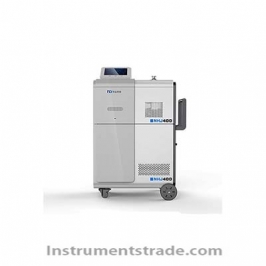
ZQJ-3900 Helium Mass Spectrometer Leak Detector

Product ID:HZhzp020

Price: Please inquire PDF Format
Supply Ability:50 SETS/MON
Port:SHENZHEN
  • Product Introduction
  • Other information
  • Model NumberZQJ-3900
    Brand NameZHONGKEKEYI
    Payment TermsTT,PAYPAL,Alibaba.com Pay
    ZQJ-3900 Helium Mass Spectrometer Leak Detector
    Product Introduction
    The ZQJ-3900 Helium Mass Spectrometer Leak Detector is a high-sensitivity instrument designed to locate leaks and measure leak rates in vacuum systems and industrial components. Using helium as a tracer gas, it detects gas entering through leak paths and determines the corresponding leakage rate.
    With a compact structure, flexible communication interfaces, and a high-reliability harmonic decoupling algorithm, the ZQJ-3900 can be integrated into customized leak detection systems. Its multiple test ports support different leak detection pressure requirements, making it suitable for a wide range of industrial applications.


    Performance Features
    • Compact Design: Space-saving structure supports customized integration with leak detection systems.
    • Flexible Communication: Multiple analog and digital interfaces provide versatile communication options.
    •  Improved Wiring: Optimized wiring design simplifies system connections and integration.
    • Reliable Signal Processing: High-reliability harmonic decoupling algorithm supports stable leak detection.
    • High Detection Sensitivity: Minimum detectable leak rate reaches 5×10⁻¹³ Pa·m³/s.
    •   Fast Response: Response time of no more than 1 second.
    • Multiple Test Ports: Ultra-fine, fine, and rough leak detection ports accommodate different pressure conditions.


    Working Principle
    The ZQJ-3900 uses helium mass spectrometry for tracer gas leak detection. During testing, helium is applied to the area being inspected. If a leak exists, helium enters the vacuum system through the leak path and is detected by the mass spectrometer.
    The instrument analyzes the helium signal to determine the presence and rate of leakage. Its harmonic decoupling algorithm supports reliable signal processing, while multiple test ports allow the detector to operate under different pressure conditions.


    Technical Parameters
    Parameter Specification
    Minimum Detectable Leak Rate 5×10⁻¹³ Pa·m³/s
    Measurement Range 5×10⁻¹³ to 1×10⁻¹ Pa·m³/s
    Maximum Test Pressure – Ultra-Fine Test Port 20 Pa
    Maximum Test Pressure – Fine Test Port 40 Pa
    Maximum Test Pressure – Rough Test Port 1500 Pa
    Response Time ≤1 s
    Startup Time <3 min
    Communication Multiple analog and digital interfaces
    Power Supply 220 VAC ±10%, 50 Hz, 8 A
    Operating Temperature 5–45°C
    Operating Humidity <80% RH
    Dimensions (L × W × H) 365 × 285 × 400 mm
    Weight 35 kg
     

    Application Scenarios
    The ZQJ-3900 is suitable for helium leak detection and vacuum integrity testing in:
    •   Automotive manufacturing
    •   Energy equipment manufacturing
    •   Cryogenic and refrigeration systems
    •   Electrical power equipment
    •   Vacuum equipment manufacturing
    •   Metallurgical industry
    •   Valve manufacturing
    •   Nuclear power industry
    •   Semiconductor manufacturing
    •   Power plant leak testing


    Comparison
    Feature ZQJ-3900 Conventional Helium Leak Detection Systems
    Minimum Detectable Leak Rate 5×10⁻¹³ Pa·m³/s Depends on instrument configuration
    Measurement Range 5×10⁻¹³ to 1×10⁻¹ Pa·m³/s Varies by model
    Test Pressure Ports Three: ultra-fine, fine, and rough Depends on system configuration
    Response Time ≤1 s Depends on equipment
    System Integration Compact design for customized integration Depends on equipment architecture
    Communication Multiple analog and digital interfaces Varies by model
    Signal Processing Harmonic decoupling algorithm Depends on detection technology
     

    Frequently Asked Questions
    1. What is the ZQJ-3900 helium mass spectrometer leak detector used for?
    It is used to detect and measure leaks in vacuum systems, industrial components, and sealed equipment through helium tracer gas analysis.
    2. What is its minimum detectable leak rate?
    The minimum detectable leak rate is 5×10⁻¹³ Pa·m³/s, with a measurement range of 5×10⁻¹³ to 1×10⁻¹ Pa·m³/s.
    3. What are the three test port pressure limits?
    The specified maximum pressures are 20 Pa for the ultra-fine test port, 40 Pa for the fine test port, and 1500 Pa for the rough test port.
    4. How fast does the ZQJ-3900 respond to a leak signal?
    Its specified response time is no more than 1 second.
    5. Can the ZQJ-3900 be integrated into an automated leak detection system?
    Yes. Its compact design supports customized integration with leak detection systems, and its analog and digital interfaces provide communication flexibility.
    6. What communication interfaces does the instrument support?
    The product supports multiple analog and digital communication interfaces. Specific interface types depend on the selected configuration.
    7. Which industries can use the ZQJ-3900?
    Typical applications include automotive, energy, cryogenic refrigeration, electrical power, vacuum manufacturing, metallurgy, valve production, nuclear power, semiconductor manufacturing, and power plant leak testing.
    8. What are the installation requirements?
    The instrument requires a 220 VAC ±10%, 50 Hz power supply and an operating environment of 5–45°C with relative humidity below 80%.


  • Frequently Asked Questions
    1. What is the ZQJ-3900 helium mass spectrometer leak detector used for?
    It is used to detect and measure leaks in vacuum systems, industrial components, and sealed equipment through helium tracer gas analysis.
    2. What is its minimum detectable leak rate?
    The minimum detectable leak rate is 5×10⁻¹³ Pa·m³/s, with a measurement range of 5×10⁻¹³ to 1×10⁻¹ Pa·m³/s.
    3. What are the three test port pressure limits?
    The specified maximum pressures are 20 Pa for the ultra-fine test port, 40 Pa for the fine test port, and 1500 Pa for the rough test port.
    4. How fast does the ZQJ-3900 respond to a leak signal?
    Its specified response time is no more than 1 second.
    5. Can the ZQJ-3900 be integrated into an automated leak detection system?
    Yes. Its compact design supports customized integration with leak detection systems, and its analog and digital interfaces provide communication flexibility.
    6. What communication interfaces does the instrument support?
    The product supports multiple analog and digital communication interfaces. Specific interface types depend on the selected configuration.
    7. Which industries can use the ZQJ-3900?
    Typical applications include automotive, energy, cryogenic refrigeration, electrical power, vacuum manufacturing, metallurgy, valve production, nuclear power, semiconductor manufacturing, and power plant leak testing.
    8. What are the installation requirements?
    The instrument requires a 220 VAC ±10%, 50 Hz power supply and an operating environment of 5–45°C with relative humidity below 80%.
Products
Analytical instruments
Physical property test
Environmental monitoring and analysis
Lab general equipment
About us
About this website
Our service
Product purchase
Contact Us

Newsletter

Make Sure you dont miss interesting happenings by joining our newsletter program.

Contact Us
+86-18620722006
instruments@instrumentstrade.com