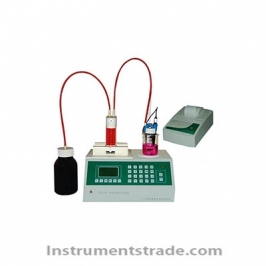
Position: Home > > Analytical instruments > Electrochemical Equipment > Potentiometric titration > UPT-DD200 Automatic Potentiometric Titrator

UPT-DD200 Automatic Potentiometric Titrator

Product ID:FDdd044

Price: Please inquire PDF Format
Supply Ability:50 SETS/MON
Port:SHENZHEN
  • Product Introduction
  • Other information
  • Model NumberUPT-DD200
    Brand NameYOUPUTONGYONG
    Payment TermsTT,PAYPAL,Alibaba.com Pay
    UPT-DD200 Automatic Potentiometric Titrator
     
    Product Introduction
    The UPT-DD200 Automatic Potentiometric Titrator is a laboratory analytical instrument designed for volumetric analysis based on the potentiometric measurement principle. It combines pH and millivolt (mV) measurement with automatic titration endpoint control, providing a convenient solution for routine chemical analysis and laboratory testing.
    Featuring a compact, integrated design, the UPT-DD200 combines the potentiometer, stirrer, and titration stand in one unit. Its automatic polarity conversion function enables the instrument to identify preset endpoints whether the measured potential increases or decreases and whether the potential is positive or negative. Users can select manual or automatic titration, adjust the dosing speed, and control the endpoint according to a preset pH or mV value.
    In addition to potentiometric titration, the instrument functions as a high-precision digital pH meter, making it suitable for laboratories that require flexible pH measurement and controlled volumetric analysis.


    Performance Features
    1.  Preset Endpoint Control
    The instrument automatically controls titration according to a user-defined potential endpoint, supporting consistent and convenient analytical procedures.
    2.  Pre-Controlled Potential Adjustment
    Users can adjust the preset potential or pH value to suit different titration methods and sample requirements.
    3.  Automatic Reagent Dosing
    An electromagnetic solenoid valve controls the addition of titrant, helping simplify the titration process and reduce manual intervention.
    4.  Manual and Automatic Titration Modes
    Two titration modes are available, allowing operators to switch freely between manual control and automatic endpoint titration.
    5.  Adjustable Titration Speed
    The dosing speed can be adjusted to support rapid addition during the initial stage and slower addition near the endpoint.
    6.  Integrated Instrument Design
    The potentiometer, stirrer, and titration stand are integrated into a single unit, saving laboratory space and simplifying operation.
    7.  Automatic Polarity Conversion
    During titration, the instrument responds to potential changes in either direction, supporting endpoint detection across positive and negative potential values.
    8. Dual pH and mV Measurement
    The instrument measures pH and electrode potential, making it useful for routine pH testing and potentiometric volumetric analysis.


    Working Principle
    The UPT-DD200 operates using the potentiometric titration principle. During analysis, an electrode measures the potential of the sample solution as titrant is added. The instrument monitors the change in pH or electrode potential and compares the measured value with the preset endpoint.
    In automatic mode, the electromagnetic solenoid valve controls titrant delivery. When the measured potential reaches the specified endpoint, the instrument controls the titration process accordingly. Adjustable dosing speed allows operators to optimize titration performance for different samples.
    The automatic polarity conversion function enables the instrument to respond to both increasing and decreasing potential signals. In addition, its digital pH measurement function supports routine laboratory pH analysis independently of the titration procedure.


    Technical Parameters
    Parameter Specification
    Model UPT-DD200
    Instrument Type Automatic Potentiometric Titrator
    Measurement Principle Potentiometric method
    pH Measurement Range 0–14.0 pH
    mV Measurement Range 0 to ±1999 mV
    pH Measurement Resolution/Indication 0.01 pH
    mV Measurement Accuracy 0.1% F.S.
    Potential Control Accuracy ±0.03 pH or ±3 mV
    Volumetric Analysis Accuracy ≤0.3% F.S.
    Input Impedance ≥10¹² Ω
    Titration Modes Manual and automatic
    Endpoint Control Preset pH or mV potential
    Titrant Delivery Electromagnetic solenoid valve
    Titration Speed Adjustable
    Integrated Components Potentiometer, stirrer, and titration stand
    Note: The pH specification is reported as provided. Confirm the distinction between pH resolution and measurement accuracy with the manufacturer if required for a regulated analytical procedure.


    Application Scenarios
    • Chemical Laboratories: Routine volumetric analysis of chemical solutions using potentiometric endpoint detection.
    •  Acid-Base Titration: Monitoring pH changes to determine titration endpoints in suitable acid-base systems.
    • Pharmaceutical Quality Control: Supporting laboratory titration procedures for raw materials, intermediates, and product testing, subject to method validation.
    •  Water Quality Analysis: Measuring pH and performing suitable potentiometric titrations for water and wastewater samples.
    •  Industrial Quality Control: Supporting chemical concentration determination and process-related laboratory analysis.
    • Educational and Research Laboratories: Demonstrating potentiometric measurement principles and conducting analytical chemistry experiments.


    Comparison: UPT-DD200 vs. Conventional Manual Titration
    Feature UPT-DD200 Automatic Potentiometric Titrator Conventional Manual Titration
    Endpoint Detection Based on preset pH or mV potential Commonly depends on visual indicators or manual electrode observation
    Titrant Addition Solenoid-valve controlled Manually operated burette or dispenser
    Operating Modes Manual and automatic Primarily manual
    Titration Speed Adjustable Controlled by the operator
    Potential Measurement Digital pH and mV measurement Depends on separately available instruments
    Endpoint Consistency Instrument-controlled endpoint criteria More dependent on operator technique
    Equipment Integration Potentiometer, stirrer, and stand integrated May require separate equipment
    Typical Use Routine laboratory potentiometric analysis General volumetric analysis


    Frequently Asked Questions
    1. What is the UPT-DD200 automatic potentiometric titrator used for?
    It is designed for laboratory volumetric analysis using potentiometric endpoint detection. It also functions as a digital pH meter for routine pH measurements.
    2. What are the pH and mV measurement ranges?
    The pH measurement range is 0–14.0 pH, while the mV range is 0 to ±1999 mV.
    3. Can the titration endpoint be set manually?
    Yes. Users can set the required pH or mV endpoint, and the instrument controls the titration process according to the preset potential.
    4. Does the instrument support automatic titration?
    Yes. It supports both manual and automatic titration modes. In automatic mode, an electromagnetic solenoid valve controls titrant delivery.
    5. Can the titration speed be adjusted?
    Yes. The adjustable dosing speed allows users to select faster or slower titration according to sample characteristics and analytical requirements.
    6. What is the potential control accuracy?
    The specified potential control accuracy is ±0.03 pH or ±3 mV.
    7. What is the input impedance of the instrument?
    The input impedance is at least 10¹² Ω, supporting high-impedance electrode measurements.
    8. Is the UPT-DD200 suitable for water quality testing?
    It can support routine pH measurement and suitable potentiometric titration procedures for water samples. The appropriate method, electrodes, and reagents depend on the target analyte and applicable testing requirements.
    9. What components are integrated into the instrument?
    The potentiometer, stirrer, and titration stand are integrated into one unit to simplify laboratory setup and operation.


  • Frequently Asked Questions
    1. What is the UPT-DD200 automatic potentiometric titrator used for?
    It is designed for laboratory volumetric analysis using potentiometric endpoint detection. It also functions as a digital pH meter for routine pH measurements.
    2. What are the pH and mV measurement ranges?
    The pH measurement range is 0–14.0 pH, while the mV range is 0 to ±1999 mV.
    3. Can the titration endpoint be set manually?
    Yes. Users can set the required pH or mV endpoint, and the instrument controls the titration process according to the preset potential.
    4. Does the instrument support automatic titration?
    Yes. It supports both manual and automatic titration modes. In automatic mode, an electromagnetic solenoid valve controls titrant delivery.
    5. Can the titration speed be adjusted?
    Yes. The adjustable dosing speed allows users to select faster or slower titration according to sample characteristics and analytical requirements.
    6. What is the potential control accuracy?
    The specified potential control accuracy is ±0.03 pH or ±3 mV.
    7. What is the input impedance of the instrument?
    The input impedance is at least 10¹² Ω, supporting high-impedance electrode measurements.
    8. Is the UPT-DD200 suitable for water quality testing?
    It can support routine pH measurement and suitable potentiometric titration procedures for water samples. The appropriate method, electrodes, and reagents depend on the target analyte and applicable testing requirements.
    9. What components are integrated into the instrument?
    The potentiometer, stirrer, and titration stand are integrated into one unit to simplify laboratory setup and operation.


Products
Analytical instruments
Physical property test
Environmental monitoring and analysis
Lab general equipment
About us
About this website
Our service
Product purchase
Contact Us

Newsletter

Make Sure you dont miss interesting happenings by joining our newsletter program.

Contact Us
+86-18620722006
instruments@instrumentstrade.com