Position: Home > > Industrial on-line and process control > Flow / leak > Flow rate monitor > TY-30GD Inline Electromagnetic Flow Meter

TY-30GD Inline Electromagnetic Flow Meter

Product ID:LLCL015

Price: Please inquire PDF Format
Supply Ability:50 SETS/MON
Port:SHENZHEN
  • Product Introduction
  • Other information
  • Model NumberTY-30GD
    Brand NameDLTIANYANG
    Payment TermsTT,PAYPAL,Alibaba.com Pay
    TY-30GD Inline Electromagnetic Flow Meter
     
    Product Introduction
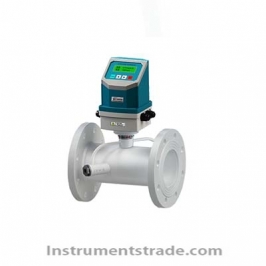
    The TY-30GD Inline Electromagnetic Flow Meter is designed for measuring the volumetric flow rate of conductive liquids in industrial pipelines. Based on Faraday's law of electromagnetic induction, it provides a linear measurement signal without introducing a constricting flow element into the measuring tube.
    Available with different nominal diameters and liner materials, the TY-30GD supports applications involving water, wastewater, slurry, pulp, and compatible corrosive liquids. Its full-bore measuring structure helps minimize additional pressure loss and reduces the risk of blockage when handling fluids containing suspended solids or fibers.
    With bidirectional flow measurement, multiple signal outputs, and optional high-protection configurations, the TY-30GD can be integrated into water treatment, chemical processing, metallurgy, mining, and other industrial flow monitoring systems.


    Performance Features
    •  Full-Bore Pipeline Design: A smooth measuring passage without obstructive sensing components supports flow measurement of liquids containing suspended particles and fibers.
    •  Low Pressure Loss: The meter introduces no significant additional pressure loss from a constricted measuring section.
    •  Bidirectional Measurement: Supports forward flow, reverse flow, and net flow measurement.
    •  Multiple Diameter Options: Available in nominal sizes from DN10 to DN2000, depending on liner configuration.
    •  Flexible Liner Materials: Options include standard rubber, high-temperature rubber, PTFE, and high-temperature PTFE.
    •  Wide Flow Range: Standard velocity range of 0.5–10 m/s, with a customized lower limit of 0.3 m/s.
    • Multiple Accuracy Classes: Available in Class 0.5 and Class 1.0 configurations.
    •  Broad Turndown Ratio: Standard range ratio of 1:20, with 1:30 available by customization.
    • Industrial Communication: Supports 4–20 mA, pulse-frequency output, RS485, HART, and Modbus, subject to configuration.
    • Flexible Installation: Flanged pipeline connections simplify integration into compatible piping systems.
    • Corrosion-Resistant Options: Liner and wetted-part materials can be selected according to the chemical compatibility requirements of the process fluid.
    • Industrial Enclosure Protection: IP67 protection is specified, with special configurations available up to IP68.


    Working Principle
    The TY-30GD operates according to Faraday's law of electromagnetic induction. Excitation coils generate a magnetic field across the measuring tube. When a conductive liquid flows through this field, an induced voltage proportional to the average flow velocity is generated across electrodes in contact with the liquid.
    The transmitter processes the electrode signal and converts it into a flow measurement. Because the measurement is based on electromagnetic induction rather than mechanical movement, the instrument has no moving parts and is largely unaffected by changes in fluid density, viscosity, temperature, or pressure within its specified operating conditions.
    The meter can measure forward and reverse flow, making it suitable for pipelines where flow direction changes during operation. The liquid must have sufficient electrical conductivity for reliable measurement.


    Technical Parameters
    Parameter Specification
    Model TY-30GD
    Instrument Type Inline electromagnetic flow meter
    Applicable Standard JB/T 9248-2015
    Nominal Diameter, Rubber Liner DN65–DN2000
    Nominal Diameter, F46/PTFE Liner DN10–DN600
    Flow Direction Forward, reverse, and net flow
    Range Ratio 1:20; customized 1:30
    Repeatability Error ±0.1% of measured value
    Accuracy Class Class 0.5 or Class 1.0
    Standard Flow Velocity 0.5–10 m/s
    Customized Flow Velocity 0.3–10 m/s
    Minimum Fluid Conductivity Source specification unclear; confirm with manufacturer
    Standard Rubber Liner Temperature −20°C to +60°C
    High-Temperature Rubber Liner −20°C to +90°C
    PTFE Liner Temperature −30°C to +120°C
    High-Temperature PTFE Liner −20°C to +160°C
    Rated Pressure, DN15–DN25 ≤4.0 MPa
    Rated Pressure, DN32–DN300 ≤1.6 MPa
    Rated Pressure, DN350–DN800 ≤1.0 MPa
    Rated Pressure, DN800–DN2000 ≤0.6 MPa
    Higher Pressure Customization available
    Analog Output 4–20 mA
    Other Outputs Pulse-frequency output
    Communication Interfaces RS485, HART, Modbus
    Power Supply 220 VAC ±15% or 24 VDC
    DC Ripple Source lists ≤55%; confirm the intended specification
    Recommended Straight Pipe Length Upstream ≥5DN; downstream ≥3DN
    Connection Flanged
    Flange Standard GB/T 9119-2000, as specified; confirm the applicable edition and flange configuration
    Protection Rating IP67; special configurations up to IP68
    Ambient Temperature −25°C to +60°C
    Relative Humidity 5%–95%
    Power Consumption Less than 5 W
    Important: The source contains a few unclear or potentially inconsistent entries, including minimum conductivity, DC ripple, the duplicated DN800 pressure boundary, and the flange-standard reference. Confirm these details with the manufacturer before procurement or engineering design.


    Application Scenarios
    •  Municipal Water Supply: Measuring water flow in distribution networks and large-diameter pipelines.
    •  Wastewater Treatment: Monitoring influent, effluent, and conductive process wastewater.
    • Pulp and Paper Manufacturing: Measuring pulp, black liquor, and other compatible process liquids containing fibers.
    • Mining and Mineral Processing: Monitoring conductive mineral slurry and coal-water slurry.
    •  Metallurgy: Measuring compatible process liquids and cooling-water flow.
    • Chemical Processing: Measuring conductive corrosive liquids when the selected liner and electrode materials are chemically compatible.
    •  Industrial Cooling Systems: Monitoring cooling water and circulation systems.
    • Long-Distance Slurry Transport: Supporting flow monitoring in suitable conductive-liquid pipeline transport systems.
    •  Food, Pharmaceutical, and Biotechnology Processes: Potentially suitable when the selected materials and sanitary design meet the application's hygiene requirements.


    TY-30GD vs. TY-30CR Insertion Electromagnetic Flow Meter
    Comparison Item TY-30GD Inline Type TY-30CR Insertion Type
    Measuring Structure Full-bore measuring tube Probe inserted into the pipeline
    Stated Pipe Diameter DN10–DN2000, depending on liner DN100–DN700
    Measurement Method Electromagnetic induction across the measuring tube Electromagnetic induction using an insertion probe
    Flow Profile Coverage Measures through the full measuring section Samples flow locally and relies on installation and calibration
    Pressure Loss Very low; no significant constriction-related loss Very low; insertion probe occupies only part of the pipe
    Solid-Laden Liquids Smooth bore supports many slurry and fiber-containing applications Suitability depends on probe design and fluid characteristics
    Installation Flanged installation of a meter section Insertion fitting; hot-tap installation may be possible with suitable equipment
    Liner Selection Multiple liner materials for different fluid conditions Depends on sensor construction
    Best Suited For New installations and applications requiring full-bore measurement Large-pipe retrofits where insertion installation may reduce cost
    The most suitable model depends on pipeline size, required accuracy, fluid conductivity, solids content, installation constraints, and maintenance requirements.


    Frequently Asked Questions
    1. What is the TY-30GD electromagnetic flow meter used for?
    It measures the volumetric flow rate of conductive liquids in industrial pipelines, including water, wastewater, pulp, slurry, and compatible chemical liquids.
    2. What pipeline sizes are available?
    The stated range is DN65–DN2000 for rubber-lined versions and DN10–DN600 for F46/PTFE-lined versions. Confirm availability for the selected diameter and liner combination.
    3. Can the TY-30GD measure reverse flow?
    Yes. The specified measurement directions include forward flow, reverse flow, and net flow, making it suitable for systems where flow direction changes.
    4. What accuracy options are available?
    The listed accuracy classes are Class 0.5 and Class 1.0, with a stated repeatability error of ±0.1% of the measured value. Confirm the accuracy definition and applicable operating conditions for the selected model.
    5. Which liner materials can be selected?
    Options include standard rubber, high-temperature rubber, PTFE, and high-temperature PTFE. The choice should be based on fluid temperature, chemical compatibility, abrasion characteristics, and operating pressure.
    6. What is the maximum operating temperature?
    The specified maximum depends on the liner: +60°C for standard rubber, +90°C for high-temperature rubber, +120°C for PTFE, and +160°C for high-temperature PTFE.
    7. Can the meter measure slurry and liquids containing suspended solids?
    Yes. Its unobstructed full-bore measuring passage is suitable for many conductive liquids containing suspended particles or fibers. Actual suitability depends on particle size, solids concentration, abrasion, conductivity, and the selected liner.
    8. Which output and communication options are supported?
    The listed options include 4–20 mA, pulse-frequency output, RS485, HART, and Modbus. Confirm which interfaces are included in the selected transmitter configuration.
    9. What installation conditions are recommended?
    The stated straight-pipe requirements are at least 5 pipe diameters upstream and 3 pipe diameters downstream. Flanged connections are specified. Actual requirements may vary with upstream disturbances, reducers, pumps, valves, and the manufacturer's installation guidance.


  • Frequently Asked Questions
    1. What is the TY-30GD electromagnetic flow meter used for?
    It measures the volumetric flow rate of conductive liquids in industrial pipelines, including water, wastewater, pulp, slurry, and compatible chemical liquids.
    2. What pipeline sizes are available?
    The stated range is DN65–DN2000 for rubber-lined versions and DN10–DN600 for F46/PTFE-lined versions. Confirm availability for the selected diameter and liner combination.
    3. Can the TY-30GD measure reverse flow?
    Yes. The specified measurement directions include forward flow, reverse flow, and net flow, making it suitable for systems where flow direction changes.
    4. What accuracy options are available?
    The listed accuracy classes are Class 0.5 and Class 1.0, with a stated repeatability error of ±0.1% of the measured value. Confirm the accuracy definition and applicable operating conditions for the selected model.
    5. Which liner materials can be selected?
    Options include standard rubber, high-temperature rubber, PTFE, and high-temperature PTFE. The choice should be based on fluid temperature, chemical compatibility, abrasion characteristics, and operating pressure.
    6. What is the maximum operating temperature?
    The specified maximum depends on the liner: +60°C for standard rubber, +90°C for high-temperature rubber, +120°C for PTFE, and +160°C for high-temperature PTFE.
    7. Can the meter measure slurry and liquids containing suspended solids?
    Yes. Its unobstructed full-bore measuring passage is suitable for many conductive liquids containing suspended particles or fibers. Actual suitability depends on particle size, solids concentration, abrasion, conductivity, and the selected liner.
    8. Which output and communication options are supported?
    The listed options include 4–20 mA, pulse-frequency output, RS485, HART, and Modbus. Confirm which interfaces are included in the selected transmitter configuration.
    9. What installation conditions are recommended?
    The stated straight-pipe requirements are at least 5 pipe diameters upstream and 3 pipe diameters downstream. Flanged connections are specified. Actual requirements may vary with upstream disturbances, reducers, pumps, valves, and the manufacturer's installation guidance.


Products
Analytical instruments
Physical property test
Environmental monitoring and analysis
Lab general equipment
About us
About this website
Our service
Product purchase
Contact Us

Newsletter

Make Sure you dont miss interesting happenings by joining our newsletter program.

Contact Us
+86-18620722006
instruments@instrumentstrade.com