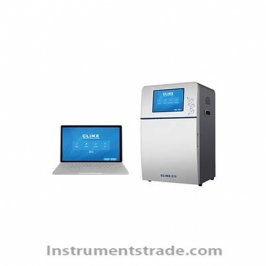
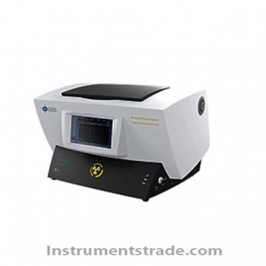
RPP-500A Microcoulometric Sulfur and Chlorine Analyzer Introduction: The RPP-500A microcoulometric sulfur and chlorine analyzer utilizes the microcoulometric titration principle, with computer control for data acquisition and processing. The instrument employs the microcoulometric principle, where the sample is carried into the pyrolysis tube by a carrier gas and fully combusted with oxygen. The sulfur or chlorine in the sample is then carried into the titration cell by the carrier gas for titration, consuming the titrant in the electrolyte. The electricity generated is equal to the amount of titrant consumed. By measuring the electricity consumed during the electrolysis process, the content of the element to be measured in the sample can be calculated based on Faraday's law. Depending on different configurations, the analyzer can measure the content of sulfur or chlorine in the sample separately. The analyzer is used in petrochemical, coal chemical, aromatic hydrocarbon, and other measurements. It has advantages such as high sensitivity and good repeatability. Features: 1. The quartz pyrolysis tube is made of imported high-purity quartz material, ensuring thorough sample pyrolysis and rapid reaction. Using a high-precision quartz pyrolysis tube can increase the sample injection volume, thereby improving the detection accuracy and 2. Temperature control system: Air cooling replaces water cooling, with automatic on/off of cooling fans, eliminating the need for personnel to wait for shutdown. The instrument alarms and automatically corrects for overtemperature, preventing the cracking furnace from easily burning out. The two-stage heating method controls the temperature between 900℃ and 1200℃. The use of low-voltage power supply effectively reduces the total power and extends the service life of the furnace. Gasification and cracking 3. The sample is fully lysed and reacts quickly. The electrolytic cell and quartz tube adopt * technology. The high-precision quartz cracking tube can increase the sample injection volume, improving the detection accuracy and repeatability. 4. The sample feeder adopts a wheeled sample feeding mechanism, equipped with an imported stepper motor for precise control, ensuring noiseless sample feeding. 5. The use of corrosion-resistant electrode caps prevents large errors in detection results caused by corrosion of the electrode caps by the electrolyte and poor electrode contact. 6. Gas pressure stabilization system: A pressure stabilization system has been installed in the gas circuit to avoid interference from gas pressure fluctuations on the measurement. The gas pipeline is made of imported passivated stainless steel, reducing adsorption force. 7. Gas flow control: A mass flowmeter is used to control the gas flow through computer control, ensuring stable and precise gas flow without fluctuations. The instrument has better repeatability and measurement accuracy for small-content samples 8. The sample feeder adopts a wheeled sample feeding mechanism, equipped with an imported stepper motor for precise control, ensuring noiseless sample feeding. 9. Syringe sampling system: The sampling speed is constant, and it can be adjusted according to the sample 10. Data Processing: Fully computer-controlled, including sample injection, electrolysis, measurement, endpoint detection, integration, and data processing, displaying the entire process status, parameters, measurement peak shape, and test samples all on the same interface. It features automatic calculation of concentration and content, and allows for querying, storing, and printing of spectrograms and test results. 11. Operating platform: Windows operating platform, featuring human-machine interaction and convenient operation. 12. Result printing: It can print test data and final analysis reports, and can be edited using EXCEL. 13. The independent and movable workbench inside the mixer ensures flexible and convenient connection of gas pipelines. 14. Liquid injector, solid injector, gas injector, and solid-liquid integrated injector can be selected according to the sample status Technical Specifications: Sample status: gas, liquid, solid (corresponding sample injector is optional) Gas source requirements: Nitrogen purity of 99.95%, output pressure ≤ 0.2 MPa; Oxygen purity of 99.95%, output pressure ≤ 0.2 MPa Analysis time: 2min Support connection to LIMS system Power Supply: AC 220V±22V, 50Hz±0.5Hz; Power: 3000W Measurement range: S: 0.2mg/L to 10000mg/L (percentage content); Cl: 0.2mg/L to 10000mg/L (percentage content) Repeatability accuracy: 0.2mg/L≤ sample (or standard sample) concentration < 1.0 mg/L, ±0.1 1.0mg/L≤sample (or standard sample) concentration≤10 mg/L, ≤8% The concentration of the sample (or standard sample) is greater than 10 mg/L,
RPP-500A Microcoulometric Sulfur and Chlorine Analyzer Introduction: The RPP-500A microcoulometric sulfur and chlorine analyzer utilizes the microcoulometric titration principle, with computer control for data acquisition and processing. The instrument employs the microcoulometric principle, where the sample is carried into the pyrolysis tube by a carrier gas and fully combusted with oxygen. The sulfur or chlorine in the sample is then carried into the titration cell by the carrier gas for titration, consuming the titrant in the electrolyte. The electricity generated is equal to the amount of titrant consumed. By measuring the electricity consumed during the electrolysis process, the content of the element to be measured in the sample can be calculated based on Faraday's law. Depending on different configurations, the analyzer can measure the content of sulfur or chlorine in the sample separately. The analyzer is used in petrochemical, coal chemical, aromatic hydrocarbon, and other measurements. It has advantages such as high sensitivity and good repeatability.