Position: Home > > Analytical instruments > Elemental Analyzer > Metal element analyzer > QL-BS1000B Almighty Precise Elemental Analyzer

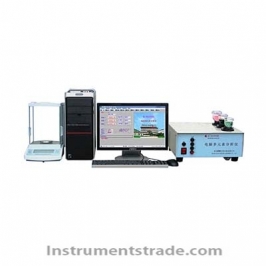
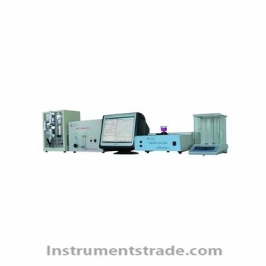
QL-BS1000B Almighty Precise Elemental Analyzer

Product ID:FYjsys001

Price: Please inquire PDF Format
Supply Ability:50SETS/MON
Port:SHENZHEN
  • Product Introduction
  • Other information
  • Model NumberQL- BS1000B
    Brand NameNJQILIN
    Payment TermsTT,PAYPAL,Alibaba.com Pay
    QL-BS1000B Almighty Precise Elemental Analyzer
     
    Product Introduction
    The QL-BS1000B Almighty Precise Elemental Analyzer is a compact and highly automated photometric elemental analyzer designed for rapid quantitative analysis of elements in steel, non-ferrous metals, alloys, and other materials.
    The instrument uses a continuously tunable wavelength light source covering 400–800 nm, expanding the range of photometric applications while improving analytical accuracy. As long as an element can be determined by a suitable photometric method, the QL-BS1000B can be configured for its analysis.
    The analyzer is particularly suitable for determining elements such as silicon, manganese, phosphorus, nickel, chromium, and copper in metal and alloy samples. It can support incoming-material inspection, finished-product testing, foundry analysis, metallurgical quality control, blast-furnace-related testing, machinery manufacturing, and chemical industry applications.
    Using microcontroller-based control and data processing, the QL-BS1000B automatically performs analytical calculations and can directly display concentration or mass fraction results. Its compact design, low power consumption, cold-light-source technology, self-calibration, and internal EEPROM data storage make it suitable for routine laboratory and production-site elemental analysis.


    Main Features
    •  Continuously tunable wavelength system covering 400–800 nm
    •  Improved wavelength accuracy of ±3 nm
    •  Designed for photometric determination of multiple elements
    •  Suitable for steel, non-ferrous metals, alloys, and other materials
    •  Rapid and quantitative elemental analysis
    •  Microcontroller-based automatic control and data processing
    •  Direct display of concentration or mass fraction
    •  Can store up to 9 calibration curves
    •  Internal EEPROM retains stored data for up to 10 years
    •  Patented cold-light-source technology
    •  Imported optical components for stable optical performance
    •  Automatic zero and full-scale calibration
    •  Shortcut-key operation for efficient testing
    •  Quick replacement of cuvettes with different optical thicknesses
    •  External sample dissolution design for convenient operation
    •  No complex valves or internal piping, reducing aging-related maintenance
    •  Compact and lightweight design
    •  Low power consumption of ≤45 W


    Working Principle
    The QL-BS1000B uses a photometric elemental analysis principle.
    After sample preparation and dissolution, the target element reacts with a suitable reagent to form a colored compound or analytical species. The instrument selects the appropriate wavelength within its 400–800 nm continuously adjustable range and passes the light through the prepared sample.
    The detector measures the resulting absorbance. Based on the established calibration curve, the microcontroller processes the absorbance signal and calculates the corresponding elemental concentration or mass fraction.
    The instrument supports multiple calibration curves, allowing different elements and analytical methods to be configured for routine testing. Automatic zero and full-scale calibration helps maintain measurement stability and repeatability.


    Technical Parameters
    Parameter Specification
    Model QL-BS1000B
    Product Type Almighty Precise Elemental Analyzer
    Analysis Principle Photometric / Spectrophotometric Elemental Analysis
    Wavelength Range 400–800 nm
    Wavelength Adjustment Continuously adjustable
    Wavelength Accuracy ±3 nm
    Absorbance Range 0–1.999 A
    Concentration Range 0.000–99.99%
    Display 1-inch digital display tube
    Range Switching Automatic
    Calibration Curves Up to 9 curves
    Data Storage Internal EEPROM
    Data Retention Up to 10 years
    Control Microcontroller
    Calibration Automatic zero and full-scale calibration
    Power Supply AC 220 V ±10%, 50 Hz ±5%
    Power Consumption ≤45 W
    Weight ≤15 kg


    Applicable Elements and Materials
    The QL-BS1000B is designed for photometric determination of multiple elements. Typical applications include:
    •  Silicon (Si)
    •  Manganese (Mn)
    •  Phosphorus (P)
    •  Nickel (Ni)
    •  Chromium (Cr)
    •  Copper (Cu)
    The actual measurable elements depend on the selected analytical method, reagents, calibration curves, and sample matrix.
    It can be used for:
    •  Carbon and alloy steel analysis
    •  Non-ferrous metals
    •  Metal alloys
    •  Foundry materials
    •  Metallurgical samples
    •  Incoming raw-material inspection
    •  Finished-product quality control


    Application Scenarios
    Metallurgy and Foundries
    Rapid analysis of elemental composition in steel, cast materials, and metal alloys for production and quality control.
    Machinery Manufacturing
    Incoming material inspection and finished-product testing to verify alloy composition and ensure material consistency.
    Chemical Industry
    Photometric determination of target elements in suitable prepared samples and process materials.
    Blast Furnace and Metallurgical Production
    Multi-element testing associated with metallurgical production and material quality monitoring.
    Laboratory Quality Control
    Routine quantitative elemental analysis where a flexible photometric wavelength system is required.


    QL-BS1000B vs. Conventional Elemental Analyzers
    Feature QL-BS1000B Conventional Fixed-Wavelength Elemental Analyzer
    Wavelength 400–800 nm continuously adjustable Usually fixed or limited wavelengths
    Wavelength Accuracy ±3 nm May be lower depending on instrument
    Analytical Flexibility High More method-dependent
    Photometric Elements Multiple Often limited by installed wavelengths
    Calibration Curves Up to 9 Configuration-dependent
    Control MCU automatic control Manual or electronic control
    Zero Calibration Automatic May require manual operation
    Full-Scale Calibration Automatic Often manual
    Data Storage EEPROM, up to 10 years Depends on system
    Sample Handling External dissolution Configuration-dependent
    Portability ≤15 kg Varies
    Power Consumption ≤45 W Often higher
    The QL-BS1000B precise elemental analyzer offers greater analytical flexibility than conventional fixed-wavelength systems because its wavelength can be continuously adjusted from 400 to 800 nm. This makes it possible to accommodate a wider variety of photometric elemental analysis methods while maintaining improved wavelength accuracy.


    Frequently Asked Questions (FAQ)
    1. What is the QL-BS1000B Elemental Analyzer used for?
    The QL-BS1000B is used for quantitative photometric analysis of elements in steel, non-ferrous metals, alloys, and other suitable materials.
    2. What is the wavelength range?
    The analyzer provides a continuously adjustable wavelength range of 400–800 nm.
    3. Which elements can be analyzed?
    Typical target elements include silicon, manganese, phosphorus, nickel, chromium, and copper. The actual elemental range depends on the selected analytical method and reagents.
    4. What is the wavelength accuracy?
    The wavelength accuracy is ±3 nm, providing improved precision compared with many conventional fixed-wavelength elemental analyzers.
    5. Can the instrument analyze different elements?
    Yes. The continuously adjustable wavelength system allows the instrument to support different photometric methods. Up to nine calibration curves can be stored.
    6. What is the concentration measurement range?
    The specified concentration range is 0.000–99.99%, with automatic range switching.
    7. How is analytical data stored?
    Measurement and calibration data are stored in the internal EEPROM, with data retention of up to 10 years without requiring conventional long-term external storage.
    8. Is the QL-BS1000B suitable for field or production-site testing?
    Yes. Its compact design, ≤15 kg weight, low power consumption, and straightforward operation make it suitable for laboratories as well as material inspection and production environments.
    9. Does the instrument require complicated internal piping?
    No. The QL-BS1000B uses an external sample dissolution design, eliminating complex internal valves and piping and helping reduce maintenance associated with aging components.


    Conclusion
    The QL-BS1000B Almighty Precise Elemental Analyzer is a flexible tunable-wavelength photometric elemental analyzer designed for rapid and quantitative analysis of metals and alloys. Its 400–800 nm continuously adjustable wavelength, ±3 nm wavelength accuracy, automatic calibration, MCU control, nine calibration curves, and long-term EEPROM data storage provide a practical solution for multi-element analysis.
    The analyzer is particularly suitable for steel and non-ferrous alloy testing, metallurgy, foundries, machinery manufacturing, chemical laboratories, incoming material inspection, and finished-product quality control.


  • Frequently Asked Questions (FAQ)
    1. What is the QL-BS1000B Elemental Analyzer used for?
    The QL-BS1000B is used for quantitative photometric analysis of elements in steel, non-ferrous metals, alloys, and other suitable materials.
    2. What is the wavelength range?
    The analyzer provides a continuously adjustable wavelength range of 400–800 nm.
    3. Which elements can be analyzed?
    Typical target elements include silicon, manganese, phosphorus, nickel, chromium, and copper. The actual elemental range depends on the selected analytical method and reagents.
    4. What is the wavelength accuracy?
    The wavelength accuracy is ±3 nm, providing improved precision compared with many conventional fixed-wavelength elemental analyzers.
    5. Can the instrument analyze different elements?
    Yes. The continuously adjustable wavelength system allows the instrument to support different photometric methods. Up to nine calibration curves can be stored.
    6. What is the concentration measurement range?
    The specified concentration range is 0.000–99.99%, with automatic range switching.
    7. How is analytical data stored?
    Measurement and calibration data are stored in the internal EEPROM, with data retention of up to 10 years without requiring conventional long-term external storage.
    8. Is the QL-BS1000B suitable for field or production-site testing?
    Yes. Its compact design, ≤15 kg weight, low power consumption, and straightforward operation make it suitable for laboratories as well as material inspection and production environments.
    9. Does the instrument require complicated internal piping?
    No. The QL-BS1000B uses an external sample dissolution design, eliminating complex internal valves and piping and helping reduce maintenance associated with aging components.

     
Products
Analytical instruments
Physical property test
Environmental monitoring and analysis
Lab general equipment
About us
About this website
Our service
Product purchase
Contact Us

Newsletter

Make Sure you dont miss interesting happenings by joining our newsletter program.

Contact Us
+86-18620722006
instruments@instrumentstrade.com