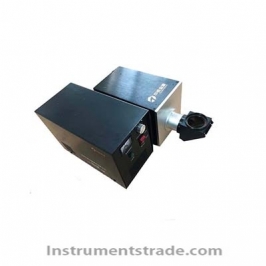
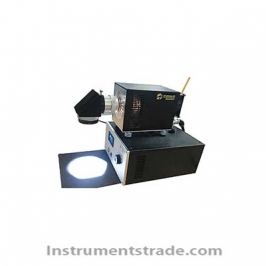
Position: Home > > Optical instruments and equipment > Optical experimental equipment > Light source > PLS-AL150300 Continuously Tunable Wavelength Light Source

PLS-AL150300 Continuously Tunable Wavelength Light Source

Product ID:GSYgy016

Price: Please inquire PDF Format
Supply Ability:50 SETS/MON
Port:SHENZHEN
  • Product Introduction
  • Other information
  • Model NumberPLS-AL150300
    Brand NameBOFEILAI
    Payment TermsTT,PAYPAL,Alibaba.com Pay
    PLS-AL150300 Continuously Tunable Wavelength Light Source
     
    Product Introduction
    The PLS-AL150300 Continuously Tunable Wavelength Light Source is designed for photocatalysis, photochemistry, photoelectrochemistry, IPCE measurements, and solar cell research where high-energy monochromatic illumination is required over a relatively narrow wavelength range.
    Unlike conventional monochromators that primarily emphasize high spectral purity and stray-light suppression but may provide insufficient output energy, the PLS-AL150300 increases the output/input energy ratio by using a wider entrance slit design. This significantly increases monochromatic light intensity from approximately 200–400 μW to the mW level, providing stronger optical output for light-driven research applications.
    With a wavelength output range of 200–800 nm, minimum wavelength step of 1 nm, and selectable output bandwidths of 1, 2, 5, 10, and 20 nm, the system provides flexible wavelength control for a wide range of optical and photoelectrochemical experiments.


    Performance Features
    •  Continuously tunable wavelength: Adjustable wavelength output from 200 to 800 nm for broad-spectrum research.
    • Higher optical output: Optimized entrance-slit design increases the output/input energy ratio and provides substantially higher monochromatic light intensity.
    •  High monochromaticity: Specialized optical component design provides high wavelength selectivity.
    •  Low stray light: Stray light is specified at 5 × 10⁻⁴, supporting sensitive optical measurements.
    •  1 nm minimum wavelength step: Enables precise wavelength adjustment for wavelength-dependent experiments.
    •  Selectable output bandwidth: Slit settings provide 20, 10, 5, 2, and 1 nm output bandwidths.
    • High-quality imported grating: Uses a high-quality imported diffraction grating with a 2400 L/mm ruling.
    • Large wavelength range: 200–800 nm coverage supports photocatalysis, photoelectrochemistry, and solar cell research.
    •  Optional motorized filter wheel: Four-position motorized filter wheel can be equipped for second-order diffraction suppression.
    • Convenient operation: Motorized filter selection simplifies experimental operation and wavelength-dependent measurements.


    Working Principle
    The PLS-AL150300 uses an optical wavelength-selection system based on a diffraction grating and adjustable slit structure.
    Incident light enters the optical system through the entrance slit and is dispersed by the diffraction grating according to wavelength. By adjusting the wavelength-selection mechanism, a specific wavelength range can be continuously selected and output through the exit slit.
    Compared with conventional monochromators optimized primarily for extremely narrow spectral bandwidth and low stray light, the PLS-AL150300 adopts a relatively wider entrance-slit design to increase the optical energy reaching the output. This allows stronger monochromatic illumination while maintaining useful wavelength selectivity for photocatalytic and photoelectrochemical experiments.
    The optional four-position motorized filter wheel can be used to suppress second-order diffraction, improving the suitability of the output for wavelength-specific measurements.


    Technical Specifications
    Parameter Specification
    Model PLS-AL150300
    Type Continuously Tunable Wavelength Light Source
    Focal Length 150 mm
    F/T F/2.5
    Stray Light 5 × 10⁻⁴
    Minimum Wavelength Step 1 nm
    Grating Type High-quality imported grating
    Effective Grating Area 45 × 45 mm
    Grating Groove Density 2400 L/mm
    Grating Blaze Wavelength 300 nm
    Wavelength Output Range 200–800 nm
    Output Bandwidth 20, 10, 5, 2, 1 nm
    Slit Multi-step adjustable
    Filter Wheel Optional
    Filter Wheel Type 4-position motorized filter wheel
    Filter Function Second-order diffraction suppression


    Application Scenarios
    The PLS-AL150300 tunable wavelength light source is suitable for research applications requiring wavelength-selectable and relatively high-energy monochromatic illumination, including:
    •  Photocatalysis research
    •  Photochemistry experiments
    •  Photoelectrochemical research
    •  IPCE (Incident Photon-to-Current Efficiency) measurements
    •  Solar cell research
    •  Semiconductor photoresponse studies
    •  Wavelength-dependent optical experiments
    •  Light-driven material research
    •  Laboratory spectroscopy and photochemical testing


    PLS-AL150300 vs. Conventional Monochromator
    Feature PLS-AL150300 Tunable Light Source Conventional Monochromator
    Primary Design Focus Wavelength-selectable illumination with higher optical output Often optimized for monochromatic signal/weak excitation
    Wavelength Range 200–800 nm Depends on configuration
    Minimum Step 1 nm Depends on configuration
    Output Energy Designed for substantially higher optical output May be insufficient for some photocatalytic applications
    Output Bandwidth 1–20 nm selectable Commonly optimized toward narrower bandwidth
    Stray Light 5 × 10⁻⁴ Depends on model
    Grating 2400 L/mm imported grating Depends on model
    Photocatalysis Suitable for high-energy monochromatic illumination May be limited by output energy
    Photoelectrochemistry/IPCE Suitable Depends on optical output
    Filter Wheel Optional 4-position motorized wheel Depends on configuration


    FAQ
    1.  What is the wavelength range of the PLS-AL150300?
    The continuously tunable wavelength output range is 200–800 nm.
    2. What is the minimum wavelength adjustment step?
    The minimum wavelength step is 1 nm.
    3. What output bandwidths are available?
    The output bandwidth can be selected as 20, 10, 5, 2, or 1 nm through the adjustable slit configuration.
    4. Why is the PLS-AL150300 suitable for photocatalysis?
    Its optical design increases the output/input energy ratio, providing substantially higher monochromatic optical output than conventional low-energy monochromator applications.
    5. Can the PLS-AL150300 be used for IPCE measurements?
    Yes. The higher-energy wavelength-selectable output is designed to support IPCE and related photoelectrochemical measurements.
    6. What type of grating does the system use?
    It uses a high-quality imported grating with a 2400 L/mm groove density and a 300 nm blaze wavelength.
    7. Is a motorized filter wheel available?
    Yes. A four-position motorized filter wheel is available as an option and is used for second-order diffraction suppression.
    8. What is the stray-light specification?
    The specified stray light is 5 × 10⁻⁴.

  • FAQ
    1.  What is the wavelength range of the PLS-AL150300?
    The continuously tunable wavelength output range is 200–800 nm.
    2. What is the minimum wavelength adjustment step?
    The minimum wavelength step is 1 nm.
    3. What output bandwidths are available?
    The output bandwidth can be selected as 20, 10, 5, 2, or 1 nm through the adjustable slit configuration.
    4. Why is the PLS-AL150300 suitable for photocatalysis?
    Its optical design increases the output/input energy ratio, providing substantially higher monochromatic optical output than conventional low-energy monochromator applications.
    5. Can the PLS-AL150300 be used for IPCE measurements?
    Yes. The higher-energy wavelength-selectable output is designed to support IPCE and related photoelectrochemical measurements.
    6. What type of grating does the system use?
    It uses a high-quality imported grating with a 2400 L/mm groove density and a 300 nm blaze wavelength.
    7. Is a motorized filter wheel available?
    Yes. A four-position motorized filter wheel is available as an option and is used for second-order diffraction suppression.
    8. What is the stray-light specification?
    The specified stray light is 5 × 10⁻⁴.
Products
Analytical instruments
Physical property test
Environmental monitoring and analysis
Lab general equipment
About us
About this website
Our service
Product purchase
Contact Us

Newsletter

Make Sure you dont miss interesting happenings by joining our newsletter program.

Contact Us
+86-18620722006
instruments@instrumentstrade.com