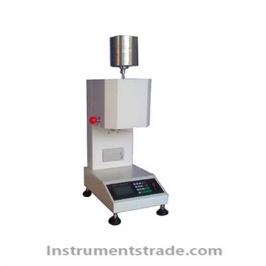
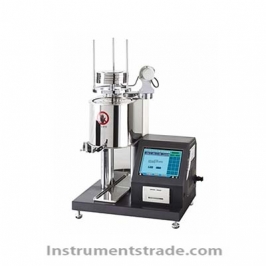
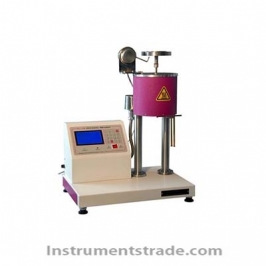
MZ-2028 Melt Flow Rate Tester Introduction: The MZ-2028 Melt Flow Rate Tester is used to measure the melt mass flow rate (MFR) of various polymers in the viscous flow state. It is suitable for testing engineering plastics with higher melting temperatures, such as polycarbonate, polyarylene sulfone, fluoroplastics, and nylon, as well as plastics with lower melting temperatures, such as polyethylene, polystyrene, polypropylene, ABS resin, and polyoxymethylene resin. It complies with the requirements for determining the melt mass flow rate of thermoplastics specified in GB/T 3682-2000 "Determination of Melt Mass Flow Rate and Melt Volume Flow Rate of Thermoplastics". This standard is equivalent to ISO 1133:1997 and also meets the ASTM D1238 testing standard. It is widely used in industries such as plastic production, plastic products, petrochemicals, as well as in relevant universities, research institutions, and commodity inspection departments. Technical Specifications Temperature range: room temperature to 300℃ Temperature fluctuation: ±0.5℃ Temperature display resolution: 0.1℃ Barrel diameter: ф9.55mm±0.025mm Inner diameter of die: ф2.095mm±0.005mm Power Supply: AC220V±10% 50Hz 1kW Overall dimensions: 300mm×400mm×500mm Net weight: 34kg
MZ-2028 Melt Flow Rate Tester Introduction: The MZ-2028 Melt Flow Rate Tester is used to measure the melt mass flow rate (MFR) of various polymers in the viscous flow state. It is suitable for testing engineering plastics with higher melting temperatures, such as polycarbonate, polyarylene sulfone, fluoroplastics, and nylon, as well as plastics with lower melting temperatures, such as polyethylene, polystyrene, polypropylene, ABS resin, and polyoxymethylene resin. It complies with the requirements for determining the melt mass flow rate of thermoplastics specified in GB/T 3682-2000 "Determination of Melt Mass Flow Rate and Melt Volume Flow Rate of Thermoplastics". This standard is equivalent to ISO 1133:1997 and also meets the ASTM D1238 testing standard. It is widely used in industries such as plastic production, plastic products, petrochemicals, as well as in relevant universities, research institutions, and commodity inspection departments.