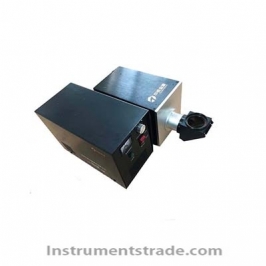
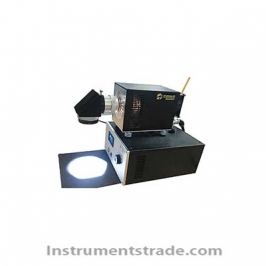
MC-PF300UV Xenon Light Source System (UV Enhanced) Introduction: The MC-PF300UV xenon lamp light source system is suitable for: photocatalytic water splitting for hydrogen/oxygen production; photocatalytic water splitting; photocatalytic CO2 reduction; photodegradation of gaseous pollutants; photocatalytic quantum efficiency measurement; PEC photoelectrochemical analysis, etc. Features: 1. Body material: High-density non-metallic body, with insulation performance of Class B, ensuring safety and reliability 2. Triggering method: 30KV high-voltage triggering, with the triggering device integrated into the lamp head, ensuring easy and barrier-free triggering 3. Spot uniformity: Install a uniform light component to meet the Class B standard of the solar simulator, with non-uniformity <5% 4. Power stability: Stable power output with a power error of less than 3% 5. Ultra-high light intensity: With a brand-new light path design, the ideal light intensity can reach up to 30 times that of the sun 6. Port coupling: It can be coupled with other auxiliary devices such as fiber optics, electronic shutters, uniform light lenses, and filters Technical Specifications: Light source structure: Split-type light source Control mode: manual electric control Power adjustment: rotary knob navigation adjustment Bulb power: 300W Power adjustment range: continuously adjustable from 150W to 320W; Current regulation range: 11-22A; operating voltage 14V, safe and reliable; Spectral range: 300nm~2500nm (200nm~2500nm optional) Optical power density: 100mw/cm2 – 3500mw/cm2 Divergent angle of parallel light: greater than 2° Heat dissipation form: axial heat dissipation module Bulb lifespan: over 1000 hours Experimental spot: 60mm diameter circular spot
MC-PF300UV Xenon Light Source System (UV Enhanced) Introduction: The MC-PF300UV xenon lamp light source system is suitable for: photocatalytic water splitting for hydrogen/oxygen production; photocatalytic water splitting; photocatalytic CO2 reduction; photodegradation of gaseous pollutants; photocatalytic quantum efficiency measurement; PEC photoelectrochemical analysis, etc.