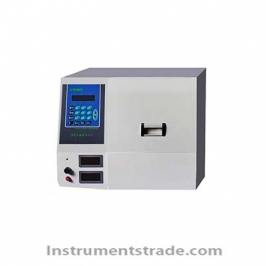
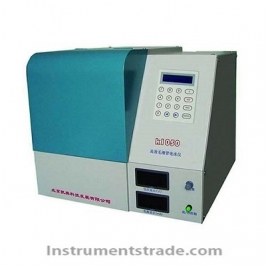
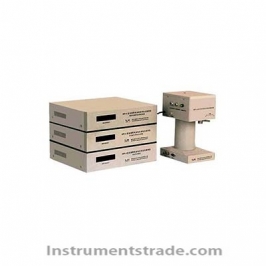
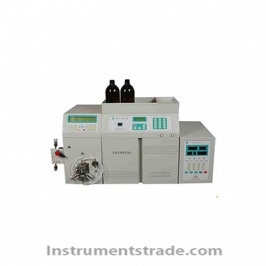
K7010 capillary electrophoresis system Introduction: Capillary electrophoresis, also known as high-performance capillary electrophoresis, is a new type of liquid-phase separation technology that uses capillaries as separation channels and high-voltage direct current electric fields as driving forces. Capillary electrophoresis actually involves electrophoresis, chromatography, and their intersection, enabling analytical chemistry to move from microliter level to nanoliter level and making single-cell and even single-molecule analysis possible. Technical parameters: 1. Automatic sampling system 1.1. The injection port can be programmed from 0 to+100KPa 1.2. Rinse with 1-100KPa 1.3 Apply high pressure of 1-100KPa to the sample bottle at the capillary inlet 2. Data processing 2.1. Comes with LCD touch screen control, 2.2. Built in workstation and Win7 operating system; No need for an external computer 2.3. Built in WiFi enables remote operation 3. Injection mode 3.1 Self calibration injection system 3.2 Programmable range: up to 50000 seconds 3.3. Pressure range: 1-100KPa mbar 3.4 Electric potential 0 to ± 30kV 4. Automatic sampler 4.1. 10 sample tray 4.2. The capillary inlet end can freely contact all sample bottles 5. Capillary tube sleeve 5.1. The shortest capillary tube has a total length of 35cm 5.2 Capillary compatibility 365 µ m outer diameter 6. Detector 6.1 Imported UV detector 6.2. Wavelength accuracy: 1nm 6.3. Deuterium lamp and tungsten lamp automatic switching system 6.4. Wavelength range: 190-740nm, continuously adjustable 6.5. Wavelength accuracy: ± 0.5nm; 6.6. Wavelength repeatability: ± 1n 6.7 Sensitivity: 1 μ M 4-hydroxyacetophenone, injection condition 5KPa 5s, 33x50 µ m capillary tube 6.8. Signal to noise ratio>6 (50mM boric acid buffer solution, pH9.3,25kV) 6.9. Baseline noise:<20 μ AU (response time of 2s) 6.10. Linear dynamic range: 1x10⁴ (33cmx50 μ m capillary) 7. Raw data channel: detector signal and spectrum, voltage, current, leakage current, power, sleeve box temperature, pressure, lamp voltage, and detector temperature 8. Electrophoretic power consumption 8.1 Voltage Range 8.2 Stable voltage supply from 0 to ± 30kV 8.3 Current 0-300 μ A 8.4. Power Stability 0-40W 9. Security features 9.1. Low current limit for current leakage detection 9.2. The safety sensors of the door and hood can cut off high voltage 10. Environment 10.1 Temperature 5-40 C 10.2. At a humidity of 31 ° C, the relative humidity can reach up to 80% (without condensation) 11. Power requirements 11.1 Voltage 100-240V, maximum power 300W 11.2. Power frequency 50-6Hz
Introduction: Capillary electrophoresis, also known as high-performance capillary electrophoresis, is a new type of liquid-phase separation technology that uses capillaries as separation channels and high-voltage direct current electric fields as driving forces. Capillary electrophoresis actually involves electrophoresis, chromatography, and their intersection, enabling analytical chemistry to move from microliter level to nanoliter level and making single-cell and even single-molecule analysis possible.