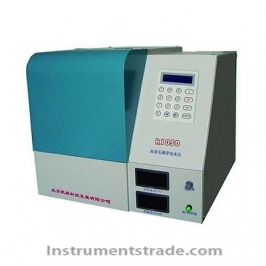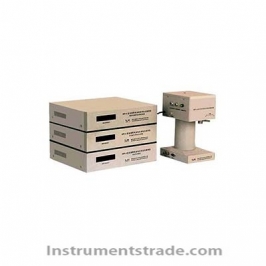
Position: Home > > Analytical instruments > Chromatography Equipment > Capillary electrophoresis > CL1030A High Performance Capillary Electrophoresis Instrument

CL1030A High Performance Capillary Electrophoresis Instrument

Product ID:FSmao004

Price: Please inquire PDF Format
Supply Ability:50SETS/MON
Port:SHENZHEN
  • Product Introduction
  • Other information
  • Model NumberCL1030A
    Brand NameHUAYANGLIMIN
    Payment TermsTT,PAYPAL,Alibaba.com Pay
    CL1030A High Performance Capillary Electrophoresis Instrument
     
    Product Introduction
    The CL1030A High Performance Capillary Electrophoresis Instrument is a laboratory capillary electrophoresis system equipped with an imported variable-wavelength UV absorption detector. The detector supports automatic wavelength positioning, automatic zero adjustment, wavelength scanning, and selectable time constants for sensitive analysis of a wide range of compounds.
    The CL1030A can be used for the analysis of organic compounds, inorganic ions, neutral molecules, chiral compounds, proteins, peptides, DNA, and nucleic acid fragments. With flexible voltage polarity, programmable wavelength selection, adjustable injection modes, and multiple capillary electrophoresis separation modes, it is particularly suitable for scientific research, laboratory experiments, and teaching in universities and research institutions.


    Performance Features
    • Variable-wavelength UV detection: Detection wavelength can be selected within the specified UV range for different analytical applications.
    • Programmable wavelength: Wavelength can be changed during measurement, enabling different wavelengths to be used at different stages of an analysis.
    •  High-sensitivity UV detection: Low noise, low baseline drift, and a detection limit of ≤1 × 10⁻⁶ g/mL for p-aminobenzoic acid.
    • Multiple separation modes: Supports CZE, MECC, CGE, CITP, CIEF, MEEKC, and CIA.
    • Flexible high-voltage supply: Positive, negative, and polarity-switchable configurations are available.
    •  Multiple injection modes: Electrokinetic injection from 0–30 kV and pressure injection with a 130–230 mm adjustable range.
    • UV spectrum acquisition: The detector can acquire a UV spectrum under stopped-flow conditions.
    •  Automatic zero adjustment: Supports full-range automatic zeroing.
    •  Low reagent consumption: Capillary electrophoresis requires small sample and reagent quantities, with relatively simple sample preparation.
    •  RS-232 communication: Supports connection to a host computer for remote control.
    •  GLP functions: Records lamp operating time and provides detailed reports.
    • LCD and touch panel: Provides convenient instrument operation and monitoring.


    Working Principle
    Capillary electrophoresis separates charged or electrokinetically responsive components under a high electric field inside a capillary. Different components migrate at different velocities according to their electrophoretic and electroosmotic behavior, allowing separation before detection.
    The CL1030A uses UV absorption detection. When a separated component passes through the detector window, its absorbance differs from that of the background electrolyte. Under defined experimental conditions, absorbance is related to analyte concentration according to the Beer–Lambert relationship.
    The UV detector uses a diffraction-grating monochromator and photodiode to select and detect the required wavelength. Its wavelength can be programmed during a run, allowing different wavelengths to be applied at different analysis times.


    Supported Capillary Electrophoresis Modes
    1. Capillary Zone Electrophoresis (CZE)
    2. Micellar Electrokinetic Capillary Chromatography (MECC)
    3. Capillary Gel Electrophoresis (CGE)
    4. Capillary Isotachophoresis (CITP)
    5. Capillary Isoelectric Focusing (CIEF)
    6. Microemulsion Electrokinetic Capillary Chromatography (MEEKC)
    7. Capillary Ion Analysis (CIA)


    Technical Specifications
    UV Detector
    Parameter Specification
    Detector Type Variable-wavelength UV absorption detector
    Optical System Diffraction-grating monochromator + photodiode
    Light Source Deuterium lamp
    Wavelength Range 190–500 nm, continuously adjustable
    Lamp Life ≥2,000 h
    Bandwidth Δλ ≤8 nm
    Wavelength Accuracy ±2 nm
    Time Constant 0.00 / 0.02 / 0.05 / 0.1 / 0.2 / 0.5 / 1.0 / 2.0 s
    Analog Output ±1 V
    Automatic Zero Full range
    GLP Function Detailed reports, lamp operating time
    Noise ±1.5 × 10⁻⁵ AU at 254 nm
    Baseline Drift ±4 × 10⁻⁴ AU/h at 254 nm
    Detection Limit ≤1 × 10⁻⁶ g/mL, p-aminobenzoic acid
    Qualitative Repeatability RSD ≤1.3%
    Quantitative Repeatability RSD ≤3.0%
    High-Voltage Power Supply
    Parameter Specification
    Output Current 0–999 μA
    Voltage Programming Programmable voltage setting and output
    Voltage Output Continuously adjustable
    Voltage/Current Display Digital continuous display
    RS-232 Available
    Remote Control Supported through host computer
    Power Regulation Supply voltage variation ±10%; output voltage variation 0.01%
    Load Regulation 10 V / 100 μA
    Ripple 0.1% P-P of output voltage
    Voltage Indication Error ≤2.0%
    Current Indication Error ≤2.5%
    Stability Variation ≤1.5%
    Preheating No preheating required for stable voltage output
    Other Instrument Parameters
    Parameter Specification
    Electrokinetic Injection 0–30 kV adjustable
    Pressure Injection 130–230 mm adjustable
    Rinsing Method Spring-pressure rinsing
    Display LCD
    Operation Touch-sensitive panel
    Wavelength Scanning Supported
    Automatic Zeroing Supported
    Lamp Monitoring Automatic recording of lamp operating time and ignition count


    Application Scenarios
    The CL1030A is suitable for capillary electrophoresis analysis of:
    •  Organic compounds
    •  Inorganic ions
    •  Neutral molecules
    •  Chiral compounds
    •  Proteins and peptides
    •  DNA and nucleic acid fragments
    •  Chemical and pharmaceutical research
    •  University laboratory teaching
    •  Scientific research institutions
    •  Method development and analytical research


    CL1030A vs. Conventional Electrophoresis Systems
    Feature CL1030A Capillary Electrophoresis Instrument Conventional Electrophoresis System
    Detection Variable-wavelength UV absorption Depends on system
    UV Range 190–500 nm Depends on detector
    Wavelength Programming Wavelength can change during measurement Often limited
    Separation Modes 7 supported CE modes Often fewer modes
    Injection Electrokinetic + pressure injection Depends on system
    Voltage Programmable high-voltage output Depends on system
    UV Spectrum Available under stopped-flow conditions Depends on detector
    Sample Consumption Low Depends on technique
    Computer Communication RS-232 Depends on system
    Applications Organic/inorganic compounds, proteins, DNA, etc. Depends on configuration


    Frequently Asked Questions
    1.  What is the CL1030A used for?
    It is a high-performance capillary electrophoresis instrument for separating and analyzing organic compounds, inorganic ions, neutral molecules, chiral compounds, proteins, peptides, DNA, and nucleic acid fragments.
    2. What type of detector does the CL1030A use?
    It uses an imported variable-wavelength UV absorption detector with a diffraction-grating monochromator and photodiode.
    3. What is the UV detection range?
    The UV detector provides a continuously adjustable wavelength range of 190–500 nm.
    4. Can the wavelength be changed during a run?
    Yes. The wavelength can be programmed to change during measurement, allowing different wavelengths to be used at different analysis times.
    5. What capillary electrophoresis modes are supported?
    The system supports CZE, MECC, CGE, CITP, CIEF, MEEKC, and CIA.
    6. What injection methods are available?
    The CL1030A supports electrokinetic injection from 0–30 kV and pressure injection with an adjustable 130–230 mm range.
    7. Can the CL1030A acquire a UV spectrum?
    Yes. Under stopped-flow conditions, the UV detector can acquire a UV spectrum.
    8. What is the UV detection limit?
    The specified detection limit is ≤1 × 10⁻⁶ g/mL using p-aminobenzoic acid as the test substance.
    9. Does the high-voltage power supply require preheating?
    No. The system can output stable voltage immediately after startup without a preheating period.
    10. Can the CL1030A be remotely controlled?
    Yes. An RS-232 interface is provided for connection to a host computer and remote control.


  • Frequently Asked Questions
    1.  What is the CL1030A used for?
    It is a high-performance capillary electrophoresis instrument for separating and analyzing organic compounds, inorganic ions, neutral molecules, chiral compounds, proteins, peptides, DNA, and nucleic acid fragments.
    2. What type of detector does the CL1030A use?
    It uses an imported variable-wavelength UV absorption detector with a diffraction-grating monochromator and photodiode.
    3. What is the UV detection range?
    The UV detector provides a continuously adjustable wavelength range of 190–500 nm.
    4. Can the wavelength be changed during a run?
    Yes. The wavelength can be programmed to change during measurement, allowing different wavelengths to be used at different analysis times.
    5. What capillary electrophoresis modes are supported?
    The system supports CZE, MECC, CGE, CITP, CIEF, MEEKC, and CIA.
    6. What injection methods are available?
    The CL1030A supports electrokinetic injection from 0–30 kV and pressure injection with an adjustable 130–230 mm range.
    7. Can the CL1030A acquire a UV spectrum?
    Yes. Under stopped-flow conditions, the UV detector can acquire a UV spectrum.
    8. What is the UV detection limit?
    The specified detection limit is ≤1 × 10⁻⁶ g/mL using p-aminobenzoic acid as the test substance.
    9. Does the high-voltage power supply require preheating?
    No. The system can output stable voltage immediately after startup without a preheating period.
    10. Can the CL1030A be remotely controlled?
    Yes. An RS-232 interface is provided for connection to a host computer and remote control.
Products
Analytical instruments
Physical property test
Environmental monitoring and analysis
Lab general equipment
About us
About this website
Our service
Product purchase
Contact Us

Newsletter

Make Sure you dont miss interesting happenings by joining our newsletter program.

Contact Us
+86-18620722006
instruments@instrumentstrade.com