Position: Home > > Physical property test > Surface physical property test > LB film analyzer > JMP2000A Interface Expansion Rheometer

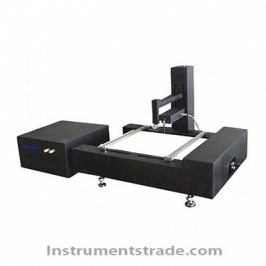
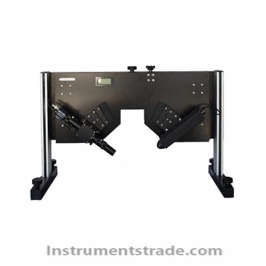
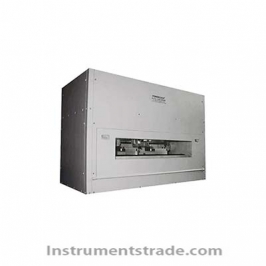
JMP2000A Interface Expansion Rheometer

Product ID:WBlb006

Price: Please inquire PDF Format
Supply Ability:50SETS/MON
Port:SHENZHEN
  • Product Introduction
  • Other information
  • Model NumberJMP2000A
    Brand NameYM
    Payment TermsT/T, paypal,Alibaba.com Pay
    JMP2000A Interface Expansion Rheometer
     
    Product Introduction
    The JMP2000A Interface Expansion Rheometer is a specialized instrument for measuring interfacial expansion viscoelastic properties using the Langmuir trough method. It is suitable for studying oil/water and air/water interfaces, including interfacial tension, expansion modulus, and interfacial viscosity.
    In addition to constant-speed operation and dynamic surface-pressure recording, the instrument supports three measurement modes: low-frequency oscillation, steady-state macroscopic deformation, and interfacial relaxation. It can be used to investigate interfacial expansion modulus, steady-state interfacial expansion viscosity, the real and imaginary components of interfacial viscosity over a frequency spectrum, and fundamental interfacial relaxation processes.
    With PC-based control, a large-area trough, and a dual-slide structure, the JMP2000A is suitable for research in applied chemistry, biological membranes, liposomes, Langmuir–Blodgett films, supramolecular structures, nonlinear physics, and related fields.


    Performance Features
    • Langmuir Trough Measurement: Designed for interfacial expansion viscoelasticity measurements at oil/water and air/water interfaces.
    •  Multiple Measurement Modes: Supports low-frequency oscillation, steady-state macroscopic deformation, and interfacial relaxation measurements.
    • Dynamic Surface-Pressure Recording: Retains constant-speed operation and dynamic membrane-pressure recording.
    •  PC-Based Control: The measurement process is controlled by a computer and lead-screw drive system, supporting operational consistency and repeatability.
    •  Large Trough Surface Area: Features a large measurement area and a dual-slide structure.
    •  High Sensitivity: Designed for sensitive interfacial measurements with low noise and minimal vibration.
    •  Stable Slide Movement: Stable travel speed and low leakage help maintain measurement conditions.
    • Data Processing: Measurement data can be stored, printed, and further processed. Standard BMP image output is supported.
    •  Broad Research Applications: Suitable for interfacial rheology studies in chemical, biological, and materials science.


    Working Principle
    The JMP2000A uses a Langmuir trough to form and control an interface between two phases, such as oil and water or air and water. A movable barrier changes the available interfacial area, creating controlled expansion or compression of the interfacial film.
    Surface tension is measured using the Wilhelmy plate method, in which the force acting on a suspended plate is used to determine interfacial tension. By controlling the barrier movement and recording the resulting surface-pressure response, the instrument can characterize interfacial expansion behavior.
    Different operating modes enable the measurement of dynamic surface-pressure changes, expansion viscoelastic modulus, steady-state expansion viscosity, frequency-dependent interfacial viscosity, and interfacial relaxation behavior.


    Technical Specifications
    Parameter Specification
    Model JMP2000A
    Instrument Type Interface Expansion Rheometer
    Measurement Method Langmuir trough method
    Surface Tension Measurement Method Wilhelmy plate method
    Measurement Interface Oil/water or air/water
    Surface Tension Range 0–150 mN/m
    Resolution <0.05 mN/m
    Measurement Modes Low-frequency oscillation, steady-state macroscopic deformation, interfacial relaxation
    Upper Trough Dimensions (L × W × H) 70 × 150 × 8 mm
    Lower Trough Dimensions (L × W × H) 60 × 150 × 8 mm
    Maximum Measurement Area 96.6 cm²
    Minimum Measurement Area 19.32 cm²
    Slide/Barrier Options Leakproof, barrier, or custom hollow sliding barrier
    Sampling Period 150–300 seconds, software controlled
    Control System PC-based control
    Data Handling Data storage, printing, secondary processing, BMP image output
    Power Supply AC 220 V ±10%
    Power Frequency 50 Hz
    Maximum Power Consumption <150 W


    Application Scenarios
    The JMP2000A interface expansion rheometer is designed for research and measurement applications involving interfacial films and viscoelastic behavior, including:
    •  Applied chemistry and surface chemistry
    •  Oil/water and air/water interface studies
    •  Biological membrane research
    •  Liposome research
    •  Langmuir–Blodgett (LB) film preparation and characterization
    •  Supramolecular structure research
    •  Nonlinear physics
    •  Optoelectronics and integrated optics
    •  Interfacial expansion modulus and viscosity studies
    •  Interfacial relaxation process research


    Comparison with Conventional Surface Tension Instruments
    Feature JMP2000A Interface Expansion Rheometer Conventional Surface Tension Meter
    Primary Measurement Interfacial expansion viscoelasticity and surface tension Primarily surface or interfacial tension
    Measurement System Langmuir trough Depends on instrument
    Tension Measurement Wilhelmy plate method Depends on instrument
    Dynamic Measurement Supports dynamic surface-pressure recording Often focused on static measurements
    Measurement Modes Oscillation, steady-state deformation, relaxation Usually limited to specific measurement methods
    Expansion Modulus Supported Not typically a standard function
    Interfacial Viscosity Supports steady-state and frequency-dependent studies Generally not available
    Data Processing PC control, storage, printing, and secondary processing Depends on instrument
    Research Applications Interfacial rheology and film behavior Surface tension measurement


    FAQ
    1.  What is the JMP2000A Interface Expansion Rheometer used for?
    It is used to measure interfacial expansion viscoelastic properties and surface tension at oil/water and air/water interfaces.
    2. What measurement method does the JMP2000A use?
    It uses the Langmuir trough method for interfacial expansion studies and the Wilhelmy plate method for surface tension measurement.
    3. What is the surface tension measurement range?
    The specified measurement range is 0–150 mN/m, with a resolution of less than 0.05 mN/m.
    4. What measurement modes are available?
    The instrument supports low-frequency oscillation, steady-state macroscopic deformation, and interfacial relaxation modes.
    5. Can the JMP2000A measure interfacial expansion modulus?
    Yes. It is designed to measure interfacial expansion modulus and related interfacial viscoelastic properties.
    6. Can it measure interfacial viscosity?
    Yes. It supports steady-state interfacial expansion viscosity and frequency-dependent measurements of the real and imaginary components of interfacial viscosity.
    7. What types of interfaces can be studied?
    The instrument is suitable for oil/water and air/water interfaces.
    8. Does the instrument support data storage and processing?
    Yes. Measurement data can be stored, printed, and further processed using the PC-based control system. BMP image output is also supported.
    9. What are the maximum and minimum measurement areas?
    The maximum measurement area is 96.6 cm², and the minimum measurement area is 19.32 cm².
    10. Which research fields can use the JMP2000A?
    Applications include applied chemistry, biological membranes, liposomes, LB films, supramolecular structures, nonlinear physics, optoelectronics, and integrated optics.


  • FAQ
    1.  What is the JMP2000A Interface Expansion Rheometer used for?
    It is used to measure interfacial expansion viscoelastic properties and surface tension at oil/water and air/water interfaces.
    2. What measurement method does the JMP2000A use?
    It uses the Langmuir trough method for interfacial expansion studies and the Wilhelmy plate method for surface tension measurement.
    3. What is the surface tension measurement range?
    The specified measurement range is 0–150 mN/m, with a resolution of less than 0.05 mN/m.
    4. What measurement modes are available?
    The instrument supports low-frequency oscillation, steady-state macroscopic deformation, and interfacial relaxation modes.
    5. Can the JMP2000A measure interfacial expansion modulus?
    Yes. It is designed to measure interfacial expansion modulus and related interfacial viscoelastic properties.
    6. Can it measure interfacial viscosity?
    Yes. It supports steady-state interfacial expansion viscosity and frequency-dependent measurements of the real and imaginary components of interfacial viscosity.
    7. What types of interfaces can be studied?
    The instrument is suitable for oil/water and air/water interfaces.
    8. Does the instrument support data storage and processing?
    Yes. Measurement data can be stored, printed, and further processed using the PC-based control system. BMP image output is also supported.
    9. What are the maximum and minimum measurement areas?
    The maximum measurement area is 96.6 cm², and the minimum measurement area is 19.32 cm².
    10. Which research fields can use the JMP2000A?
    Applications include applied chemistry, biological membranes, liposomes, LB films, supramolecular structures, nonlinear physics, optoelectronics, and integrated optics.


Products
Analytical instruments
Physical property test
Environmental monitoring and analysis
Lab general equipment
About us
About this website
Our service
Product purchase
Contact Us

Newsletter

Make Sure you dont miss interesting happenings by joining our newsletter program.

Contact Us
+86-18620722006
instruments@instrumentstrade.com