Position: Home > > Analytical instruments > Elemental Analyzer > Carbon sulfur analyzer > HW2000-D High-Frequency Infrared Multi-Element Analyzer

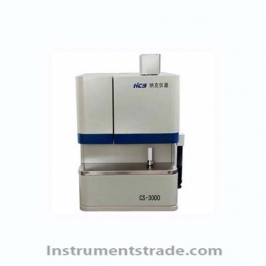
HW2000-D High-Frequency Infrared Multi-Element Analyzer

Product ID:FYtl001

Price: Please inquire PDF Format
Supply Ability:50SETS/MON
Port:SHENZHEN
  • Product Introduction
  • Other information
  • Model NumberHW2000-D
    Brand NameNJSIFEN
    Payment TermsTT,PAYPAL,Alibaba.com Pay
    HW2000-D High-Frequency Infrared Multi-Element Analyzer
     
    Product Introduction
    The HW2000-D High-Frequency Infrared Multi-Element Analyzer is an integrated laboratory instrument for carbon, sulfur, and multi-element analysis of metals and non-metallic materials. It combines a high-frequency combustion furnace, infrared absorption system, photoelectric colorimetric system, and intelligent computer software to deliver rapid, reliable elemental analysis.
    The HW2000-D uses high-frequency infrared absorption to determine carbon and sulfur, while photoelectric colorimetry measures other elements. It is suitable for steel, iron and alloys, nonferrous metals, cement, ores, glass, coke, coal, catalysts, and other solid materials.
    With 16 carbon/sulfur working channels, flexible multi-element channel configuration, and analysis times of approximately 35 seconds, the HW2000-D is designed for efficient laboratory quality control and materials research.


    Performance Features
    •  Multi-element analysis: Carbon, sulfur, and other elements in metals and non-metallic materials.
    •  High-frequency infrared absorption: Dedicated carbon and sulfur analysis with wide measurement ranges.
    •  Photoelectric colorimetry: Supports analysis of Si, Mn, P, Cr, Ni, Fe, Mg, Mo, Cu, Ti, and other elements.
    •  16 carbon/sulfur working channels: Supports flexible high- and low-content analysis.
    •  High-frequency combustion furnace: Up to 5 kW maximum power and 30 MHz oscillation frequency.
    •  Automatic gas-flow control: High-precision electronic flowmeter improves analysis stability.
    •  Advanced dust removal: Automatic cleaning, dust filtration, and dedicated exhaust channels reduce contamination.
    •  Stable infrared optical system: Wavelength-limited source, protective gas, and integrated dual-carbon/dual-sulfur platinum absorption cell.
    •  Intelligent software: More than 40 functions for monitoring, calibration, data statistics, diagnostics, and system control.
    •  Remote diagnosis: Supports remote monitoring and troubleshooting to reduce maintenance time.
    •  Automatic weighing: Data transfer from a 0.0001 g readability electronic balance.
    •  Flexible multi-element channels: Up to 10 major channels, each storing 30 working curves.


    Working Principle
    The HW2000-D combines two analytical methods in one instrument.
    Carbon and Sulfur Analysis
    The solid sample is weighed and introduced into the high-frequency combustion furnace, where it is rapidly combusted in an oxygen atmosphere. Carbon and sulfur in the sample are converted into their corresponding oxides.
    The combustion gas passes through the purification and gas-analysis system into the infrared absorption cells. Carbon and sulfur oxides absorb infrared radiation at characteristic wavelengths. The instrument measures the absorption signal and calculates the carbon and sulfur mass fractions.
    The high-frequency furnace, automatic gas-flow control, multi-stage filtration, and dust-removal system help maintain stable combustion and analysis conditions.
    Other Element Analysis
    For other elements, the sample is prepared according to the selected analytical method and analyzed using the photoelectric colorimetric system. The system measures the characteristic optical response of the element and calculates its concentration using stored calibration curves.
    The instrument supports single-point or multi-point calibration with certified reference materials, allowing flexible analysis of different materials and concentration ranges.


    Technical Parameters
    General Specifications
    Parameter Specification
    Product Name HW2000-D High-Frequency Infrared Multi-Element Analyzer
    Analysis Methods High-frequency infrared absorption; photoelectric colorimetry
    Main Applications Metals, alloys, cement, ores, glass, coke, coal, catalysts, and other solid materials
    Carbon/Sulfur Working Channels 16
    Analysis Time 25–60 seconds adjustable; approximately 35 seconds typical
    Sensitivity 0.000001% (0.01 ppm)
    Precision Complies with JJG395-97
    Accuracy Complies with ISO9556-94, ISO4935-94, and GB223.3–5-1988
    Applicable Standards GB/T 223 series and relevant ISO standards
    Electronic Balance 0.0001 g readability; automatic data transfer
    Power Supply High-quality integrated linear module power supply
    Element Measurement Ranges
    The following ranges are representative examples for steel and iron analysis. Actual ranges depend on the selected element, calibration curve, and material.
    Element Measurement Range
    Carbon (C) 0.00001%–99.9999%
    Sulfur (S) 0.00001%–99.9999%
    Manganese (Mn) 0.010%–70.000%
    Phosphorus (P) 0.0005%–1.0000%
    Silicon (Si) 0.010%–80.000%
    Chromium (Cr) 0.010%–85.000%
    Nickel (Ni) 0.005%–85.000%
    Molybdenum (Mo) 0.010%–15.000%
    Rare Earth Elements 0.0100%–8.000%
    Magnesium (Mg) 0.0100%–15.000%
    Copper (Cu) 0.010%–95.000%
    Titanium (Ti) 0.010%–10.000%
    Carbon/Sulfur Analysis System
    Parameter Specification
    High-Frequency Furnace High-power, air-cooled ceramic power tube
    Oscillation Frequency 30 MHz
    Maximum Power Up to 5 kW
    Infrared Absorption Cell Integrated dual-carbon/dual-sulfur platinum absorption cell
    Sampling Chip Imported 72-position sampling chip
    Processor Quad-core processor
    Infrared Wavelength Range 2–10 μm
    High/Low Carbon Channels Automatic switching
    High/Low Sulfur Channels Automatic switching
    Gas-Flow Control High-precision electronic flowmeter
    Dust Removal Automatic cleaning and high-pressure dust discharge
    Gas Circuit Silicone rubber or stainless steel
    Gas Filtration Multi-stage filtration
    Photoelectric Colorimetric System
    Parameter Specification
    Major Channels 10
    Working Curves per Channel 30
    Potential Element Capacity Up to 300 elements in principle
    Calibration Single-point or multi-point calibration
    Calibration Standards Certified reference materials
    Optical System Imported Swiss light source
    Light Source Life Tens of thousands of hours
    Data Acquisition Low-noise, high-sensitivity, high-stability system
    Software Intelligent integrated control and analysis software


    Application Scenarios
    **Steel & Iron Analysis** Carbon, sulfur, and other elemental analysis of steel, cast iron, and alloys. **Nonferrous Metals** Multi-element analysis of copper, aluminum, and other nonferrous materials. **Cement & Ores** Elemental analysis of cement, mineral ores, and other inorganic solid materials. **Coal, Coke & Catalysts** Carbon, sulfur, and other elemental analysis for industrial and research materials.


    HW2000-D vs. Conventional Carbon/Sulfur Analyzer
    Feature HW2000-D Multi-Element Analyzer Conventional Carbon/Sulfur Analyzer
    Carbon/Sulfur Method High-frequency infrared absorption Depends on model
    Other Elements Photoelectric colorimetry Usually not included
    Analysis Capability Carbon, sulfur, and multiple other elements Mainly carbon and sulfur
    Carbon/Sulfur Channels 16 Depends on model
    Analysis Time Approximately 35 seconds typical Depends on model
    Multi-Element Calibration Flexible single- or multi-point calibration Limited or unavailable
    Software Intelligent monitoring, diagnostics, and data processing Depends on model
    Best For Integrated multi-element laboratory analysis Dedicated carbon/sulfur testing
    Why choose HW2000-D?
    The HW2000-D combines high-frequency infrared carbon/sulfur analysis with photoelectric colorimetric multi-element analysis, providing a practical solution for laboratories that need both dedicated carbon/sulfur testing and broader elemental analysis.


    Frequently Asked Questions (FAQ)
    1.  What is the HW2000-D High-Frequency Infrared Multi-Element Analyzer used for?
    The HW2000-D is used for carbon, sulfur, and multi-element analysis of metals, alloys, cement, ores, glass, coke, coal, catalysts, and other solid materials.
    2. Which elements can the HW2000-D measure?
    It measures carbon and sulfur by high-frequency infrared absorption. Other elements include Si, Mn, P, Cr, Ni, Fe, Mg, Mo, Cu, Ti, and more, depending on the selected configuration and calibration.
    3. What is the difference between the two analytical methods?
    Carbon and sulfur are measured by high-frequency infrared absorption, while other elements are measured by photoelectric colorimetry.
    4. How long does one analysis take?
    The analysis time is adjustable from 25 to 60 seconds, with a typical analysis time of approximately 35 seconds.
    5. What is the sensitivity of the HW2000-D?
    The stated sensitivity is 0.000001% (0.01 ppm).
    6. Can the HW2000-D analyze both metals and non-metallic materials?
    Yes. It is suitable for steel, iron, alloys, nonferrous metals, cement, ores, glass, coke, coal, catalysts, and other solid materials.
    7. How are the carbon and sulfur channels configured?
    The carbon/sulfur system has 16 working channels, with automatic switching between high- and low-content channels.
    8. Does the HW2000-D support calibration and data management?
    Yes. It supports single-point or multi-point calibration, data statistics, result correction, system monitoring, diagnostics, and automatic data transfer from the electronic balance.


  • Frequently Asked Questions (FAQ)
    1.  What is the HW2000-D High-Frequency Infrared Multi-Element Analyzer used for?
    The HW2000-D is used for carbon, sulfur, and multi-element analysis of metals, alloys, cement, ores, glass, coke, coal, catalysts, and other solid materials.
    2. Which elements can the HW2000-D measure?
    It measures carbon and sulfur by high-frequency infrared absorption. Other elements include Si, Mn, P, Cr, Ni, Fe, Mg, Mo, Cu, Ti, and more, depending on the selected configuration and calibration.
    3. What is the difference between the two analytical methods?
    Carbon and sulfur are measured by high-frequency infrared absorption, while other elements are measured by photoelectric colorimetry.
    4. How long does one analysis take?
    The analysis time is adjustable from 25 to 60 seconds, with a typical analysis time of approximately 35 seconds.
    5. What is the sensitivity of the HW2000-D?
    The stated sensitivity is 0.000001% (0.01 ppm).
    6. Can the HW2000-D analyze both metals and non-metallic materials?
    Yes. It is suitable for steel, iron, alloys, nonferrous metals, cement, ores, glass, coke, coal, catalysts, and other solid materials.
    7. How are the carbon and sulfur channels configured?
    The carbon/sulfur system has 16 working channels, with automatic switching between high- and low-content channels.
    8. Does the HW2000-D support calibration and data management?
    Yes. It supports single-point or multi-point calibration, data statistics, result correction, system monitoring, diagnostics, and automatic data transfer from the electronic balance.
Products
Analytical instruments
Physical property test
Environmental monitoring and analysis
Lab general equipment
About us
About this website
Our service
Product purchase
Contact Us

Newsletter

Make Sure you dont miss interesting happenings by joining our newsletter program.

Contact Us
+86-18620722006
instruments@instrumentstrade.com