Position: Home > > Industry specific instrument > Textile industry special equipment > Fiber type testing apparatus > FXW121-II Engineering Short Fiber Strength Tester

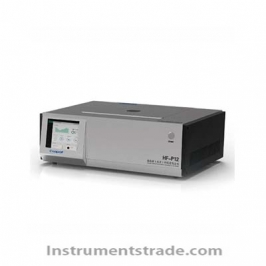
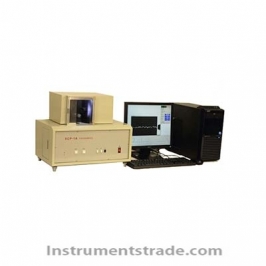
FXW121-II Engineering Short Fiber Strength Tester

Product ID:HZFZxwei0032

Price: Please inquire PDF Format
Supply Ability:50 SETS/MON
Port:SHENZHEN
  • Product Introduction
  • Other information
  • Model NumberFXW121-II
    Brand NameWZFANGYUAN
    Payment TermsTT,PAYPAL,Alibaba.com Pay
    FXW121-II Engineering Short Fiber Strength Tester
    Product Introduction
    The FXW121-II Engineering Short Fiber Strength Tester is specially designed for measuring the breaking strength and elongation at break of short fibers shorter than 10 mm that are difficult to grip using conventional tensile testing equipment.
    The tester is applicable to synthetic fibers used in cement concrete and mortar and complies with the test method specified in Appendix A of GB/T 21120-2007, covering breaking strength, initial modulus and elongation at break of synthetic fibers.
    With a servo drive system, precision ball screw transmission and high-resolution rotary encoder, the FXW121-II provides stable mechanical movement, low operating noise and precise elongation measurement. Its dedicated workstation also allows operators to perform testing comfortably while seated.


    Performance Features
       Specially designed for short fibers below 10 mm that are difficult to clamp.
       Powder-coated housing provides a durable external finish.
      Metal panel, metal keys and key clamping components use aluminum alloy construction.
       Dedicated test table supports comfortable seated operation.
       Servo drive and motor provide stable operation and a wide speed ratio range.
       Precision ball screw and guide rod transmission improves running stability and reduces vibration and noise.
      Rotary encoder provides high-resolution elongation measurement down to 0.01 mm.
     Computer and printer configuration supports online testing and report generation.
       Displays real-time force–elongation curves.
      Curves can be overlaid, enlarged at selected points and saved for later analysis.
      Test reports support Chinese/English output and metric/imperial unit conversion.
       Curve point-reading function can obtain elongation values at six selected force points or force values at six selected elongation points.
       Digital force calibration requires no mechanical component adjustment.
     Elongation calibration can be completed by directly entering the actual elongation value.


    Working Principle
    The short fiber specimen is securely positioned using the dedicated clamping mechanism. The servo motor drives the precision transmission system at the preset test speed, applying tensile force to the specimen until rupture.
    During testing, the system continuously records the force and elongation. The rotary encoder measures specimen elongation with a resolution of up to 0.01 mm, while the force measurement system records the applied tensile load. The software generates a force–elongation curve and allows selected points to be analyzed for breaking strength and elongation.
    After testing, the software can save curves, overlay multiple curves, perform curve-point readings and generate test reports.


    Technical Parameters
    Parameter Specification
    Model FXW121-II
    Main Application Breaking strength and elongation at break of short fibers
    Applicable Fiber Length <10 mm
    Test Material Synthetic short fibers
    Standard GB/T 21120-2007, Appendix A
    Test Items Breaking strength, initial modulus, elongation at break
    Drive System Servo drive + servo motor
    Transmission Precision ball screw + guide rod
    Elongation Measurement Rotary encoder
    Elongation Resolution 0.01 mm
    Force Calibration Digital calibration
    Elongation Calibration Direct actual-value input
    Curve Display Force–elongation curve
    Curve Functions Overlay, zoom, save, point reading
    Curve Point Reading 6 force points or 6 elongation points
    Report Language Chinese / English
    Unit Conversion Metric / Imperial
    Computer Connection Online testing supported*
    Printer Included configuration
    *Online computer functions are provided according to the configured system.
     

    Application Scenarios
    The FXW121-II is particularly suitable for laboratories and quality-control applications involving:
       Synthetic fibers for cement concrete
       Synthetic fibers for mortar
       Engineering short fibers
       Fiber-reinforced concrete materials
       Fiber-reinforced mortar materials
       Construction material research
       Synthetic fiber quality control
       Research institutions and material testing laboratories


    Comparison with Conventional Fiber Tensile Testers
    Feature FXW121-II Short Fiber Strength Tester Conventional Fiber Tensile Tester
    Target Fiber <10 mm short fibers Mainly longer fibers
    Difficult-to-Grip Fibers Specially designed for them Often difficult to clamp
    Drive System Servo drive + motor Depends on configuration
    Transmission Ball screw + precision guide rod Conventional transmission
    Elongation Resolution 0.01 mm Depends on instrument
    Force–Elongation Curve Real-time display Usually supported
    Curve Overlay Yes Depends on software
    Curve Point Reading 6 selected points Usually limited
    Force Calibration Digital calibration May require adjustment
    Elongation Calibration Direct value input Depends on system
    Report Language Chinese / English Depends on software
    Unit Conversion Metric / Imperial Depends on software
    Operator Position Dedicated seated workstation Usually bench operation
     

    FAQ
    1.  What is the FXW121-II designed for?
    It is designed to test the breaking strength and elongation at break of short fibers shorter than 10 mm that are difficult to clamp with conventional equipment.
    2. Which standard does the FXW121-II comply with?
    It is designed according to GB/T 21120-2007, Appendix A, for testing synthetic fibers used in cement concrete and mortar.
    3. What properties can be tested?
    The applicable test method covers breaking strength, initial modulus and elongation at break of synthetic fibers.
    4. Why is the FXW121-II suitable for short fibers?
    Its dedicated clamping structure is designed specifically for short fibers that are difficult to securely hold with conventional tensile testing fixtures.
    5. What is the elongation measurement resolution?
    The rotary encoder provides an elongation resolution of up to 0.01 mm.
    6. Can the force–elongation curve be analyzed?
    Yes. The software can display, save, overlay and enlarge force–elongation curves and supports selected-point reading.
    7. How many curve points can be read?
    The system can read the elongation corresponding to six selected force points, or the force corresponding to six selected elongation points.
    8. Does the tester support calibration?
    Yes. Force calibration uses digital calibration without mechanical adjustment, while elongation calibration allows the actual elongation value to be entered directly.
    9. Can test reports be generated in different languages?
    Yes. The configured software supports Chinese and English reports and metric/imperial unit conversion.


  • FAQ
    1.  What is the FXW121-II designed for?
    It is designed to test the breaking strength and elongation at break of short fibers shorter than 10 mm that are difficult to clamp with conventional equipment.
    2. Which standard does the FXW121-II comply with?
    It is designed according to GB/T 21120-2007, Appendix A, for testing synthetic fibers used in cement concrete and mortar.
    3. What properties can be tested?
    The applicable test method covers breaking strength, initial modulus and elongation at break of synthetic fibers.
    4. Why is the FXW121-II suitable for short fibers?
    Its dedicated clamping structure is designed specifically for short fibers that are difficult to securely hold with conventional tensile testing fixtures.
    5. What is the elongation measurement resolution?
    The rotary encoder provides an elongation resolution of up to 0.01 mm.
    6. Can the force–elongation curve be analyzed?
    Yes. The software can display, save, overlay and enlarge force–elongation curves and supports selected-point reading.
    7. How many curve points can be read?
    The system can read the elongation corresponding to six selected force points, or the force corresponding to six selected elongation points.
    8. Does the tester support calibration?
    Yes. Force calibration uses digital calibration without mechanical adjustment, while elongation calibration allows the actual elongation value to be entered directly.
    9. Can test reports be generated in different languages?
    Yes. The configured software supports Chinese and English reports and metric/imperial unit conversion.
Products
Analytical instruments
Physical property test
Environmental monitoring and analysis
Lab general equipment
About us
About this website
Our service
Product purchase
Contact Us

Newsletter

Make Sure you dont miss interesting happenings by joining our newsletter program.

Contact Us
+86-18620722006
instruments@instrumentstrade.com