Position: Home > > Analytical instruments > X-ray Equipment > X fluorescence spectrometer > DM8000 X-Ray Fluorescence Spectrometer

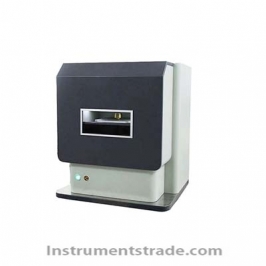
DM8000 X-Ray Fluorescence Spectrometer

Product ID:FXyg036

Price: Please inquire PDF Format
Supply Ability:50 SETS/MON
Port:SHENZHEN
  • Product Introduction
  • Other information
  • Model NumberDM8000
    Brand NameSHAISITE
    Payment TermsTT,PAYPAL,Alibaba.com Pay
    DM8000 X-Ray Fluorescence Spectrometer
     
    Product Introduction
    The DM8000 X-Ray Fluorescence Spectrometer is an advanced wavelength dispersive X-ray fluorescence (WDXRF) spectrometer developed from decades of experience in XRF analysis. Building on the company's established calcium-iron analyzers, sulfur analyzers, aluminum-silicon analyzers, and multi-element analyzers, the DM8000 provides fast, accurate, and efficient elemental analysis for industrial laboratories.
    The DM8000 can simultaneously measure any 10 elements from Na to U, with analysis concentrations ranging from ppm levels to 100% for most elements. It is suitable for elemental and oxide analysis in cement, minerals, metals, petroleum, chemicals, geological materials, and other industrial samples.
    Compared with conventional chemical analysis methods, the XRF spectrometer offers rapid analysis, high precision, reduced operator workload, low human error, and no chemical pollution during routine measurement.


    Performance Features
    •  WDXRF technology: Uses wavelength dispersive X-ray fluorescence for accurate elemental analysis.
    •  Wide elemental range: Measures any 10 elements from Na to U.
    •  Simultaneous multi-element analysis: Multiple elements can be measured efficiently in one analytical process.
    •  Wide concentration range: Suitable for concentrations from ppm levels to 100% for most elements.
    •  Fast analysis: Typical system analysis time is approximately 180 seconds.
    •  High precision: Excellent repeatability for major components such as SiO₂ and CaO.
    •  Low operator workload: Automated instrumental analysis reduces manual operations and human errors.
    •  Non-polluting analysis: XRF analysis does not require routine wet-chemical reagents.
    •  Broad industrial applications: Suitable for building materials, metallurgy, petroleum, chemicals, geology, mining, and related industries.


    Working Principle
    The DM8000 uses wavelength dispersive X-ray fluorescence (WDXRF) technology.
    During measurement, the X-ray tube irradiates the prepared sample with primary X-rays. The elements in the sample are excited and emit characteristic secondary X-rays. Each element produces characteristic wavelengths corresponding to its atomic structure.
    The WDXRF optical system separates these characteristic X-ray wavelengths, while the detector measures their intensities. The measured intensities are processed using calibrated analytical curves to determine the concentration of individual elements or their corresponding oxides.
    For example, in cement analysis, the DM8000 can measure components such as Na₂O, MgO, Al₂O₃, SiO₂, SO₃, TiO₂, K₂O, CaO, and Fe₂O₃, enabling rapid multi-element quality control.


    Technical Parameters
    Parameter Specification
    Model DM8000
    Technology Wavelength Dispersive X-Ray Fluorescence (WDXRF)
    Elements Any 10 elements from Na to U
    Typical Oxide Analysis Na₂O, MgO, Al₂O₃, SiO₂, SO₃, TiO₂, K₂O, CaO, Fe₂O₃, etc.
    Concentration Range Determined by calibration curve within control target ±2.5%
    Typical Analysis Time 180 s
    Precision εSiO₂ < 0.40%; εSO₃ < 2.0%; εCaO < 0.15%
    Stability RSiO₂ < 1.5%; RSO₃ < 5.0%; RCaO < 0.5%
    Linearity / Content Error ENa₂O < 0.035%; EMgO < 0.10%; EAl₂O₃ < 0.14%; ESiO₂ < 0.14%; ESO₃ < 0.10%; ETiO₂ < 0.035%; EK₂O < 0.07%; ECaO < 0.18%; EFe₂O₃ < 0.10%
    X-Ray Tube Power 400 W
    Maximum Tube Voltage 50 kV
    Maximum Tube Current 8 mA
    Constant Temperature Chamber 36 ± 0.1°C
    Ambient Temperature 15–28°C
    Relative Humidity ≤75% RH at 25°C
    Power Supply 220 V ± 20 V, 50 Hz
    Power Consumption <50 W
    Dimensions (L × W × H) 790 × 760 × 1200 mm
    Weight 195 kg


    Typical Applications
    The DM8000 X-ray fluorescence analyzer is designed for routine elemental and oxide analysis across multiple industries:
    •  Cement and building materials: Rapid analysis of CaO, SiO₂, Al₂O₃, Fe₂O₃ and other cement components.
    Metallurgy: Elemental composition and quality control of metals and raw materials.
    Petroleum and chemical industries: Elemental analysis of industrial materials and products.
    Geology and mining: Analysis of ores, minerals, rocks, and geological samples.
    •  Aluminum-silicon analysis: Determination of Al and Si-related components in industrial materials.
    Quality control laboratories: Fast multi-element screening and process quality control.


    DM8000 WDXRF vs. Conventional Chemical Analysis
    Feature DM8000 WDXRF Spectrometer Conventional Wet-Chemical Analysis
    Analysis Method Wavelength dispersive XRF Chemical reactions/titration
    Elements Up to 10 selected elements simultaneously Usually requires separate procedures
    Analysis Speed Typically 180 s Generally longer
    Operator Workload Low Relatively high
    Human Error Low More dependent on operator
    Chemical Reagents No routine wet-chemical reagents Usually required
    Pollution No routine chemical waste Chemical waste may be generated
    Multi-Element Analysis Excellent More time-consuming
    Industrial Suitability High-throughput routine analysis Suitable for conventional laboratory analysis


    Frequently Asked Questions (FAQ)
    1.  What is the DM8000 X-ray fluorescence spectrometer used for?
    The DM8000 is used for rapid elemental and oxide analysis in cement, building materials, metallurgy, petroleum, chemicals, geology, mining, and other industries.
    2. What XRF technology does the DM8000 use?
    It uses wavelength dispersive X-ray fluorescence (WDXRF) technology for elemental analysis.
    3. How many elements can the DM8000 analyze?
    The instrument can simultaneously analyze any 10 elements from Na to U, according to the selected analytical configuration.
    4. What is the typical analysis time?
    The typical system analysis time is approximately 180 seconds.
    5. What concentration range can be measured?
    For most elements, the DM8000 can analyze concentrations ranging from ppm levels to 100%, with the actual range determined by the calibration curve.
    6. Can the DM8000 analyze cement oxides?
    Yes. It can analyze major cement components including Na₂O, MgO, Al₂O₃, SiO₂, SO₃, TiO₂, K₂O, CaO, and Fe₂O₃.
    7. What are the main advantages of WDXRF analysis?
    WDXRF provides fast multi-element analysis, high precision, low operator workload, reduced human error, and avoids routine chemical pollution associated with wet-chemical analysis.
    8. Is the DM8000 suitable for aluminum-silicon analysis?
    Yes. Its multi-element XRF capability makes it suitable for aluminum-silicon analysis and other industrial elemental composition measurements.


  • Frequently Asked Questions (FAQ)
    1.  What is the DM8000 X-ray fluorescence spectrometer used for?
    The DM8000 is used for rapid elemental and oxide analysis in cement, building materials, metallurgy, petroleum, chemicals, geology, mining, and other industries.
    2. What XRF technology does the DM8000 use?
    It uses wavelength dispersive X-ray fluorescence (WDXRF) technology for elemental analysis.
    3. How many elements can the DM8000 analyze?
    The instrument can simultaneously analyze any 10 elements from Na to U, according to the selected analytical configuration.
    4. What is the typical analysis time?
    The typical system analysis time is approximately 180 seconds.
    5. What concentration range can be measured?
    For most elements, the DM8000 can analyze concentrations ranging from ppm levels to 100%, with the actual range determined by the calibration curve.
    6. Can the DM8000 analyze cement oxides?
    Yes. It can analyze major cement components including Na₂O, MgO, Al₂O₃, SiO₂, SO₃, TiO₂, K₂O, CaO, and Fe₂O₃.
    7. What are the main advantages of WDXRF analysis?
    WDXRF provides fast multi-element analysis, high precision, low operator workload, reduced human error, and avoids routine chemical pollution associated with wet-chemical analysis.
    8. Is the DM8000 suitable for aluminum-silicon analysis?
    Yes. Its multi-element XRF capability makes it suitable for aluminum-silicon analysis and other industrial elemental composition measurements.
Products
Analytical instruments
Physical property test
Environmental monitoring and analysis
Lab general equipment
About us
About this website
Our service
Product purchase
Contact Us

Newsletter

Make Sure you dont miss interesting happenings by joining our newsletter program.

Contact Us
+86-18620722006
instruments@instrumentstrade.com