Position: Home > > Optical instruments and equipment > Optical experimental equipment > Light source > CEL-M500-T5 Mercury Lamp Light Source

CEL-M500-T5 Mercury Lamp Light Source

Product ID:GSYgy048

Price: Please inquire PDF Format
Supply Ability:50 SETS/MON
Port:SHENZHEN
  • Product Introduction
  • Other information
  • Model NumberCEL-M500-T5
    Brand NameZHONGJIAOJINYUAN
    Payment TermsTT,PAYPAL,Alibaba.com Pay
    CEL-M500-T5 Mercury Lamp Light Source
     
    Product Introduction
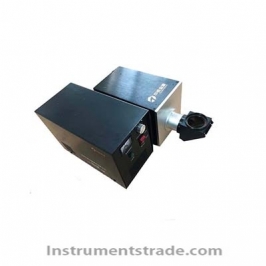
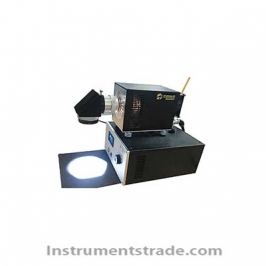
    The CEL-M500-T5 Mercury Lamp Light Source is a research-grade high-intensity UV mercury lamp source specifically designed for ultraviolet photocatalysis, photochemical research, photodegradation, photolithography and chemical synthesis.
    The light source uses a 350W/500W high-pressure short-arc spherical mercury lamp. Under high-frequency, high-voltage excitation, the lamp generates arc discharge and produces a strong, stable ultraviolet spectrum with high energy density. This makes the CEL-M500-T5 particularly suitable for experiments requiring intense UV irradiation, including photocatalytic degradation and other strong-light photocatalysis studies.
    The system supports a variety of domestic and imported filters and optical lenses, including 25.4 mm, 50.8 mm, M52 and M62 specifications. Common UV bandpass filters include 254 nm, 313 nm, 334 nm, 350 nm, 365 nm, 380 nm, 400 nm and 405 nm.


    Performance Features
    • High-intensity UV mercury lamp: Designed specifically for UV-region photocatalytic and photochemical experiments.
    • 350W/500W high-pressure short-arc mercury lamp: Provides strong UV radiation and high energy density.
    • Wide spectral output: 185–1100 nm when equipped with the quartz lens group.
    •  Adjustable optical power density: 0.5–5 Sun for flexible irradiation conditions.
    •  High optical stability: Light source stability of ≤1%.
    •  Large working spot: Circular light spot diameter of ≥60 mm.
    • Broad filter compatibility: Supports multiple filter and lens sizes, including 25.4 mm, 50.8 mm, M52 and M62.
    • UV bandpass filter options: Common wavelengths include 254, 313, 334, 350, 365, 380, 400 and 405 nm.
    •  Automatic fan cooling: Fan power can be automatically adjusted according to optical output power.
    • Long lamp life: Lamp life exceeds 800 hours under specified operating conditions.
    •  Research-oriented design: Suitable for high-intensity UV photochemistry and photocatalytic experiments.


    Working Principle
    The CEL-M500-T5 uses a high-pressure short-arc spherical mercury lamp as its UV light source. When the lamp is electrically excited under high-frequency and high-voltage conditions, an arc discharge is generated inside the lamp.
    The mercury discharge produces intense characteristic spectral radiation covering the ultraviolet and visible regions. The optical system and quartz lens group transmit and direct the emitted radiation toward the experimental sample.
    By selecting suitable optical filters, researchers can isolate specific wavelength bands for targeted UV irradiation. Common UV bandpass filters include 254 nm, 313 nm, 334 nm, 350 nm, 365 nm, 380 nm, 400 nm and 405 nm.
    The optical power density can be adjusted between 0.5 and 5 Sun, allowing different irradiation intensities to be used for photocatalysis, photodegradation and photochemical experiments. An automatic air-cooling system adjusts fan power according to the light output to support stable lamp operation.


    Technical Parameters
    Parameter Specification
    Model CEL-M500-T5 / CEL-M500
    Light Source High-pressure short-arc spherical mercury lamp
    Lamp Power 350W / 500W
    Maximum Input Power 500 W
    Optical Power Density 0.5–5 Sun
    Total Optical Output 15 W
    Spectral Range 185–1100 nm with quartz lens group
    Working Spot Circular, ≥60 mm diameter
    Light Source Stability ≤1%
    Lamp Life >800 h
    Cooling Air cooling
    Fan Control Automatically adjusted according to optical output power
    Compatible Filter Sizes 25.4 mm / 50.8 mm / M52 / M62
    Common UV Filters 254 / 313 / 334 / 350 / 365 / 380 / 400 / 405 nm


    Application Scenarios
    The CEL-M500-T5 Mercury Lamp Light Source is suitable for:
    •  UV photocatalysis research
    •  Strong-light photocatalytic experiments
    •  Photodegradation studies
    •  Photochemical catalysis
    •  Photochemical synthesis
    •  Photolithography research
    •  UV-region chemical synthesis
    •  Pollutant degradation
    •  Photochemical reaction studies
    •  UV optical experiments
    •  Photocatalyst performance evaluation
    •  Photochemical material testing
    •  UV-accelerated laboratory experiments
    It is particularly suitable for experiments requiring high-intensity and wavelength-selective UV irradiation.


    CEL-M500-T5 vs. Conventional UV Light Sources
    Feature CEL-M500-T5 Mercury Lamp Source Conventional UV Light Source
    Light Source High-pressure short-arc mercury lamp Depends on system
    Lamp Power 350W / 500W Varies
    Spectral Range 185–1100 nm Depends on source
    Optical Power Density 0.5–5 Sun Depends on system
    Light Stability ≤1% Depends on system
    Working Spot ≥60 mm circular spot Depends on optics
    UV Filter Selection Multiple wavelength options Depends on configuration
    Filter Compatibility 25.4 / 50.8 mm / M52 / M62 Depends on system
    Cooling Automatic air cooling Depends on system
    Main Applications UV photocatalysis, photodegradation, photochemistry General UV irradiation


    FAQ
    1.  What is the CEL-M500-T5 used for?
    It is designed for high-intensity UV photocatalysis, photodegradation, photochemical synthesis, photolithography and other ultraviolet-region research.
    2. What type of lamp does the CEL-M500-T5 use?
    It uses a 350W/500W high-pressure short-arc spherical mercury lamp.
    3. What is the spectral range of the mercury light source?
    With the quartz lens group, the specified spectral range is 185–1100 nm.
    4. Can the optical power density be adjusted?
    Yes. The average optical power density can be adjusted from 0.5 to 5 Sun.
    5. What is the light source stability?
    The specified light source stability is ≤1%.
    6. Which UV wavelengths can be selected using filters?
    Common UV bandpass filter wavelengths include 254, 313, 334, 350, 365, 380, 400 and 405 nm.
    7. What filter sizes are compatible with the system?
    The system can accommodate multiple filter and lens specifications, including 25.4 mm, 50.8 mm, M52 and M62.
    8. What is the working light spot size?
    The standard circular working light spot has a diameter of 60 mm or more.
    9. How is the mercury lamp cooled?
    The system uses air cooling, with fan power automatically adjusted according to the light output power.
    10. What is the expected lamp life?
    The specified lamp life is more than 800 hours under appropriate operating conditions.


  • FAQ
    1.  What is the CEL-M500-T5 used for?
    It is designed for high-intensity UV photocatalysis, photodegradation, photochemical synthesis, photolithography and other ultraviolet-region research.
    2. What type of lamp does the CEL-M500-T5 use?
    It uses a 350W/500W high-pressure short-arc spherical mercury lamp.
    3. What is the spectral range of the mercury light source?
    With the quartz lens group, the specified spectral range is 185–1100 nm.
    4. Can the optical power density be adjusted?
    Yes. The average optical power density can be adjusted from 0.5 to 5 Sun.
    5. What is the light source stability?
    The specified light source stability is ≤1%.
    6. Which UV wavelengths can be selected using filters?
    Common UV bandpass filter wavelengths include 254, 313, 334, 350, 365, 380, 400 and 405 nm.
    7. What filter sizes are compatible with the system?
    The system can accommodate multiple filter and lens specifications, including 25.4 mm, 50.8 mm, M52 and M62.
    8. What is the working light spot size?
    The standard circular working light spot has a diameter of 60 mm or more.
    9. How is the mercury lamp cooled?
    The system uses air cooling, with fan power automatically adjusted according to the light output power.
    10. What is the expected lamp life?
    The specified lamp life is more than 800 hours under appropriate operating conditions.


Products
Analytical instruments
Physical property test
Environmental monitoring and analysis
Lab general equipment
About us
About this website
Our service
Product purchase
Contact Us

Newsletter

Make Sure you dont miss interesting happenings by joining our newsletter program.

Contact Us
+86-18620722006
instruments@instrumentstrade.com