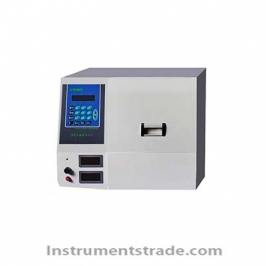
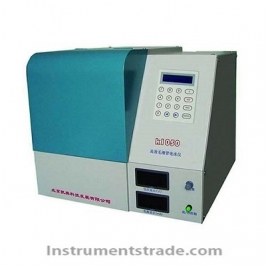
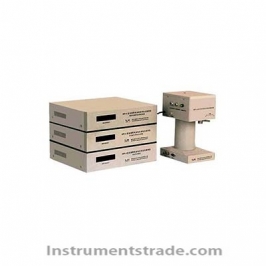
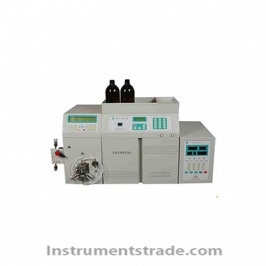
BPCL-ECL150/210 Electrochemiluminescence Analyzer Introduction: The BPCL-ECL150/210 electrochemiluminescence analyzer is a multifunctional electrochemiluminescence detection platform. It utilizes a high-sensitivity photomultiplier tube (PMT) as the chemiluminescence detector and is equipped with a built-in high-performance potentiostat. The platform is configured with over ten conventional electrochemical methods, including cyclic voltammetry. Its ultra-large sample chamber accommodates various electrode materials. Standard features include a reaction cell, cell cover, and temperature control bracket. The sample chamber is equipped with built-in electrode wires, offering excellent operational convenience. The software allows for the setting of multiple parameters, making it a versatile electrochemiluminescence detection platform. This platform is capable of performing electrochemiluminescence, electrochemical, and chemiluminescence analyses. The analysis targets include immunology, drugs, amino acids, peptides, proteins, and nucleic acids. Relevant fields include life sciences, disease detection, new drug development, environmental analysis, and food safety Technical Specifications: 1. Weak light detector (1) High-sensitivity photomultiplier tube as a detector for photon pulse measurement. (2) Wavelength range: 300-650nm, 185-850nm, 230-920nm, available for selection according to needs. (3) Programmable high-voltage output: negative (0-1500) V, with an accuracy of 0.1V. 2. Sensitivity and stability (1) Utilize our self-developed ultra-weak standard light source with a power of 10^-13W for metrology. (2) A weak light source with a power of 10^-13W can provide a counting rate of 10,000-20,000 per second. (3) The long-term stability is better than 1.5% (RSD, standard light source test). (4) Measurement accuracy of chemiluminescence system: better than 0.05% (5) Signal noise: 0.5 mV (P-P value, 1×) 3. Time-resolved data acquisition (1) Time resolution: 10 μs (2) Acquisition rate (integration time): adjustable from 0.01 to 10000 ms. (3) Sampling rate: 1-100,000 times/second (4) Range: 8 orders of magnitude (5) Gain: Manual/Automatic, any multiple (6) Automatic zero adjustment, automatic background subtraction 4. Sample cup and temperature control (1) Up to 65 ℃, temperature control accuracy: 0.5 ℃. (2) Sample cup: made of quartz, with diameters of 15mm, 26mm, and 36mm respectively. (3) Sample cup electrode cover: made of polytetrafluoroethylene (PTFE), with customized electrode holes. 5. Spectral measurement and optical filter (optional) (1) Automatic spectral scanning or manual replacement, with adjustable scanning time, which can be set between 1-10 seconds. (2) Filter specifications: With aluminum alloy protective frame, available in outer diameters of 15mm/58mm. (3) Visible light band: 350, 380, 400, 425, 440, 460, 475, 490, 505, 520, 535, 555, 575, 590, 620nm. (Optional) (4) Full spectral bands: 230, 260, 290, 320, 350, 380, 425, 460, 490, 520, 555, 590, 620, 640, 665, 690, 715, 740, 765, 790, 815 nm. (Optional) 6. Electrochemical method Cyclic voltammetry (CV), linear sweep voltammetry (LSV), step chronoamperometry (SCV), chronoamperometry (CA), chronocoulometry (CC), differential pulse voltammetry (DPV), normal pulse voltammetry (NPV), differential normal pulse voltammetry (DNPV), square wave voltammetry (SWV), current-time curve (i-t), controlled potential electrolysis coulometry (BE), open circuit potential-time curve (OCPT), multi-potential step method (STEP) 7. Analysis software (1) Communication method with computer: USB, with a maximum communication rate of 480 Mbit/s, and plug-and-play functionality. (2) Measurement modes: electrochemiluminescence analysis, chemiluminescence analysis, and electrochemical analysis, each entering a different analytical coordinate system. (3) Dual-coordinate synchronous display, automatic range switching. (4) The main interface allows for settings such as high-voltage output, temperature control, acquisition rate, electrochemical methods, and parameters. It features automatic background subtraction, automatic transformation of the acquisition count rate range, real-time display of data point kinetic curves, and real-time display of acquisition time, count rate, and total count. (5) Raw data: Optional formats include EXCEL and TXT, with automatic or manual saving options. 8. Analysis platform It can be displayed as a point plot, line plot, or curve plot, with the ability to zoom in, zoom out, and pan the coordinates. It also features curve overlay, curve smoothing, curve fitting (exponential, logarithmic, polynomial, etc.), Gaussian function fitting (Gaussian), Lorentz function fitting (Lorentz), Fourier transform, manual peak search, manual integration, etc. Additionally, it can regenerate new raw data and save it. 9. Electrochemical parameters (1) Electrode: 2, 3, 4 electrode structure (2) Maximum potential range: ±10V (3) Cell voltage: ±13V (4) Potential rise time: 0.5us (5) Potential scanning range: ±10V (6) Potential resolution: 0.0015% of the potential scanning range (7) Potential measurement accuracy: ±0.5mV (8) Measurement current range: ±10pA~±0.12A, 9 ranges (9) Measurement current resolution: 0.0015% of the current range (10) Current measurement accuracy: 1% of the current range (11) Input offset current: <10pA (12) Maximum sampling rate: 500,000 data points per second (13) Maximum data length: 6,000,000 data points (14) CV and LSV scan rates: 0.001V/s~10,000V/s (15) CV and LSV potential increment: 0.000305V (16) Minimum sampling interval for CV and LSV: 0.001V (17) CA and CC pulse width: 0.00001~1000sec (18) Minimum sampling interval for CA and CC: 10us (19) DPV and NPV pulse width: 0.00001~1000sec (20) SWV frequency: 1Hz~100kHz (21) Minimum sampling interval of i-t: 10us (22) Self-check: Internal resistance self-check of 9 gear positions 10. Sample room (1) Specifications of the sample chamber: Length × Width × Height: 310 × 172 × 166 mm (2) Upper injection port: 1, suitable for manual sample injection. (3) Electrode and pipeline interfaces: 4, compatible with other brands of electrochemical workstations. (4) Fluid circuit connectors: 4, suitable for sample dispensing with syringe pumps. (5) Automatic sensor door: If the sample chamber door is not properly closed, testing cannot commence to prevent accidental damage to the detector. (6) Automatic light window shutter: Upon the start of detection, the light window shutter will automatically open; upon the end of detection, it will automatically close. In emergency situations, the light window shutter will automatically close to protect the detector.
BPCL-ECL150/210 Electrochemiluminescence Analyzer Introduction: The BPCL-ECL150/210 electrochemiluminescence analyzer is a multifunctional electrochemiluminescence detection platform. It utilizes a high-sensitivity photomultiplier tube (PMT) as the chemiluminescence detector and is equipped with a built-in high-performance potentiostat. The platform is configured with over ten conventional electrochemical methods, including cyclic voltammetry. Its ultra-large sample chamber accommodates various electrode materials. Standard features include a reaction cell, cell cover, and temperature control bracket. The sample chamber is equipped with built-in electrode wires, offering excellent operational convenience. The software allows for the setting of multiple parameters, making it a versatile electrochemiluminescence detection platform. This platform is capable of performing electrochemiluminescence, electrochemical, and chemiluminescence analyses. The analysis targets include immunology, drugs, amino acids, peptides, proteins, and nucleic acids. Relevant fields include life sciences, disease detection, new drug development, environmental analysis, and food safety