Position: Home > > Analytical instruments > Spectroscopy Equipment > Atomic fluorescence spectrum > AFS-9760 Fully Automatic Dual Channel Atomic Fluorescence Spectrometer

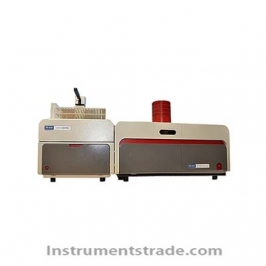
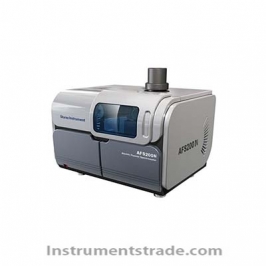
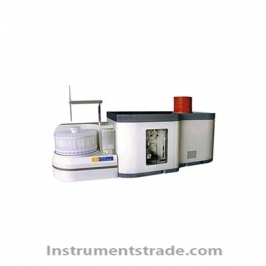
AFS-9760 Fully Automatic Dual Channel Atomic Fluorescence Spectrometer

Product ID:FGyzyg005

Price: Please inquire PDF Format
Supply Ability:50SETS/MON
Port:SHENZHEN
  • Product Introduction
  • Other information
  • Model NumberAFS - 9760
    Brand NameBJHAIGUANG
    Payment TermsTT,PAYPAL,Alibaba.com Pay
    AFS-9760 Fully Automatic Dual Channel Atomic Fluorescence Spectrometer
    Product Introduction
    The AFS-9760 Fully Automatic Dual Channel Atomic Fluorescence Spectrometer is a high-performance trace element analysis instrument designed for accurate detection of ultra-trace elements in various samples. Based on advanced atomic fluorescence spectroscopy (AFS) technology, the instrument is widely used for the determination of arsenic (As), mercury (Hg), selenium (Se), lead (Pb), germanium (Ge), tin (Sn), antimony (Sb), bismuth (Bi), cadmium (Cd), tellurium (Te), zinc (Zn), and gold (Au).
    The AFS-9760 integrates automatic operation, high-efficiency atomization technology, intelligent gas control, and powerful data processing software. It provides excellent sensitivity, low detection limits, and stable analytical performance for environmental monitoring, food safety, pharmaceutical testing, geological analysis, and scientific research.
    Equipped with a dual-channel optical system, automatic element identification, automatic dilution function, and advanced interference reduction technology, the AFS-9760 improves testing efficiency while reducing operation complexity.

     
    Performance Features
    High-Sensitivity Multi-Element Detection
    ●Supports trace analysis of up to 12 elements:
    As, Hg, Se, Pb, Ge
    Sn, Sb, Bi, Cd
    Te, Zn, Au
    ●Suitable for ultra-trace heavy metal analysis.
    Automatic Operation System
    ●Automatic element recognition.
    ●Automatic monitoring of hollow cathode lamp lifetime.
    ●Single-point calibration curve configuration.
    ●Automatic dilution of high-concentration samples.
    Advanced Atomization Technology
    ●Shielded quartz furnace low-temperature atomizer.
    ●Reduces fluorescence quenching and gas-phase interference.
    ●Improves atomization efficiency and detection accuracy.
    Efficient Gas Management
    ●Array-type gas path structure.
    ●Automatic and precise gas flow control.
    ●Innovative gas-saving design reduces argon consumption.
    Intelligent Safety and Diagnosis
    ●Automatic startup inspection.
    ●Automatic fault diagnosis.
    ●Alarm notification system.
    ●Flame observation window for real-time monitoring of argon-hydrogen flame status.
    Powerful Data Management
    ●Dedicated Windows operating software.
    ●Expert online help system.
    ●Fast data export to Excel.
    ●Supports network data sharing.

     
    Working Principle
    The AFS-9760 Atomic Fluorescence Spectrometer uses the principle of atomic fluorescence spectroscopy.
    During analysis, the sample is converted into gaseous atoms through a chemical vapor generation process and enters the atomization system. The hollow cathode lamp emits element-specific excitation light, which excites the target atoms. When the excited atoms return to their ground state, they emit characteristic fluorescence radiation.
    The fluorescence intensity is measured by the detector and is proportional to the concentration of the target element in the sample. The instrument software processes the signal and calculates the element concentration.
    The shielded quartz furnace atomizer and membrane gas-liquid separation system effectively reduce interference and improve analytical sensitivity and stability.

     
    Technical Parameters
    Parameter Specification
    Product Model AFS-9760
    Instrument Type Fully Automatic Dual Channel Atomic Fluorescence Spectrometer
    Analysis Technology Atomic Fluorescence Spectroscopy (AFS)
    Detection Elements As, Hg, Se, Pb, Ge, Sn, Sb, Bi, Cd, Te, Zn, Au
    Hollow Cathode Lamp Special coded hollow cathode lamp with automatic recognition
    Calibration Method Single-point calibration curve
    Sample Processing Automatic dilution of high concentration samples
    Atomization System Shielded quartz furnace low-temperature atomizer
    Gas Separation System Membrane gas-liquid separation device
    Gas Control Automatic flow control with gas-saving function
    Detection Limit (As, Se, Pb, Bi, Sb, Te, Sn) <0.01 μg/L
    Detection Limit (Hg, Cd) <0.001 μg/L
    Detection Limit (Zn) <1.0 μg/L
    Detection Limit (Ge) <0.05 μg/L
    Detection Limit (Au) <3.0 μg/L
    Precision (RSD) 0.8%
    Operating Temperature 0℃–45℃
    Relative Humidity ≤90%
    Power Consumption 1000W
    Dimensions (L×W×H) 1200 × 440 × 360 mm
    Weight Approx. 80 kg
    Software System Windows-based professional analysis software
     
    Application Scenarios
    Environmental Monitoring
    ●Heavy metal analysis in wastewater.
    ●Soil and sediment contamination testing.
    ●Environmental quality assessment.
    Food Safety Testing
    ●Detection of arsenic, mercury, lead, cadmium, and other contaminants.
    ●Food raw material safety inspection.
    ●Agricultural product quality control.
    Pharmaceutical and Chemical Industry
    ●Trace impurity analysis.
    ●Quality control of pharmaceutical materials.
    ●Chemical product composition testing.
    Geological and Mineral Analysis
    ●Trace element detection in geological samples.
    ●Mineral exploration research.
    ●Metal content analysis.
    Scientific Research Laboratories
    ●Elemental research.
    ●Material analysis.
    ●Academic and industrial testing applications.

     
    AFS-9760 vs Traditional Element Analysis Methods
    Feature AFS-9760 Atomic Fluorescence Spectrometer Traditional Element Analysis Methods
    Detection Sensitivity Ultra-trace detection with low detection limits Usually lower sensitivity
    Multi-Element Capability Supports 12 trace elements Often requires multiple instruments
    Operation Automatic operation and intelligent control More manual operation required
    Calibration Automatic single-point calibration support Manual calibration process
    Gas Consumption Optimized gas-saving system Higher gas consumption
    Interference Control Shielded atomizer reduces interference More affected by matrix interference
    Data Processing Digital software with Excel export Manual data processing
    Application Range Food, environment, pharmaceutical, geology Limited depending on method
     
    Frequently Asked Questions (FAQ)
    1. What elements can the AFS-9760 detect?
    The instrument can analyze 12 elements including arsenic (As), mercury (Hg), selenium (Se), lead (Pb), cadmium (Cd), germanium (Ge), tin (Sn), antimony (Sb), bismuth (Bi), tellurium (Te), zinc (Zn), and gold (Au).
    2. What is the detection limit of the AFS-9760?
    The detection limit depends on the element. For mercury and cadmium, it can reach below 0.001 μg/L, providing excellent trace analysis capability.
    3. Does the instrument support automatic operation?
    Yes. The AFS-9760 supports automatic element recognition, lamp monitoring, sample dilution, diagnosis, and fault alarms.
    4. What advantages does the dual-channel design provide?
    The dual-channel system improves analysis efficiency and enables simultaneous or flexible multi-element detection.
    5. How does the instrument reduce interference?
    The shielded quartz furnace atomizer and membrane gas-liquid separation technology effectively reduce fluorescence quenching and gas-phase interference.
    6. Can measurement data be exported?
    Yes. The software supports rapid data export to Excel and network resource sharing.

     
  • Frequently Asked Questions (FAQ)
    1. What elements can the AFS-9760 detect?
    The instrument can analyze 12 elements including arsenic (As), mercury (Hg), selenium (Se), lead (Pb), cadmium (Cd), germanium (Ge), tin (Sn), antimony (Sb), bismuth (Bi), tellurium (Te), zinc (Zn), and gold (Au).
    2. What is the detection limit of the AFS-9760?
    The detection limit depends on the element. For mercury and cadmium, it can reach below 0.001 μg/L, providing excellent trace analysis capability.
    3. Does the instrument support automatic operation?
    Yes. The AFS-9760 supports automatic element recognition, lamp monitoring, sample dilution, diagnosis, and fault alarms.
    4. What advantages does the dual-channel design provide?
    The dual-channel system improves analysis efficiency and enables simultaneous or flexible multi-element detection.
    5. How does the instrument reduce interference?
    The shielded quartz furnace atomizer and membrane gas-liquid separation technology effectively reduce fluorescence quenching and gas-phase interference.
    6. Can measurement data be exported?
    Yes. The software supports rapid data export to Excel and network resource sharing.
Products
Analytical instruments
Physical property test
Environmental monitoring and analysis
Lab general equipment
About us
About this website
Our service
Product purchase
Contact Us

Newsletter

Make Sure you dont miss interesting happenings by joining our newsletter program.

Contact Us
+86-18620722006
instruments@instrumentstrade.com