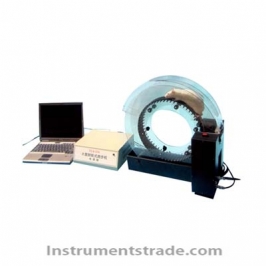
ZH-XWT Type Tail Suspension Test Video Analysis System Introduction: The ZH-XWT Suspended Tail Test Video Analysis System suspends experimental animals with their heads downward by fixing their tails. In this environment, the animals desperately struggle to escape but cannot, thus providing an unavoidable oppressive environment. After a period of experimentation, a series of parameters are recorded during the animals' despairing immobility in this environment. This typical "immobility" exhibited by the animals reflects a state known as "behavioral despair". This behavioral despair model is similar to depression and is sensitive to most antidepressant drugs. Furthermore, its efficacy is significantly correlated with clinical efficacy, making it useful for the initial selection of antidepressant drugs. Technical Specifications: Hardware dimensions: 1000×530×850mm Camera: gun-type camera Definition: 540 lines/600 lines Color: Black and white or color Minimum illumination: <0.005 Lux Camera brand: SONY gun-type camera Camera frame rate: 28/30 frames per second at 600X, Camera resolution: 640×480 Camera power supply: 12V 5A Camera type: 2.8~12mm auto zoom Encryption dog type: USB2.0 interface Signal transmission method: 10-meter integrated signal and power cable Video capture module: USB2.0 video capture card (supporting laptops) It can be imported into Excel, facilitating users' analysis and statistics in Excel, SPSS, SAS, and other software
ZH-XWT Type Tail Suspension Test Video Analysis System Introduction: The ZH-XWT Suspended Tail Test Video Analysis System suspends experimental animals with their heads downward by fixing their tails. In this environment, the animals desperately struggle to escape but cannot, thus providing an unavoidable oppressive environment. After a period of experimentation, a series of parameters are recorded during the animals' despairing immobility in this environment. This typical "immobility" exhibited by the animals reflects a state known as "behavioral despair". This behavioral despair model is similar to depression and is sensitive to most antidepressant drugs. Furthermore, its efficacy is significantly correlated with clinical efficacy, making it useful for the initial selection of antidepressant drugs.