Position: Home > > Lab general equipment > Synthesis / reaction equipment > Microwave synthesizer > XO-400A Ultrasonic Microwave Reaction System

XO-400A Ultrasonic Microwave Reaction System

Product ID:SYHCwbhc010

Price: Please inquire PDF Format
Supply Ability:50SETS/MON
Port:SHENZHEN
  • Product Introduction
  • Other information
  • Model NumberXO-400A
    Brand NameNJXIANOU
    Payment TermsTT,PAYPAL,Alibaba.com Pay
    XO-400A Ultrasonic Microwave Reaction System
     
    Product Introduction
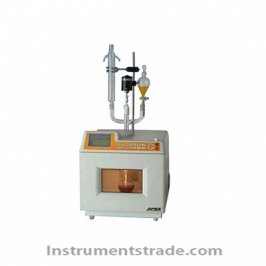
    The XO-400A Ultrasonic Microwave Reaction System is a programmable laboratory platform designed for microwave-assisted chemical synthesis, catalysis, extraction, and polymerization research. Operating at 2450 MHz with adjustable microwave power up to 3000 W, it supports reaction volumes from 1 to 4 liters.
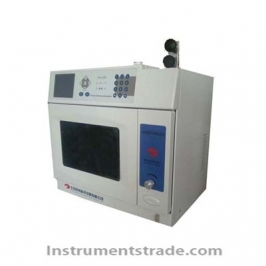
    The system integrates a microwave generator, touchscreen computer control, high-precision infrared temperature sensing, and automatic temperature-regulated microwave power adjustment. Optional refrigeration circulation, reaction vessels, stirring assemblies, sample injection, and reflux accessories allow researchers to configure the system for different experimental requirements.
    With continuous microwave emission, programmable reaction parameters, and temperature control accuracy of ±1°C, the XO-400A supports reproducible reaction conditions and efficient laboratory workflows.


    Performance Features
    1.Stable Microwave Generation: Uses a Samsung microwave generation system operating at 2450 MHz, with adjustable output power up to 3000 W.
    2. Automatic Temperature Control: High-precision non-contact infrared sensing monitors reaction temperature in real time, while automatic power regulation maintains temperature control accuracy of ±1°C under suitable operating conditions.
    4. Programmable Touchscreen Operation: A high-sensitivity touchscreen and 10-inch high-definition display provide convenient parameter setting and monitoring.
    5. Continuous Microwave Emission: The system uses non-pulsed continuous microwave emission with self-regulating power to support stable reaction conditions.
    6. Optional Cooling Circulation: A dedicated cooling-water arrangement and optional refrigeration circulator help manage heat generated during microwave operation.
    7.Flexible Reaction Vessel Materials: Glass, PTFE (Teflon), and other compatible vessel materials can be selected according to chemical compatibility and experimental requirements.
    8.Multiple Stirring Options: Optional magnetic and mechanical stirring assemblies improve mixing for different reaction systems.
    9. Reaction Process Recording: The display system supports real-time status monitoring, while the built-in camera option enables image capture and recording of reaction processes.
    10. Optional Computer Software: Computer connectivity supports real-time parameter display and recording, with storage for an extensive number of reaction programs.
    11. Expandable Reaction Configuration: Standard interfaces allow integration with compatible sample injection, gas introduction, liquid separation, and reflux equipment.
    12. Thermal Management: Variable-frequency forced-air cooling helps maintain a more uniform chamber temperature during operation.
    13. Safety Protection: Overtemperature and sensor-abnormality protection help improve operational reliability. Stainless steel inner and outer housings provide a durable enclosure and help restrict the entry of magnetic materials into the reaction chamber.


    Working Principle
    The XO-400A uses microwave energy at 2450 MHz to heat reaction materials through dielectric interactions. This rapid volumetric heating can accelerate suitable chemical reactions and support microwave-assisted synthesis, catalysis, extraction, and polymerization.
    An infrared temperature sensor continuously monitors the reaction temperature. The controller automatically adjusts microwave power in response to temperature changes, helping maintain the programmed reaction conditions. Optional stirring promotes mixing, while cooling circulation helps manage excess heat.
    Depending on the experimental setup, compatible reaction vessels can be connected to reflux condensers, sample injection systems, gas introduction lines, or liquid separation accessories to support different reaction workflows.
    Note: Despite the product's name, the supplied specifications describe a microwave reaction system and do not identify a dedicated ultrasonic generator or ultrasonic operating frequency. Confirm ultrasonic functionality with the manufacturer if simultaneous ultrasonic processing is required.


    Technical Parameters
    Parameter Specification
    Model XO-400A
    Product Type Programmable Microwave Reaction System
    Maximum Microwave Power 3000 W
    Microwave Power Adjustment Adjustable, 0–3000 W
    Operating Frequency 2450 MHz
    Reaction Volume 1000–4000 mL (1–4 L)
    Temperature Control Range 20–500°C, as specified
    Temperature Control Accuracy ±1°C
    Temperature Measurement Non-contact infrared sensor
    Microwave Emission Continuous, non-pulsed
    Power Regulation Automatic temperature-based power adjustment
    Control Interface 10-inch high-definition touchscreen
    Reaction Program Storage Five experimental data sets; optional computer software supports additional program storage
    Reaction Vessel Materials Glass, PTFE (Teflon), or other compatible materials
    Stirring Optional magnetic or mechanical stirring
    Cooling Dedicated cooling-water arrangement; optional refrigeration circulator
    Process Monitoring Real-time display; optional camera recording
    Optional Accessories Sample injection, gas introduction, reflux condenser, liquid separation equipment
    Safety Protection Overtemperature and sensor fault protection
    Housing Stainless steel inner and outer enclosure


    Application Scenarios
    • Chemical Synthesis: Microwave-assisted synthesis of organic and inorganic compounds.
    •  Catalytic Reaction Research: Investigation of reaction pathways and catalytic efficiency under controlled heating conditions.
    • Extraction Research: Microwave-assisted extraction of suitable chemical, natural-product, and laboratory samples.
    • Polymerization: Development and optimization of microwave-assisted polymer synthesis processes.
    • Pharmaceutical Research: Reaction optimization and synthesis of pharmaceutical intermediates.
    • Materials Science: Preparation and processing of selected functional materials.
    •  Process Development: Evaluation of microwave power, temperature, and reaction-time effects during laboratory-scale process development.
    • Reflux Reactions: Integration with compatible condensers and sample-handling accessories for suitable open-system experiments.


    XO-400A vs. Conventional Microwave Reaction Systems
    Feature XO-400A Conventional Microwave Reaction Systems
    Microwave Frequency 2450 MHz Depends on model
    Maximum Microwave Power 3000 W Depends on model
    Reaction Volume 1–4 L Depends on model
    Temperature Monitoring Non-contact infrared sensing Depends on configuration
    Temperature Control Automatic power regulation, ±1°C specified Depends on control system
    Microwave Emission Continuous, non-pulsed Depends on model
    Reaction Vessel Options Glass, PTFE, and other compatible materials Depends on configuration
    Stirring Optional magnetic or mechanical Depends on configuration
    Cooling Optional refrigeration circulator Depends on system design
    Process Recording Optional camera and computer software Depends on available accessories
    System Expansion Standard interfaces for compatible accessories Depends on system design


    Frequently Asked Questions
    1. What is the XO-400A microwave reaction system used for?
    It is designed for microwave-assisted chemical synthesis, catalysis, extraction, polymerization, and other laboratory reaction studies.
    2. What is the maximum microwave power of the XO-400A?
    The maximum specified microwave power is 3000 W, with adjustable output from 0 to 3000 W.
    3. What is the reaction volume of the XO-400A?
    The specified reaction volume is 1000–4000 mL, equivalent to 1–4 liters.
    4. What is the operating frequency?
    The system operates at 2450 MHz, a commonly used microwave frequency for laboratory and industrial heating applications.
    5. How accurately can the reaction temperature be controlled?
    The specified temperature control accuracy is ±1°C, using non-contact infrared temperature measurement and automatic microwave power regulation. Actual performance depends on the sample, vessel, sensor configuration, and operating conditions.
    6. Which reaction vessel materials are available?
    Glass, PTFE (Teflon), and other compatible materials can be selected. Vessel selection should account for chemical compatibility, operating temperature, pressure, and the specific reaction procedure.
    7. Can the XO-400A perform reflux reactions?
    Yes. Compatible reflux condensers and sample injection accessories can be integrated through the system's standard interfaces, subject to the selected configuration.
    8. Does the system include ultrasonic functionality?
    The supplied technical description does not specify an ultrasonic transducer or ultrasonic frequency. Confirm whether an ultrasonic module is available as a standard or optional component before purchasing.
    9. Can reaction parameters be recorded and stored?
    Yes. The touchscreen supports storage of five experimental data sets. Optional computer software provides real-time parameter recording and expanded reaction-program storage, while an optional camera can record the reaction process.


  • Frequently Asked Questions
    1. What is the XO-400A microwave reaction system used for?
    It is designed for microwave-assisted chemical synthesis, catalysis, extraction, polymerization, and other laboratory reaction studies.
    2. What is the maximum microwave power of the XO-400A?
    The maximum specified microwave power is 3000 W, with adjustable output from 0 to 3000 W.
    3. What is the reaction volume of the XO-400A?
    The specified reaction volume is 1000–4000 mL, equivalent to 1–4 liters.
    4. What is the operating frequency?
    The system operates at 2450 MHz, a commonly used microwave frequency for laboratory and industrial heating applications.
    5. How accurately can the reaction temperature be controlled?
    The specified temperature control accuracy is ±1°C, using non-contact infrared temperature measurement and automatic microwave power regulation. Actual performance depends on the sample, vessel, sensor configuration, and operating conditions.
    6. Which reaction vessel materials are available?
    Glass, PTFE (Teflon), and other compatible materials can be selected. Vessel selection should account for chemical compatibility, operating temperature, pressure, and the specific reaction procedure.
    7. Can the XO-400A perform reflux reactions?
    Yes. Compatible reflux condensers and sample injection accessories can be integrated through the system's standard interfaces, subject to the selected configuration.
    8. Does the system include ultrasonic functionality?
    The supplied technical description does not specify an ultrasonic transducer or ultrasonic frequency. Confirm whether an ultrasonic module is available as a standard or optional component before purchasing.
    9. Can reaction parameters be recorded and stored?
    Yes. The touchscreen supports storage of five experimental data sets. Optional computer software provides real-time parameter recording and expanded reaction-program storage, while an optional camera can record the reaction process.
Products
Analytical instruments
Physical property test
Environmental monitoring and analysis
Lab general equipment
About us
About this website
Our service
Product purchase
Contact Us

Newsletter

Make Sure you dont miss interesting happenings by joining our newsletter program.

Contact Us
+86-18620722006
instruments@instrumentstrade.com