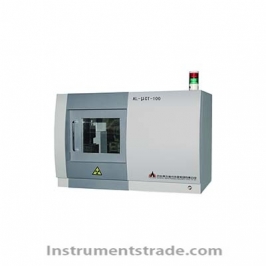
WS-Ox-M Animal Hypoxia Workstation Introduction: In the fields of life sciences, basic medicine, and high altitude physiology, accurately simulating hypoxic environments is crucial for exploring the effects of hypoxia on animal organisms. The hypoxic workstation is precisely the core equipment designed for such rigorous animal experiments. Unlike conventional hypoxic chambers that require opening to disrupt the environment during operation, the hypoxic workstation achieves a revolutionary breakthrough through its fully enclosed structure and built-in operating gloves. Researchers can perform various operations on animals inside the chamber through the airtight gloves, without opening the main chamber, in an environment where the target hypoxic level (such as 1%-21% O₂ adjustable) is continuously and stably maintained, including: Daily care: Safely perform feeding and water replacement to ensure the basic survival needs of animals in long-term experiments. Experimental intervention: Implement precise drug administration, injection, surgery, or physiological parameter monitoring (such as body temperature and heart rate). Behavior observation: Conduct animal behavior experiments under constant hypoxic conditions to minimize interference from environmental fluctuations. In situ sampling: Collecting blood, tissue, and other samples directly in a hypoxic environment to minimize exposure to oxidative stress or metabolic changes caused by exposure to normoxic conditions, thereby ensuring the authenticity of subsequent analytical data. Equipment operation: Place or operate small experimental instruments (such as micro treadmills, cameras). Features: 1. Excellent environmental stability: The operation process operates in a "zero-interruption" hypoxic environment with minimal oxygen concentration fluctuations (typically <±0.1%), providing continuous and reliable hypoxic conditions for chronic, long-term hypoxic exposure experiments (from days to months), eliminating the issues of concentration rebound and recovery delay caused by frequent opening of the chamber. 2. Operational convenience and continuity: Without waiting for the environment to recover, experimental operations can be carried out at any time and frequently, greatly enhancing experimental efficiency and flexibility. 3. Reducing animal stress: Closed operation reduces direct interference from light, noise, and human activities on animals, which helps to obtain physiological response data that is closer to their natural state. 4. Ensuring sample authenticity: In-situ sampling and processing under hypoxic conditions are crucial for studying hypoxia-related biomarkers, gene expression, and metabolites, avoiding artifacts caused by oxidation after sampling. 5. Integrated environmental control (optional): Advanced models can integrate precise temperature and humidity control systems as well as CO₂ removal devices, providing a more comfortable and physiologically stable experimental environment for animals. 6. Cleanliness and Safety: The enclosed design, coupled with a high-efficiency filtration system (HEPA/ULPA), effectively controls microbial contamination. Additionally, it provides a physical barrier for operators, isolating them from potential allergens or experimental harmful substances. Application scenarios The hypoxic workstation serves as an ideal platform for research on high altitude adaptation mechanisms, ischemic disease models, hypoxic-related tumors, hypoxia and metabolic diseases, hypoxia and cardiovascular diseases, perinatal hypoxic-ischemic brain damage, as well as any animal experiments requiring in vivo manipulation or in situ sampling in a stable hypoxic environment. It overcomes the core limitations of traditional hypoxic chambers, laying a solid foundation for obtaining rigorous, repeatable, and high-quality scientific research data. Technical Specifications: 1. Provide a stable hypoxic environment for the establishment of animal hypoxic experimental models 2. Automatically proportion gases according to the set gas concentration to maintain a constant oxygen concentration environment. There is no need to mix proportional gases outside the chamber, ensuring accurate experimental oxygen concentration and saving gas resources 3. Touch screen control, user-friendly interface, easy to operate 4. Monitoring parameters: temperature, humidity, oxygen concentration, carbon dioxide concentration 5. Control accuracy: ±0.1% 6. Non-dispersive infrared (NDIR) carbon dioxide sensor, measurement range: 0~5000ppm 7. Imported electrochemical oxygen concentration detector, with a measurement range of 0-25% vol (optional 0.1-99.0%), good linearity, accurate detection, long service life, and temperature compensation mechanism 8. Temperature detection: Imported high-precision temperature sensor 9. Dynamic curve of oxygen concentration change, providing an intuitive understanding of the process of oxygen concentration variation 10. Equipped with a built-in UV sterilization lamp, it can perform sterilization at scheduled times 11. It features a timing function, automatically returning to normoxia upon completion of the experiment, accompanied by an audible prompt 12. Automatic calibration of oxygen concentration: Quick calibration of the sensor through the controller 13. The unique gas mixing and circulation mechanism ensures uniform gas concentration within the box 14. High-performance solenoid valve, featuring stable performance and an extended lifespan 15. The front panel can be disassembled by hand, making it convenient to place equipment
WS-Ox-M Animal Hypoxia Workstation Introduction: In the fields of life sciences, basic medicine, and high altitude physiology, accurately simulating hypoxic environments is crucial for exploring the effects of hypoxia on animal organisms. The hypoxic workstation is precisely the core equipment designed for such rigorous animal experiments. Unlike conventional hypoxic chambers that require opening to disrupt the environment during operation, the hypoxic workstation achieves a revolutionary breakthrough through its fully enclosed structure and built-in operating gloves. Researchers can perform various operations on animals inside the chamber through the airtight gloves, without opening the main chamber, in an environment where the target hypoxic level (such as 1%-21% O₂ adjustable) is continuously and stably maintained, including: Daily care: Safely perform feeding and water replacement to ensure the basic survival needs of animals in long-term experiments. Experimental intervention: Implement precise drug administration, injection, surgery, or physiological parameter monitoring (such as body temperature and heart rate). Behavior observation: Conduct animal behavior experiments under constant hypoxic conditions to minimize interference from environmental fluctuations. In situ sampling: Collecting blood, tissue, and other samples directly in a hypoxic environment to minimize exposure to oxidative stress or metabolic changes caused by exposure to normoxic conditions, thereby ensuring the authenticity of subsequent analytical data. Equipment operation: Place or operate small experimental instruments (such as micro treadmills, cameras).