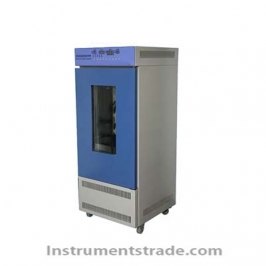
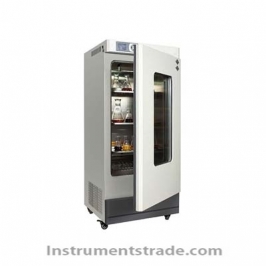
WF80-2 Microplate Constant Temperature Incubator Introduction: The WF80-2 microplate constant temperature incubator is a microplate incubator formed by combining microprocessing technology with PID control. It features small size, light weight, low noise, temperature, shaking, and time LCD display, elegant appearance, and simple operation. It is mainly used for cell culture and incubation of solutions in enzyme-linked immunosorbent assay (ELISA) plates (96-well/384-well plates), cell culture plates (24-well plates, 48-well plates, 96-well plates, etc.) at appropriate temperatures. Features: 1. LCD display, user-friendly operation interface; 2. It has the function of heating the microplate from top to bottom, ensuring that each well of the microplate is heated evenly; 3. The microprocessor controls temperature and time, ensuring good linearity and minimal fluctuation in temperature control; 4. It can simultaneously display the set parameters and actual parameters of temperature, time, and speed; 5. Multiple safety protection functions, compliant with CE safety standards, ensuring safety and reliability; 6. It can accommodate 2 standard microplates and microtiter plates, and emits an audible alarm signal after the program has finished running. Technical Specifications: Temperature control range: room temperature: +5℃~80℃ Setting range: 5℃ ~80℃ Temperature control accuracy: ±0.3℃ Temperature uniformity: ±0.3℃ Heating rate: ≤ 15 minutes (from 20℃ to 80℃) Timing range: 1 minute - 99 hours and 59 minutes / 0 indicates infinite duration Capacity: 2 microplates, height ≤ 23mm Maximum power: 150W Overall dimensions: (W×D×H) 280×278×150 (mm) Weight: 4.0kg Input power supply: AC100~230V 50-60Hz
WF80-2 Microplate Constant Temperature Incubator Introduction: The WF80-2 microplate constant temperature incubator is a microplate incubator formed by combining microprocessing technology with PID control. It features small size, light weight, low noise, temperature, shaking, and time LCD display, elegant appearance, and simple operation. It is mainly used for cell culture and incubation of solutions in enzyme-linked immunosorbent assay (ELISA) plates (96-well/384-well plates), cell culture plates (24-well plates, 48-well plates, 96-well plates, etc.) at appropriate temperatures.