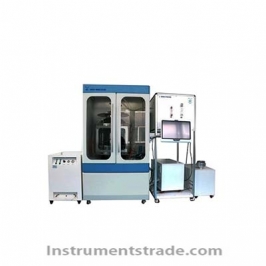
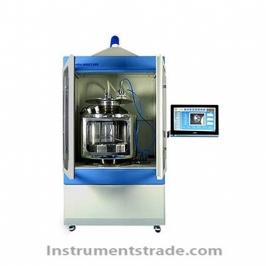
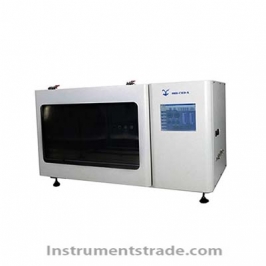
WBE-850-LD High-Throughput Whole-Body Exposure System for Animals Introduction: The whole-body exposure system is a commonly used experimental equipment in toxicology, pharmacology, and environmental health science research. It is primarily designed to allow experimental animals (such as mice, rats, guinea pigs, etc.) to be exposed to controlled concentrations of test substances in gaseous, vaporous, or aerosol forms through natural breathing pathways, covering their entire bodies. Compared to the nasal exposure system, which only exposes the respiratory tract, the whole-body exposure system allows the entire body of the test animal (including skin and hair) to be exposed to the toxic environment. Purpose: 1. Simulate real exposure scenarios: The whole-body exposure and contamination system is closer to simulating the exposure situations that humans or animals may encounter in real-world environments, such as air pollution, chemical spills, or drug nebulization. Through whole-body exposure, the comprehensive effects of pollutants entering the body through various routes such as the respiratory tract and skin can be studied. 2. Investigate the combined effects of multiple exposure routes: Substances inhaled not only affect the respiratory tract but also enter the blood circulation, reaching other target organs such as the cardiovascular system, nervous system, liver, and kidneys. Whole-body exposure allows for a more comprehensive assessment of the systemic toxicity of the test substance. Characteristics 1. Multi-material compatibility: It is suitable for various types of toxic substances, such as PM2.5 particulate matter, cigarette smoke, VOCs organic solvent aerosols, liquid atomized aerosols, gases like methane, as well as dust, nanoparticles, pollen, etc., meeting different research needs. 2. Environmental parameter control and monitoring: Equipped with an advanced control system, it can monitor and display in real-time environmental parameters such as temperature, humidity, pressure, oxygen concentration, carbon dioxide concentration, and drug concentration within the exposure cabinet, ensuring a stable experimental environment that meets experimental requirements. The accuracy and stability of exposure concentration are ensured through a gas flow control system. 3. Data recording and tracing: It can record various data during the experiment, including changes in environmental parameters, exposure time, animal reactions, etc., making it convenient for researchers to review and analyze at any time. These data are of great value for evaluating experimental results, summarizing experimental patterns, and guiding subsequent research. 4. Exhaust gas treatment: Equipped with an efficient exhaust gas treatment system, it can effectively filter and purify the exhaust gas generated during experiments, removing or reducing harmful substances to safe levels, thus preventing pollution of the laboratory environment and harm to the health of laboratory personnel. 5. SUS304 stainless steel material: The cabinet body is made of SUS304 stainless steel, which boasts excellent sealing and corrosion resistance, effectively preventing the leakage of toxic gases. 6. Light control: Equipped with built-in LED lights, it supports manual switching. During experiments, turning on the lights can clearly illuminate the interior of the chamber, facilitating observation of animal behavior and toxic reactions. If it is necessary to simulate a specific environment (such as circadian rhythm research), the lights can be turned off to create a dark environment, providing a foundation for customizing experimental scenarios. 7. Ultraviolet disinfection and sterilization: After the experiment, the built-in ultraviolet lamp is turned on to utilize the strong sterilizing ability of ultraviolet rays to carry out disinfection and sterilization of the cabin space. This can effectively eliminate residual pathogens and microorganisms, avoid cross-contamination, and create a clean environment for the next experiment. 8. Video surveillance: It features real-time observation and playback capabilities. Users can view the status of animals in the chamber at any time, record animal activities, abnormal reactions, etc. during the exposure process; accurately capture subtle physiological behavior changes, supplement intuitive evidence for data analysis, and ensure that the experimental "process is traceable and details are not omitted". 9. Warning light: Alarm parameters can be set (such as contamination concentration threshold, abnormal temperature and humidity values, etc.). When the cabin environment or contamination parameters reach the set values, the alarm light flashes and the horn sounds, immediately alerting scientific researchers to intervene. 10. Sprinkler system: After the experiment, the external water source can be connected to start flushing the cabin. For toxic residues, animal excreta, etc., the cabin can be quickly cleaned to reduce the burden of manual brushing. Technical Specifications: Name: High-throughput whole-body animal exposure system Model: WBE-850-LD Standard configuration: liquid aerosol generator and dry powder aerosol generator Exposure cages: 9 Exposure chamber external dimensions (W×D×H): 1600x800x1800mm Weight: approximately 200kg
WBE-850-LD High-Throughput Whole-Body Exposure System for Animals Introduction: The whole-body exposure system is a commonly used experimental equipment in toxicology, pharmacology, and environmental health science research. It is primarily designed to allow experimental animals (such as mice, rats, guinea pigs, etc.) to be exposed to controlled concentrations of test substances in gaseous, vaporous, or aerosol forms through natural breathing pathways, covering their entire bodies. Compared to the nasal exposure system, which only exposes the respiratory tract, the whole-body exposure system allows the entire body of the test animal (including skin and hair) to be exposed to the toxic environment.