Position: Home > > Environmental monitoring and analysis > Water quality physical chemical index > Water quality analyzer > UPW-Q700C11JYP Fully Automatic Integrated Water Quality Analyzer

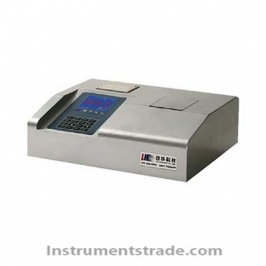
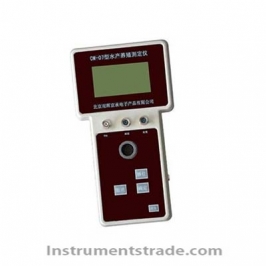
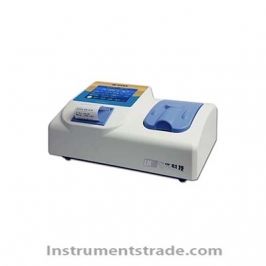
UPW-Q700C11JYP Fully Automatic Integrated Water Quality Analyzer

Product ID:HSCfx084

Price: Please inquire PDF Format
Supply Ability:50 SETS/MON
Port:SHENZHEN
  • Product Introduction
  • Other information
  • Model NumberUPW-Q700C11JYP
    Brand NameYOUPUTONGYONG
    Payment TermsTT,PAYPAL,Alibaba.com Pay
    UPW-Q700C11JYP Fully Automatic Integrated Water Quality Analyzer
     
    Product Introduction
    The UPW-Q700C11JYP Fully Automatic Integrated Water Quality Analyzer is an automated multi-parameter water testing system designed for environmental monitoring, water utilities, wastewater treatment, agriculture, chemical industries, aquaculture, and laboratory research. It integrates automatic sample loading, reagent dispensing, colorimetric analysis, rapid BOD measurement, trace heavy metal detection, biological toxicity analysis, electrochemical testing, and automatic titration in one platform.
    The system automates key procedures, including sample dispensing, reagent addition, digestion, cooling, measurement, waste discharge, and cleaning. Its 7-inch color touchscreen, preset calibration curves, built-in printer, and storage capacity of 10,000 measurement records simplify operation and data management. Suitable for fixed laboratories and mobile monitoring vehicles, the UPW-Q700C11JYP provides a flexible solution for routine water quality analysis.


    Performance Features
    •  Integrated multi-parameter testing: Combines colorimetry, BOD testing, trace heavy metal analysis, biological toxicity testing, electrochemical measurement, and automatic titration.
    •  Fully automated workflow: Automates sample loading, reagent dispensing, digestion, cooling, detection, waste discharge, and cleaning for applicable tests.
    •  Dual-wavelength COD detection: Uses 420 nm and 610 nm optical channels to support measurements across different COD concentration levels.
    • Automatic reagent dispensing: High-precision imported syringe pumps improve dispensing accuracy, while dedicated cleaning positions help reduce cross-contamination.
    • Standard-method colorimetry: Supports COD rapid digestion, ammonia nitrogen testing by the Nessler reagent method, and total phosphorus testing using ammonium molybdate digestion methods.
    • Rapid BOD measurement: Microbial membrane electrode technology with temperature control enables BOD measurement in approximately 8 minutes on average.
    •  Trace heavy metal analysis: Anodic stripping voltammetry supports ppb-level detection for applicable metal ions, with individual tests taking no more than 5 minutes.
    •  Automatic titration: Supports CODMn, calcium, magnesium, total hardness, and total alkalinity measurements.
    • Electrochemical testing: Compatible electrode connections support pH, conductivity, dissolved oxygen, and selected ion measurements.
    •  Biological toxicity assessment: Evaluates overall water toxicity and supports measurement of total microbial content using the configured biological detection module.
    •  Intelligent calibration: Stores 100 standard curves and supports automatic curve correction and regression fitting with up to five points.
    • Convenient data management: Stores 10,000 measurement records and supports built-in printing and computer-based data processing.
    •  Safe operation: Uses low-voltage power for the digestion unit and forced-air cooling to improve cooling efficiency and measurement consistency.
    • Low sample consumption: Microliter-scale dosing technology reduces sample consumption to the milliliter level.
    • Easy maintenance: Imported critical tubing components and reserved maintenance access facilitate replacement of aging tubing.
    •  Optional power backup: An optional UPS can support power continuity where required.


    Working Principle
    The UPW-Q700C11JYP combines several analytical technologies according to the selected water quality parameter.
    Colorimetric analysis: The instrument automatically adds the required reagents, performs digestion when necessary, cools the reaction mixture, and measures absorbance using its multi-wavelength optical system. COD detection uses 420 nm and 610 nm channels. Concentrations are calculated using preset or user-defined calibration curves.
    BOD measurement: A microbial membrane electrode detects changes associated with the biological consumption of oxygen in the sample. The temperature-controlled module enables rapid BOD measurement, with an average analysis time of approximately eight minutes.
    Heavy metal analysis: Anodic stripping voltammetry measures electroactive metal ions through electrochemical deposition and subsequent stripping. The resulting signal is used to determine metal concentration, with ppb-level detection achievable for applicable analytes and conditions.
    Electrochemical analysis: Compatible electrodes measure parameters such as pH, conductivity, dissolved oxygen, and selected ions.
    Automatic titration: The titration module adds reagents in a controlled manner and calculates the target parameter from the titration endpoint and reagent consumption.
    After measurement, the system can automatically record results, discharge waste, and clean the relevant fluid paths for subsequent samples.


    Technical Parameters
    Parameter Specification
    Model UPW-Q700C11JYP
    Instrument Type Fully Automatic Integrated Water Quality Analyzer
    Optical Source Life 100,000 hours
    Optical Stability ±0.003 Abs / 10 min
    Absorbance Range 0.000–3.000 Abs
    Absorbance Resolution 0.001 Abs
    Digestion Temperature Range Room temperature to 190°C
    Standard Curve Capacity 100 curves
    Regression Curve Fitting Up to 5 points
    Data Storage 10,000 records
    Display 7-inch full-color touchscreen
    Operation Touchscreen-controlled automatic operation
    Communication Interfaces RS232 / USB
    Printing Built-in printer
    COD Optical Channels 420 nm and 610 nm
    BOD Measurement Time Approximately 8 minutes on average
    Trace Heavy Metal Detection Anodic stripping voltammetry; ppb-level capability for applicable analytes
    Integrated Modules Automatic sample loading, reagent dispensing, colorimetry, BOD, trace heavy metals, biological toxicity, electrochemical analysis, automatic titration
    Power Backup Optional UPS
    Note: Individual parameter ranges, detection limits, repeatability, sample throughput, and supported analyte lists were not fully specified. Confirm the required configuration and applicable testing methods with the manufacturer.


    Application Scenarios
    • Environmental monitoring: Surface water, groundwater, and pollution investigation.
    •   Wastewater treatment: Routine monitoring of COD, BOD, ammonia nitrogen, total phosphorus, and other applicable indicators.
    • Drinking water utilities: Water quality inspection and routine laboratory analysis.
    •  Industrial process water: Water quality control in chemical and manufacturing operations.
    •  Agriculture and aquaculture: Water monitoring for agricultural production, fish farming, and irrigation.
    • Water conservancy and marine surveys: Field and laboratory testing of water samples.
    •  Public health and disease prevention: Water safety screening and selected chemical or biological assessments.
    •  Research laboratories: Multi-method water analysis, method development, and environmental research.
    •  Mobile monitoring vehicles: Integrated testing for field sampling campaigns and mobile laboratories.


    Comparison: UPW-Q700C11JYP vs. Conventional Water Quality Testing Equipment
    Feature UPW-Q700C11JYP Conventional Separate Instruments
    System Configuration Integrated multi-module platform Multiple standalone instruments
    Sample and Reagent Handling Automated Often manual or partially automated
    COD and Total Phosphorus Automated digestion and colorimetry May require separate digestion and measurement equipment
    BOD Analysis Integrated rapid BOD module Separate BOD analyzer may be required
    Trace Heavy Metals Integrated anodic stripping voltammetry Separate electrochemical analyzer may be required
    Biological Toxicity Integrated detection module Separate toxicity testing system may be required
    Electrochemical Parameters Integrated module with compatible electrodes Separate meters may be required
    Titration Integrated automatic titration module Separate titrator may be required
    Calibration Management 100 stored curves; automatic correction Depends on instrument
    Data Storage 10,000 records Depends on individual devices
    Printing and Connectivity Built-in printer, RS232/USB Varies by device
    Installation Fixed laboratories or mobile monitoring vehicles Depends on equipment size and configuration
    The UPW-Q700C11JYP consolidates multiple water analysis workflows into one automated platform, reducing routine manual handling and simplifying data management. It is especially suitable for laboratories and monitoring teams that need a broad range of analytical functions in a single integrated system.


     Frequently Asked Questions (FAQ)
    Q1: What is the UPW-Q700C11JYP used for?
    It is designed for automated multi-parameter water quality testing in environmental monitoring, wastewater treatment, water utilities, agriculture, aquaculture, industry, and research.
    Q2: Which water quality parameters can it measure?
    Depending on the installed modules and methods, it supports COD, ammonia nitrogen, total phosphorus, BOD, selected heavy metals, pH, conductivity, dissolved oxygen, selected ions, total hardness, total alkalinity, CODMn, and biological toxicity indicators.
    Q3: Does the instrument automatically complete the digestion process?
    Yes. For applicable digestion-based tests, it automatically handles reagent addition, quantitative dispensing, digestion, cooling, measurement, waste discharge, and cleaning.
    Q4: How quickly can the instrument measure BOD?
    The integrated BOD module provides an average measurement time of approximately eight minutes. Actual results depend on the sample, method, and operating conditions.
    Q5: Can it detect trace heavy metals?
    Yes. Its anodic stripping voltammetry module offers ppb-level detection for applicable metal ions, with an individual test time of no more than five minutes according to the supplied specifications.
    Q6: How many calibration curves and data records can it store?
    It stores up to 100 standard curves and 10,000 detailed measurement records. Custom regression curves can be developed using up to five fitting points.
    Q7: Is the instrument suitable for mobile laboratories?
    Yes. It is designed for use in fixed laboratories and mobile monitoring vehicles, subject to suitable installation and power arrangements.
    Q8: Does the system require manual reagent preparation?
    The system uses dedicated reagents and consumables, with preset calibration curves available for supported methods. Reagent preparation and replacement requirements depend on the selected test method.
    Q9: Can measurement data be exported or printed?
    Yes. The built-in printer supports direct result printing, while RS232/USB interfaces and supporting PC software enable data transfer and statistical processing.

     
  •  Frequently Asked Questions (FAQ)
    Q1: What is the UPW-Q700C11JYP used for?
    It is designed for automated multi-parameter water quality testing in environmental monitoring, wastewater treatment, water utilities, agriculture, aquaculture, industry, and research.
    Q2: Which water quality parameters can it measure?
    Depending on the installed modules and methods, it supports COD, ammonia nitrogen, total phosphorus, BOD, selected heavy metals, pH, conductivity, dissolved oxygen, selected ions, total hardness, total alkalinity, CODMn, and biological toxicity indicators.
    Q3: Does the instrument automatically complete the digestion process?
    Yes. For applicable digestion-based tests, it automatically handles reagent addition, quantitative dispensing, digestion, cooling, measurement, waste discharge, and cleaning.
    Q4: How quickly can the instrument measure BOD?
    The integrated BOD module provides an average measurement time of approximately eight minutes. Actual results depend on the sample, method, and operating conditions.
    Q5: Can it detect trace heavy metals?
    Yes. Its anodic stripping voltammetry module offers ppb-level detection for applicable metal ions, with an individual test time of no more than five minutes according to the supplied specifications.
    Q6: How many calibration curves and data records can it store?
    It stores up to 100 standard curves and 10,000 detailed measurement records. Custom regression curves can be developed using up to five fitting points.
    Q7: Is the instrument suitable for mobile laboratories?
    Yes. It is designed for use in fixed laboratories and mobile monitoring vehicles, subject to suitable installation and power arrangements.
    Q8: Does the system require manual reagent preparation?
    The system uses dedicated reagents and consumables, with preset calibration curves available for supported methods. Reagent preparation and replacement requirements depend on the selected test method.
    Q9: Can measurement data be exported or printed?
    Yes. The built-in printer supports direct result printing, while RS232/USB interfaces and supporting PC software enable data transfer and statistical processing.


Products
Analytical instruments
Physical property test
Environmental monitoring and analysis
Lab general equipment
About us
About this website
Our service
Product purchase
Contact Us

Newsletter

Make Sure you dont miss interesting happenings by joining our newsletter program.

Contact Us
+86-18620722006
instruments@instrumentstrade.com