Position: Home > > Environmental monitoring and analysis > Water organic pollutants > Oil measuring instrument > UPW-OB100 Portable Fully Automatic Infrared Oil Content Analyzer

UPW-OB100 Portable Fully Automatic Infrared Oil Content Analyzer

Product ID:HSYJcy038

Price: Please inquire PDF Format
Supply Ability:50 SETS/MON
Port:SHENZHEN
  • Product Introduction
  • Other information
  • Model NumberUPW-OB100
    Brand NameAOSHENGHUA
    Payment TermsT/T, paypal,Alibaba.com Pay
    UPW-OB100 Portable Fully Automatic Infrared Oil Content Analyzer
     
    Product Introduction
    The UPW-OB100 Portable Fully Automatic Infrared Oil Content Analyzer is designed for measuring total oil, petroleum hydrocarbons, and animal and vegetable oils in a wide range of water samples. Suitable for surface water, groundwater, industrial wastewater, domestic sewage, seawater, aquaculture water, and agricultural irrigation water, it can also be used to determine oil content in cooking fumes from the catering industry.
    The instrument integrates sample volume measurement, demulsification, solvent extraction, water removal, infrared detection, data storage, and result printing into an automated workflow. Its non-contact sample volume measurement system automatically reads the water sample volume and adds the appropriate extraction solvent, minimizing sample transfers and helping reduce oil loss during preparation.
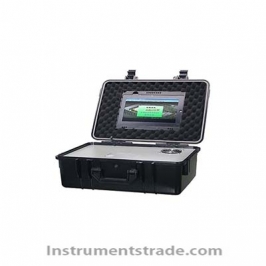
    Featuring a rugged, portable carrying-case design, the UPW-OB100 is suitable for laboratory use and field testing in vehicle-mounted, mobile, and marine environments. It supports full-spectrum scanning, three-wavenumber measurement, and single-point non-dispersive infrared analysis, providing flexible measurement options for different testing requirements.
    Additional features include automatic magnesium silicate column switching, extraction solvent purity monitoring, multiple calibration methods, adjustable sample volumes and extraction ratios, and an integrated printer. These capabilities make the UPW-OB100 a practical solution for environmental monitoring, wastewater testing, and industrial oil-content analysis.


    Performance Features
    1. Fully Automated Analysis: Automatically performs demulsification, solvent extraction, water removal, infrared measurement, data storage, and other routine analytical operations.
    2. Portable and Rugged Construction: Uses a waterproof, shock-resistant, heat-resistant, and corrosion-resistant carrying case for mobile testing and demanding field environments.
    3. Automatic Sample Volume Measurement: Measures water sample volume without contact, automatically calculates the required extraction solvent addition, and transfers the sample directly into the extraction process.
    4. Three Oil Measurements in One Workflow: Supports determination of total oil, petroleum hydrocarbons, and animal and vegetable oils within an integrated analytical workflow, subject to the selected method and required sample treatment.
    5. Automatic Magnesium Silicate Column Switching: Monitors the remaining magnesium silicate capacity, provides a reserve column position, and can automatically switch to the backup column when the primary column requires replacement.
    6.  Integrated Oil-Water Separation: A specialized separator removes water and impurities without requiring sodium sulfate desiccant filling or membrane replacement.
    7. Automatic Solvent Purity Monitoring: Evaluates extraction solvent purity and provides an alarm when solvent replacement is required.
    8. Flexible Sample Preparation: Allows users to configure sample volume and extraction ratio for samples with different oil concentrations.
    9. Three Infrared Measurement Modes: Offers full-spectrum scanning, three-wavenumber measurement, and single-point non-dispersive infrared measurement.
    10. Multiple Calibration Options: Supports three-standard correction, standard-curve calibration, and single-point calibration to accommodate different analytical workflows.
    11. Real-Time Result Printing: Includes an embedded printer for immediate output of measurement results and testing records.
    12. Flexible Touchscreen or Tablet Operation: Provides a dedicated tablet mounting position, allowing users to operate the instrument with a handheld tablet or mount it directly on the analyzer.


    Working Principle
    The UPW-OB100 uses infrared absorption spectroscopy to determine oil concentrations after extracting oil compounds from the sample into an appropriate solvent.
    The analytical process consists of the following stages:
    1. Automatic Sample Volume Measurement: The instrument measures the volume of the water sample without direct contact and calculates the required extraction solvent volume.
    2.  Demulsification and Solvent Extraction: The sample undergoes automated pretreatment to separate oil compounds from the aqueous phase and transfer them into the extraction solvent.
    3. Water and Impurity Removal: The integrated oil-water separator removes residual water and impurities from the extract. The instrument also uses a magnesium silicate column where required for the selected oil determination method.
    4.  Infrared Measurement: The prepared extract is analyzed using one of three modes: full-spectrum scanning, three-wavenumber measurement, or single-point non-dispersive infrared measurement.
    5. Concentration Calculation: The instrument processes the infrared absorption signal using the selected calibration method and accounts for the sample volume and extraction ratio to determine the oil concentration.
    6. Data Storage and Reporting: The result is stored electronically and can be printed immediately using the built-in printer.
    The automated workflow reduces manual sample handling, improves operational convenience, and supports repeatable oil-content analysis. The exact target fraction and applicable analytical standard depend on the selected measurement method and sample preparation procedure.


    Technical Parameters
    Parameter Specification
    Model UPW-OB100
    Instrument Type Portable Fully Automatic Infrared Oil Content Analyzer
    Measurement Principle Infrared absorption spectroscopy
    Baseline Stability Real-time automatic zero correction; designed to eliminate baseline drift effects
    Method Detection Limit 0.0125 mg/L (1,000 mL sample, 25 mL extract, 40 mm optical path)
    Method Detection Limit 0.05 mg/L (500 mL sample, 50 mL extract, 40 mm optical path)
    Minimum Detection Concentration 0.0006 mg/L, as specified by the manufacturer
    Basic Measurement Range 0–100 mg/L
    Maximum Measurement Concentration Up to 100% oil, with automatic dilution for high concentrations
    Accuracy Error ≤2%
    Repeatability RSD ≤1% for 11 measurements of an oil sample at 30–40 mg/L
    Linear Correlation Coefficient R > 0.999
    Wavenumber Range 60,000–85,000 m⁻¹, equivalent to approximately 2940–4167 nm
    Wavenumber Accuracy ±50 m⁻¹, as interpreted from the supplied specification
    Wavenumber Repeatability ±25 m⁻¹, as interpreted from the supplied specification
    Absorbance Range 0.00000–2.00000 AU
    Corresponding Transmittance Range 100%–1% T
    Full-Spectrum Scanning Speed 30 seconds per scan
    Non-Dispersive Infrared Measurement Time 2 seconds per measurement
    Overall Sample Measurement Time ≤10 minutes
    Sample Volume Range 0–600 mL
    Sample Volume Measurement Automatic, with error ≤2%
    Measurement Modes Full-spectrum scanning, three-wavenumber measurement, and single-point non-dispersive infrared
    Calibration Methods Three-standard correction, standard-curve calibration, and single-point calibration
    Automated Functions Demulsification, extraction, water removal, measurement, data storage, and result printing
    Technical note: The original source lists the wavenumber range using “px⁻¹,” which is not a standard spectroscopic unit. The table interprets this as cm⁻¹ converted to m⁻¹ based on the stated wavelength equivalents. Confirm the manufacturer's intended units and the stated minimum detection concentration before publishing the final technical specification.


    Application Scenarios
    • Surface Water Monitoring: Analysis of oil contamination in rivers, lakes, reservoirs, and other surface water bodies.
    • Groundwater Testing: Measurement of petroleum-related contamination in groundwater samples.
    •  Industrial Wastewater Analysis: Determination of oil content in wastewater from petroleum, chemical, manufacturing, and other industrial operations.
    •  Domestic Sewage Testing: Monitoring oil and grease in municipal wastewater and sewage treatment processes.
    •   Marine and Seawater Monitoring: Field measurement of oil contamination in seawater and coastal environments.
    • Aquaculture Water Testing: Monitoring oil-related contamination in water used for fish farming and aquaculture.
    •  Agricultural Irrigation Water: Testing irrigation water for oil contamination to support environmental management.
    •   Catering Industry Emission Testing: Analysis of oil content in cooking fumes, where the applicable sampling and analytical procedure is supported.
    • Mobile Environmental Inspections: On-site testing using the portable carrying-case design for vehicle-based, mobile, and marine operations.
    •  Environmental Laboratories: Automated extraction and infrared analysis for routine oil-content testing and environmental quality assessment.


    UPW-OB100 vs. Conventional Infrared Oil Analyzers
    Feature UPW-OB100 Portable Analyzer Conventional Infrared Oil Analyzer
    Instrument Design Portable integrated carrying-case design Often designed primarily for fixed laboratory use
    Sample Volume Measurement Automatic, non-contact measurement May require manual volume measurement
    Sample Preparation Automated demulsification and solvent extraction Often requires manual preparation
    Water Removal Integrated oil-water separator May require separate drying or separation steps
    Measurement Modes Full-spectrum, three-wavenumber, and single-point non-dispersive infrared Depends on instrument configuration
    Magnesium Silicate Column Automatic monitoring and reserve-column switching Often requires manual inspection or replacement
    Solvent Purity Monitoring Automatic detection and alarm May require manual solvent checks
    Calibration Three-standard, standard-curve, and single-point options Depends on software and method
    Result Reporting Built-in printer and data storage Depends on instrument configuration
    Field Operation Designed for mobile and on-site measurements Many models are optimized for laboratory benches
    Sample Measurement Time ≤10 minutes, according to the manufacturer Depends on sample preparation and instrument design


    Frequently Asked Questions
    1. What is the UPW-OB100 Portable Infrared Oil Content Analyzer used for?
    It measures oil content in various water samples, including surface water, groundwater, industrial wastewater, domestic sewage, seawater, aquaculture water, and agricultural irrigation water. It can also support oil-content testing in catering-industry cooking fumes when the appropriate procedure is used.
    2. Which oil fractions can the UPW-OB100 measure?
    The analyzer supports total oil, petroleum hydrocarbons, and animal and vegetable oils. The specific fraction reported depends on the extraction, cleanup, calibration, and analytical method selected.
    3. Does the UPW-OB100 perform automatic solvent extraction?
    Yes. The instrument automates demulsification, extraction solvent addition, extraction, water removal, infrared measurement, and other workflow steps, reducing manual intervention and sample transfers.
    4. What is the detection limit of the UPW-OB100?
    The specified method detection limits are 0.0125 mg/L for a 1,000 mL water sample extracted into 25 mL of solvent using a 40 mm optical path, and 0.05 mg/L for a 500 mL sample extracted into 50 mL of solvent using the same optical path. The manufacturer separately lists a minimum detection concentration of 0.0006 mg/L; users should confirm the conditions and definition associated with this value.
    5. What is the measurement range of the UPW-OB100?
    The basic measurement range is 0–100 mg/L. For high-concentration samples, the instrument supports automatic dilution, with a stated maximum concentration of up to 100% oil. The practical working range depends on sample preparation and method configuration.
    6. How long does one measurement take?
    The overall sample measurement time is specified as 10 minutes or less. Full-spectrum scanning takes approximately 30 seconds per scan, while single-point non-dispersive infrared measurement takes approximately 2 seconds per measurement.
    7. How does the analyzer handle water and impurities in the extract?
    It uses a specialized oil-water separator to remove residual water and impurities without requiring sodium sulfate desiccant filling or membrane replacement. A magnesium silicate column can also be used as required by the selected method.
    8. What calibration methods are available?
    The UPW-OB100 supports three-standard correction, standard-curve calibration, and single-point calibration. The appropriate calibration method should be selected according to the applicable analytical standard and laboratory quality-control requirements.
    9. Is the UPW-OB100 suitable for field testing?
    Yes. Its portable, integrated design and rugged carrying case make it suitable for mobile testing, including vehicle-based and marine environments. The manufacturer describes the case as waterproof, shock-resistant, heat-resistant, and corrosion-resistant.


  • Frequently Asked Questions
    1. What is the UPW-OB100 Portable Infrared Oil Content Analyzer used for?
    It measures oil content in various water samples, including surface water, groundwater, industrial wastewater, domestic sewage, seawater, aquaculture water, and agricultural irrigation water. It can also support oil-content testing in catering-industry cooking fumes when the appropriate procedure is used.
    2. Which oil fractions can the UPW-OB100 measure?
    The analyzer supports total oil, petroleum hydrocarbons, and animal and vegetable oils. The specific fraction reported depends on the extraction, cleanup, calibration, and analytical method selected.
    3. Does the UPW-OB100 perform automatic solvent extraction?
    Yes. The instrument automates demulsification, extraction solvent addition, extraction, water removal, infrared measurement, and other workflow steps, reducing manual intervention and sample transfers.
    4. What is the detection limit of the UPW-OB100?
    The specified method detection limits are 0.0125 mg/L for a 1,000 mL water sample extracted into 25 mL of solvent using a 40 mm optical path, and 0.05 mg/L for a 500 mL sample extracted into 50 mL of solvent using the same optical path. The manufacturer separately lists a minimum detection concentration of 0.0006 mg/L; users should confirm the conditions and definition associated with this value.
    5. What is the measurement range of the UPW-OB100?
    The basic measurement range is 0–100 mg/L. For high-concentration samples, the instrument supports automatic dilution, with a stated maximum concentration of up to 100% oil. The practical working range depends on sample preparation and method configuration.
    6. How long does one measurement take?
    The overall sample measurement time is specified as 10 minutes or less. Full-spectrum scanning takes approximately 30 seconds per scan, while single-point non-dispersive infrared measurement takes approximately 2 seconds per measurement.
    7. How does the analyzer handle water and impurities in the extract?
    It uses a specialized oil-water separator to remove residual water and impurities without requiring sodium sulfate desiccant filling or membrane replacement. A magnesium silicate column can also be used as required by the selected method.
    8. What calibration methods are available?
    The UPW-OB100 supports three-standard correction, standard-curve calibration, and single-point calibration. The appropriate calibration method should be selected according to the applicable analytical standard and laboratory quality-control requirements.
    9. Is the UPW-OB100 suitable for field testing?
    Yes. Its portable, integrated design and rugged carrying case make it suitable for mobile testing, including vehicle-based and marine environments. The manufacturer describes the case as waterproof, shock-resistant, heat-resistant, and corrosion-resistant.


Products
Analytical instruments
Physical property test
Environmental monitoring and analysis
Lab general equipment
About us
About this website
Our service
Product purchase
Contact Us

Newsletter

Make Sure you dont miss interesting happenings by joining our newsletter program.

Contact Us
+86-18620722006
instruments@instrumentstrade.com