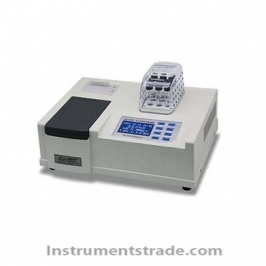
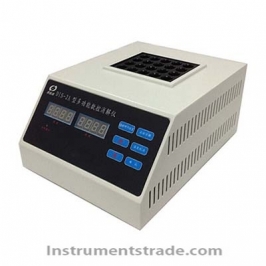
Position: Home > > Environmental monitoring and analysis > Water organic pollutants > COD digestion > UPW-GL6Z Intelligent High-Chloride Wastewater COD Digester

UPW-GL6Z Intelligent High-Chloride Wastewater COD Digester

Product ID:HSYJcodx034

Price: Please inquire PDF Format
Supply Ability:50 SETS/MON
Port:SHENZHEN
  • Product Introduction
  • Other information
  • Model NumberUPW-GL6Z
    Brand NameYOUPUTONGYONG
    Payment TermsTT,PAYPAL,Alibaba.com Pay
    UPW-GL6Z Intelligent High-Chloride Wastewater COD Digester
     
    Product Introduction
    The UPW-GL6Z Intelligent High-Chloride Wastewater COD Digester is designed for chemical oxygen demand (COD) digestion of high-chloride wastewater samples. It features six corrosion-resistant graphite digestion positions, PID temperature control, and a dual air-and-water cooling system for consistent heating and effective reflux condensation.
    Using 250 mL conical flasks as digestion vessels, the system allows samples to be titrated directly after digestion without transferring the liquid to another container. This simplifies sample handling and supports COD testing procedures aligned with applicable national standard methods. The UPW-GL6Z is suitable for environmental laboratories, wastewater treatment facilities, and industrial water quality testing.


    Performance Features
    • Six-position digestion: Processes up to six samples simultaneously for improved laboratory efficiency.
    • Corrosion-resistant graphite block: Provides acid- and alkali-resistant digestion positions with uniform heat distribution.
    •  Direct titration design: Uses 250 mL conical flasks, eliminating the need for post-digestion liquid transfer.
    • Dual cooling system: Combines forced-air cooling with water cooling to improve condenser performance.
    • PID temperature control: Maintains the selected digestion temperature for consistent processing.
    •   Wide temperature range: Adjustable heating temperature from 1°C to 300°C.
    •   Flexible timing: Programmable digestion time from 0 to 999 minutes.
    • Practical reflux condenser: The flared condenser opening helps prevent reagent overflow during addition and simplifies cleaning after digestion.
    • Independent nitrogen flow control: Provides single-channel nitrogen flow adjustment.
    •   High heating power: A 2,000 W heating system supports efficient digestion.


    Working Principle

    The UPW-GL6Z uses controlled heating and reflux digestion to prepare wastewater samples for COD determination. Samples and the required digestion reagents are placed in 250 mL conical flasks and positioned in the six-hole graphite heating block.
    PID temperature control regulates the heating process according to the selected temperature and time settings. The reflux condenser returns condensed vapor to the digestion flask, helping maintain reaction volume during heating. Combined air and water cooling supports condensation and heat dissipation.
    After digestion and cooling, the sample can be titrated directly in the same flask, avoiding additional liquid transfer and reducing handling steps. For high-chloride wastewater, the applicable COD method and reagent procedure should be selected to control chloride interference and ensure reliable results.


    Technical Parameters
    Parameter Specification
    Model UPW-GL6Z
    Instrument Type Intelligent High-Chloride Wastewater COD Digester
    Digestion Positions 6
    Heating Power 2,000 W
    Temperature Setting Range 1–300°C
    Timer Setting Range 0–999 min
    Digestion Vessel 250 mL conical flask
    Heating Block Corrosion-resistant graphite
    Temperature Control PID
    Cooling Method Combined forced-air and water cooling
    Condenser Design Flared opening reflux condenser
    Nitrogen Flow Control Single-channel control
    Power Supply AC 220 V ± 22 V, 50 Hz
    Note: The instrument is a digestion system, not a standalone COD concentration analyzer. COD measurement requires the appropriate reagents, analytical procedure, and titration or measurement equipment.


    Application Scenarios
    • High-chloride wastewater testing: Sample digestion before COD determination using an appropriate validated method.
    •  Industrial wastewater laboratories: COD sample preparation for chemical and manufacturing effluents.
    •  Environmental monitoring: Laboratory preparation of wastewater samples for chemical oxygen demand testing.
    •  Wastewater treatment plants: Routine COD testing for treatment process monitoring.
    •   Chemical laboratories: Reflux digestion and subsequent titration workflows.
    • Third-party testing laboratories: Parallel digestion of multiple wastewater samples.


    Comparison: UPW-GL6Z vs. Conventional COD Digestion Equipment
    Feature UPW-GL6Z Conventional Digestion Equipment
    Sample Capacity 6 positions Varies by model
    Heating Block Corrosion-resistant graphite Depends on design
    Temperature Control PID control Depends on model
    Cooling Combined air and water cooling May use a single cooling method
    Digestion Vessel 250 mL conical flask Depends on method
    Post-Digestion Handling Direct titration in the same flask May require sample transfer
    Timer 0–999 min Depends on model
    Nitrogen Control Single-channel flow control Depends on configuration
    Intended Application High-chloride wastewater COD digestion General COD digestion or other digestion applications
    The UPW-GL6Z combines six-position processing, PID-controlled heating, dual cooling, and direct titration in the digestion flask. Its configuration is particularly useful for laboratories seeking to simplify high-chloride wastewater COD preparation while improving batch-processing efficiency.


    Frequently Asked Questions (FAQ)
    Q1: What is the UPW-GL6Z used for?
    It is designed for digestion of high-chloride wastewater samples before chemical oxygen demand analysis.
    Q2: How many samples can it process at once?
    The graphite heating block has six digestion positions, allowing up to six samples to be processed simultaneously.
    Q3: Why does the instrument use 250 mL conical flasks?
    The flasks facilitate mixing during titration and allow direct titration after digestion without transferring the sample to another container.
    Q4: What is the heating temperature range?
    The temperature can be set from 1°C to 300°C, with PID control regulating the heating process.
    Q5: How is the digestion temperature maintained?
    The instrument uses PID temperature control to help maintain the selected temperature and improve digestion consistency.
    Q6: What are the advantages of dual air and water cooling?
    The combined cooling system improves heat dissipation and reflux condensation, helping support stable digestion conditions.
    Q7: Does the UPW-GL6Z measure COD directly?
    No. It performs sample digestion. The COD concentration must subsequently be determined using the appropriate titration or analytical method.
    Q8: Can it be used for high-chloride wastewater?
    Yes. It is designed for high-chloride wastewater COD digestion. The selected analytical method must also address chloride interference according to the applicable standard procedure.
    Q9: What power supply does the instrument require?
    It requires AC 220 V ± 22 V at 50 Hz, with a rated heating power of 2,000 W.


  • Frequently Asked Questions (FAQ)
    Q1: What is the UPW-GL6Z used for?
    It is designed for digestion of high-chloride wastewater samples before chemical oxygen demand analysis.
    Q2: How many samples can it process at once?
    The graphite heating block has six digestion positions, allowing up to six samples to be processed simultaneously.
    Q3: Why does the instrument use 250 mL conical flasks?
    The flasks facilitate mixing during titration and allow direct titration after digestion without transferring the sample to another container.
    Q4: What is the heating temperature range?
    The temperature can be set from 1°C to 300°C, with PID control regulating the heating process.
    Q5: How is the digestion temperature maintained?
    The instrument uses PID temperature control to help maintain the selected temperature and improve digestion consistency.
    Q6: What are the advantages of dual air and water cooling?
    The combined cooling system improves heat dissipation and reflux condensation, helping support stable digestion conditions.
    Q7: Does the UPW-GL6Z measure COD directly?
    No. It performs sample digestion. The COD concentration must subsequently be determined using the appropriate titration or analytical method.
    Q8: Can it be used for high-chloride wastewater?
    Yes. It is designed for high-chloride wastewater COD digestion. The selected analytical method must also address chloride interference according to the applicable standard procedure.
    Q9: What power supply does the instrument require?
    It requires AC 220 V ± 22 V at 50 Hz, with a rated heating power of 2,000 W.


Products
Analytical instruments
Physical property test
Environmental monitoring and analysis
Lab general equipment
About us
About this website
Our service
Product purchase
Contact Us

Newsletter

Make Sure you dont miss interesting happenings by joining our newsletter program.

Contact Us
+86-18620722006
instruments@instrumentstrade.com