Position: Home > > Environmental monitoring and analysis > Water organic pollutants > BOD measuring instrument > UPW-BA506 Mercury-Free Safety BOD Analyzer

UPW-BA506 Mercury-Free Safety BOD Analyzer

Product ID:HSYJbod023

Price: Please inquire PDF Format
Supply Ability:50 SETS/MON
Port:SHENZHEN
  • Product Introduction
  • Other information
  • Model NumberUPW-BA506
    Brand NameYOUPUTONGYONG
    Payment TermsTT,PAYPAL,Alibaba.com Pay
    UPW-BA506 Mercury-Free Safety BOD Analyzer
     

    Product Overview
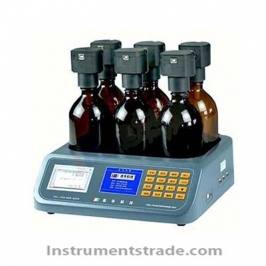
    The UPW-BA506 Mercury-Free Safety BOD Analyzer is designed to measure biochemical oxygen demand (BOD) in water using a pressure-difference respirometric method. By monitoring pressure changes associated with oxygen consumption during microbial decomposition, the instrument calculates BOD concentrations and displays results directly, reducing the need for manual calculations.
    Designed for routine water quality analysis, the UPW-BA506 measures up to six samples simultaneously and provides a selectable measurement range of 5–2000 mg/L. Its 7-inch color touchscreen, automatic data logging, built-in printer, and optional RS232/USB connectivity support convenient operation and data management. The mercury-free sensing method eliminates the need for mercury-based pressure measurement, improving operational safety.
    The analyzer is suitable for environmental monitoring, petrochemical facilities, healthcare-related laboratories, educational institutions, and scientific research.


    Key Features
    • Mercury-Free Measurement: Uses a pressure-difference respirometric method without mercury-based sensing components, reducing mercury-related safety risks.
    • Six-Sample Capacity: Supports simultaneous measurement of up to six samples for efficient laboratory workflows.
    • Wide Measurement Range: Measures BOD concentrations from 5 to 2000 mg/L, with direct measurement possible for suitable samples within the specified range without dilution.
    • Automatic Data Analysis: Calculates BOD concentration and generates measurement curves for straightforward result interpretation.
    • Flexible Test Scheduling: Supports test periods from 5 to 30 days and selectable data recording intervals from 5 minutes to 24 hours.
    • Touchscreen Operation: Features a 7-inch color touchscreen for parameter configuration, real-time monitoring, and historical data review.
    • Automatic Data Protection: Saves measurement records automatically and supports data retention during unexpected power interruptions, with testing resuming after power restoration.
    • Integrated Printing and Connectivity: Includes a built-in microprinter and optional RS232/USB data transfer for result documentation and computer-based data management.


    Working Principle
    The UPW-BA506 uses a pressure-difference respirometric method to determine biochemical oxygen demand. During the test, microorganisms in the water sample consume dissolved oxygen while decomposing biodegradable organic matter. The associated gas-pressure changes within the measurement system are monitored and used to calculate oxygen consumption.
    The instrument processes the measurement signals and converts them into BOD concentration values. It automatically records test data, generates measurement curves, and displays results on the touchscreen. Users can configure the measurement period and data recording interval according to their testing requirements.
    The method avoids mercury-based pressure sensing. Appropriate sample preparation, temperature control, and method-specific procedures are necessary to obtain reliable results.


    Technical Specifications
    Parameter Specification
    Model UPW-BA506
    Instrument Type Mercury-Free BOD Analyzer
    Measurement Principle Pressure-difference respirometric method
    Measurement Range 5–2000 mg/L
    Measurement Accuracy ±10%
    Sample Capacity 6 samples
    Data Recording Interval Selectable from 5 minutes to 24 hours
    Measurement Period 5, 7, 10 days and other selectable periods up to 30 days
    Incubation Temperature 20 ± 1°C
    Temperature Compensation Delay Adjustable delay of up to 3.5 hours
    Display 7-inch color touchscreen
    Data Storage Manufacturer-stated storage capacity of up to 30 years of records
    Data Protection Automatic data saving and power-failure protection
    Printer Built-in microprinter
    Communication Interfaces RS232 / USB, optional
    Power Supply 110–230 V AC, 50–60 Hz
    Note: Confirm the data storage specification, interface configuration, and applicable test method with the supplier before purchase. Measurement accuracy and method equivalence may depend on the sample matrix and test conditions.
     

    Applications
    • Environmental Monitoring: BOD testing of surface water, wastewater, and other water samples for environmental assessment.
    • Wastewater Treatment: Monitoring biodegradable organic loads and supporting process evaluation in wastewater treatment facilities.
    • Petrochemical Industry: Water quality analysis in petrochemical production and related industrial wastewater monitoring.
    • Healthcare Laboratories: Water quality testing in healthcare and associated laboratory environments.
    • Educational Institutions: Demonstrations and experiments involving biochemical oxygen demand and water pollution assessment.
    • Scientific Research: BOD testing for environmental science, microbiology, and water quality research.


    Applicable Standards
    The supplied product information does not identify specific standards or regulatory approvals for the UPW-BA506.
    Before using the instrument for compliance testing, confirm whether its pressure-difference respirometric method and operating procedure are accepted under the applicable local regulations or laboratory method. Results should not automatically be considered interchangeable with dilution-method BOD₅ results without method validation.


    Comparison
    Comparison Item UPW-BA506 Mercury-Free BOD Analyzer Conventional Dilution-Method BOD₅ Testing
    Measurement Principle Pressure-difference respirometric method Dissolved oxygen measurement before and after incubation
    Mercury Use Mercury-free sensing method Depends on the equipment used; mercury is not inherently required
    Sample Capacity Up to 6 samples simultaneously Depends on the number of incubation bottles and available equipment
    Result Calculation Automatic calculation and display Typically requires initial and final dissolved oxygen values and calculation
    Data Recording Automatic recording with configurable intervals Depends on the measurement and recording system
    Incubation Temperature 20 ± 1°C Commonly 20 ± 1°C for standard BOD₅ testing
    Test Duration Adjustable from 5 to 30 days Commonly 5 days for BOD₅
    Data Output Touchscreen, built-in printer, optional computer transfer Depends on the dissolved oxygen meter and laboratory workflow
    The UPW-BA506 is suitable for laboratories seeking automated respirometric BOD measurement and continuous data recording. Conventional dilution-method testing may be preferable when a particular regulatory method explicitly requires that procedure. Selection should be based on the required standard, sample characteristics, reporting requirements, and laboratory workflow.
     

    FAQ
    1. What does the UPW-BA506 measure?
    It measures biochemical oxygen demand (BOD), an indicator of the oxygen consumed by microorganisms during the decomposition of biodegradable organic matter in water.
    2. What is the measurement range of the UPW-BA506?
    The specified measurement range is 5–2000 mg/L, with a stated measurement accuracy of ±10%.
    3. How many samples can the analyzer test at once?
    The instrument supports six samples simultaneously.
    4. Is the UPW-BA506 mercury-free?
    Yes. It uses a mercury-free pressure-difference sensing method, avoiding the mercury-related risks associated with mercury-based measurement components.
    5. Can the instrument measure BOD₅?
    The UPW-BA506 supports a five-day test period. To report results as standardized BOD₅, users should follow the applicable test method and verify that the instrument's procedure meets the relevant requirements.
    6. Can the test duration be adjusted?
    Yes. The measurement period can be configured for 5, 7, 10 days and other durations up to 30 days, depending on the testing requirements.
    7. How are measurement results recorded and exported?
    The instrument automatically records measurement data, supports historical data review, and includes a built-in microprinter. Optional RS232 or USB interfaces can be used for computer data transfer.
    8. Does the UPW-BA506 require continuous operator supervision?
    The instrument automates measurement, data recording, and result display. It is designed for unattended operation during testing, although appropriate sample preparation, setup, and routine laboratory oversight remain necessary.
    9. What incubation temperature does the instrument use?
    The specified incubation temperature is 20 ± 1°C. Maintaining the required temperature is important for reliable BOD measurements.
    10. Can samples below 2000 mg/L be measured without dilution?
    The manufacturer indicates that suitable samples below 2000 mg/L can be measured directly without dilution. Sample suitability, expected BOD concentration, and any required pretreatment should be assessed before testing.


  • FAQ
    1. What does the UPW-BA506 measure?
    It measures biochemical oxygen demand (BOD), an indicator of the oxygen consumed by microorganisms during the decomposition of biodegradable organic matter in water.
    2. What is the measurement range of the UPW-BA506?
    The specified measurement range is 5–2000 mg/L, with a stated measurement accuracy of ±10%.
    3. How many samples can the analyzer test at once?
    The instrument supports six samples simultaneously.
    4. Is the UPW-BA506 mercury-free?
    Yes. It uses a mercury-free pressure-difference sensing method, avoiding the mercury-related risks associated with mercury-based measurement components.
    5. Can the instrument measure BOD₅?
    The UPW-BA506 supports a five-day test period. To report results as standardized BOD₅, users should follow the applicable test method and verify that the instrument's procedure meets the relevant requirements.
    6. Can the test duration be adjusted?
    Yes. The measurement period can be configured for 5, 7, 10 days and other durations up to 30 days, depending on the testing requirements.
    7. How are measurement results recorded and exported?
    The instrument automatically records measurement data, supports historical data review, and includes a built-in microprinter. Optional RS232 or USB interfaces can be used for computer data transfer.
    8. Does the UPW-BA506 require continuous operator supervision?
    The instrument automates measurement, data recording, and result display. It is designed for unattended operation during testing, although appropriate sample preparation, setup, and routine laboratory oversight remain necessary.
    9. What incubation temperature does the instrument use?
    The specified incubation temperature is 20 ± 1°C. Maintaining the required temperature is important for reliable BOD measurements.
    10. Can samples below 2000 mg/L be measured without dilution?
    The manufacturer indicates that suitable samples below 2000 mg/L can be measured directly without dilution. Sample suitability, expected BOD concentration, and any required pretreatment should be assessed before testing.


Products
Analytical instruments
Physical property test
Environmental monitoring and analysis
Lab general equipment
About us
About this website
Our service
Product purchase
Contact Us

Newsletter

Make Sure you dont miss interesting happenings by joining our newsletter program.

Contact Us
+86-18620722006
instruments@instrumentstrade.com