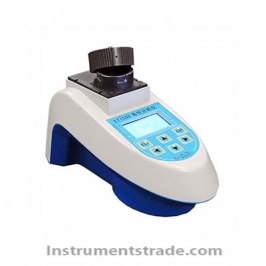
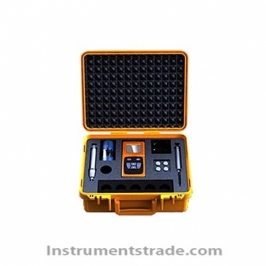
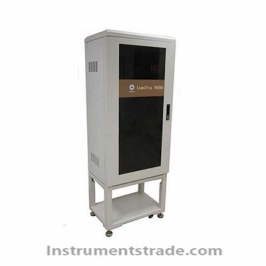
UPB-3000 Comprehensive Toxicity Analyzer

Product ID:HSSWdx017

Price: Please inquire PDF Format
Supply Ability:50 SETS/MON
Port:SHENZHEN
  • Product Introduction
  • Other information
  • Model NumberUPB-3000
    Brand NameYOUPUTONGYONG
    Payment TermsTT,PAYPAL,Alibaba.com Pay
    UPB-3000 Comprehensive Toxicity Analyzer
     
    Product Introduction
    The UPB-3000 Comprehensive Toxicity Analyzer is a portable water toxicity testing instrument based on biosensor technology. It evaluates water toxicity by measuring changes in the luminescence intensity of bioluminescent bacteria during metabolism, enabling qualitative and quantitative assessment of acute toxicity.

    Designed for rapid on-site water quality screening, the UPB-3000 detects the combined toxic effects of unknown chemical contaminants, including heavy metals, pesticides, detergents, solvents, and other organic or inorganic toxic substances. It supports both biological toxicity and ATP detection modes, making it suitable for routine water quality monitoring and emergency pollution assessment.


    Performance Features
    •  Standards Compliance: Designed to meet GB/T 15441-1995 and ISO 11348-3 requirements.
    • Broad Toxicity Screening: Screens for the combined toxic effects of heavy metals such as lead, chromium, cadmium, copper, and mercury, as well as pesticides and other chemical pollutants.
    •   Dual Detection Modes: Offers biological toxicity testing and ATP measurement to support different testing needs.
    •  Rapid Results: Biological toxicity results are available within approximately 5 minutes after sample preparation under suitable test conditions; ATP mode can provide results in as little as 15 seconds.
    •   User-Friendly Operation: Guided procedures, automatic countdowns, and on-screen prompts simplify testing for non-specialist operators.
    •  High-Resolution Touchscreen: Features a full-color display and an intuitive menu for convenient field operation.
    •   Data Management: Stores up to 1,000 measurement results and supports data transfer to a computer using dedicated software.
    • Printing Capability: Supports an external mini printer for on-site printing of current and historical test data.
    •  Portable Power Supply: Rechargeable lithium battery provides more than 10 hours of continuous operation per charge, according to the manufacturer.


    Working Principle
    The UPB-3000 uses bioluminescent bacteria as biological indicators. When toxic substances are present in a water sample, they can inhibit bacterial metabolism and reduce light emission. The analyzer measures changes in luminescence intensity and evaluates the sample's overall acute toxicity.
    In ATP mode, the instrument measures the ATP-related luminescence signal to provide a rapid indication of biological activity. This mode does not require a cultivation step, enabling faster testing. ATP measurement and toxicity assessment serve different analytical purposes and should be interpreted according to the selected method.


    Technical Parameters
    Parameter Specification
    Model UPB-3000
    Measurement Range 0–15,000 RLU (Relative Light Units)
    Single Sample Test Time 5–30 minutes, selectable
    Spectral Range 300–700 nm
    Accuracy Error less than 10%
    Measurement Modes Rapid mode, basic mode, ATP mode
    Displayed Results Relative luminescence (ATP mode); toxicity level (toxicity mode)
    Data Storage 1,000 measurement results
    Power Supply Rechargeable lithium battery or DC 5 V
    Operating Temperature +15°C to +35°C
    Relative Humidity 20%–80%


    Application Scenarios
    •  Environmental Monitoring: Rapid screening of surface water, groundwater, and other water samples for potential toxic contamination.
    •  Emergency Pollution Response: Preliminary assessment of water pollution incidents involving unknown chemical contaminants.
    •   Industrial Wastewater Monitoring: Screening for potential toxicity in industrial discharge and wastewater samples.
    •   Water Quality Safety Screening: Supporting preliminary toxicity assessments in water treatment and environmental management.
    •   Laboratories and Research Institutions: Conducting acute toxicity screening and biological response studies.


    UPB-3000 vs. Conventional Water Toxicity Testing
    Comparison Item UPB-3000 Comprehensive Toxicity Analyzer Conventional Acute Toxicity Bioassays
    Detection Principle Bioluminescent bacteria and ATP-related luminescence Depends on the selected biological test method
    Test Speed Approximately 5 minutes for toxicity screening after sample preparation Some fish-based acute toxicity tests require up to 96 hours
    On-Site Testing Portable design for field use May require laboratory facilities and controlled test conditions
    Unknown Contaminants Screens for combined toxic effects without requiring prior identification of every contaminant Depends on the test organism, endpoint, and experimental design
    Operation Guided touchscreen workflow Often requires more specialized procedures
    Data Management Stores results and supports computer transfer Depends on the test method and recording system


    Frequently Asked Questions
    1.  What is the UPB-3000 Comprehensive Toxicity Analyzer used for?
    It is used for rapid screening and assessment of acute water toxicity, particularly in environmental monitoring and water pollution emergencies.
    2. How does the UPB-3000 detect water toxicity?
    It measures changes in the luminescence intensity of bioluminescent bacteria exposed to a water sample and uses the response to assess overall toxicity.
    3. Which contaminants can it screen for?
    It can screen for the combined toxic effects of heavy metals, pesticides, detergents, solvents, and other potentially toxic organic and inorganic substances. It does not independently identify or quantify every individual contaminant.
    4. How long does a test take?
    The selectable test duration is 5–30 minutes. Under suitable conditions, toxicity screening can produce results within approximately 5 minutes after sample preparation. ATP mode can provide results in as little as 15 seconds.
    5. What is the difference between toxicity mode and ATP mode?
    Toxicity mode evaluates the overall biological toxic effect of a sample, while ATP mode measures an ATP-related luminescence signal for rapid biological activity assessment.
    6. Does the UPB-3000 support field testing?
    Yes. Its portable design, touchscreen interface, rechargeable battery, and optional external printer support on-site testing and reporting.
    7. How many test results can the instrument store?
    The instrument can store up to 1,000 measurement results and supports data transfer to a computer using dedicated software.
    8. Which standards does the UPB-3000 comply with?
    The instrument is specified as meeting GB/T 15441-1995 and ISO 11348-3 requirements. Users should confirm the applicable standard edition and test procedure for their intended application.


  • Frequently Asked Questions
    1.  What is the UPB-3000 Comprehensive Toxicity Analyzer used for?
    It is used for rapid screening and assessment of acute water toxicity, particularly in environmental monitoring and water pollution emergencies.
    2. How does the UPB-3000 detect water toxicity?
    It measures changes in the luminescence intensity of bioluminescent bacteria exposed to a water sample and uses the response to assess overall toxicity.
    3. Which contaminants can it screen for?
    It can screen for the combined toxic effects of heavy metals, pesticides, detergents, solvents, and other potentially toxic organic and inorganic substances. It does not independently identify or quantify every individual contaminant.
    4. How long does a test take?
    The selectable test duration is 5–30 minutes. Under suitable conditions, toxicity screening can produce results within approximately 5 minutes after sample preparation. ATP mode can provide results in as little as 15 seconds.
    5. What is the difference between toxicity mode and ATP mode?
    Toxicity mode evaluates the overall biological toxic effect of a sample, while ATP mode measures an ATP-related luminescence signal for rapid biological activity assessment.
    6. Does the UPB-3000 support field testing?
    Yes. Its portable design, touchscreen interface, rechargeable battery, and optional external printer support on-site testing and reporting.
    7. How many test results can the instrument store?
    The instrument can store up to 1,000 measurement results and supports data transfer to a computer using dedicated software.
    8. Which standards does the UPB-3000 comply with?
    The instrument is specified as meeting GB/T 15441-1995 and ISO 11348-3 requirements. Users should confirm the applicable standard edition and test procedure for their intended application.


Products
Analytical instruments
Physical property test
Environmental monitoring and analysis
Lab general equipment
About us
About this website
Our service
Product purchase
Contact Us

Newsletter

Make Sure you dont miss interesting happenings by joining our newsletter program.

Contact Us
+86-18620722006
instruments@instrumentstrade.com