Position: Home > > Physical property test > Nondestructive testing instrument > Ultrasonic flaw detector > TIME1120 Ultrasonic Flaw Detector

TIME1120 Ultrasonic Flaw Detector

Product ID:WWcsts013

Price: Please inquire PDF Format
Supply Ability:50SETS/MON
Port:SHENZHEN
  • Product Introduction
  • Other information
  • Model NumberTIME1130
    Brand NameSHIDAIGUANGNAN
    Payment TermsTT,PAYPAL,Alibaba.com Pay
    TIME1120 Ultrasonic Flaw Detector
    Product Introduction
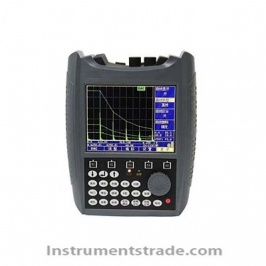
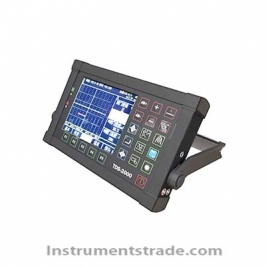
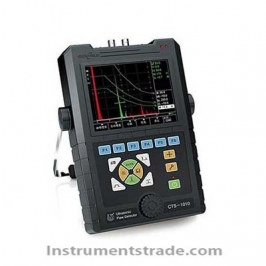
    The TIME1120 Ultrasonic Flaw Detector is a fully digital ultrasonic testing instrument designed for fast, accurate, and nondestructive detection of internal defects in metal and other industrial components. It uses high-speed equivalent sampling and DSP-based ultrasonic echo signal processing to improve defect recognition and waveform stability, making it suitable for detecting small defects and materials with strong background noise.
    The TIME1120 supports multiple ultrasonic testing modes, including single-probe, dual-probe, and through-transmission testing. It provides A-scan and B-scan display functions, independent dual gates, DAC and AVG evaluation, automatic probe calibration, defect equivalent calculation, waveform storage and playback, and PC data communication. It is widely used for the inspection of castings, forgings, plates, welds, and other components in aerospace, petrochemical, metallurgy, electric power, railway transportation, pressure vessels, steel structures, and mechanical manufacturing.


    Performance Features
    • High-Speed Sampling: Equivalent sampling frequency reaches up to 320 MHz, improving the detection capability for small defects and providing detailed RF waveform information.
    • DSP Signal Processing: Digital signal processing technology enables fast identification of ultrasonic echo signals and stable waveform display.
    • Waveform Filtering: Smooth filtering technology improves testing performance for coarse-grained metals and other materials with strong background noise.
    • Peak Memory: Records peak echo information for convenient defect analysis.
    • Automatic Gain Adjustment: Automatically adjusts gain to simplify testing operations and improve efficiency.
    • Quick Knob Adjustment: Rapid parameter adjustment through a convenient control knob improves field operation efficiency.
    • Echo Envelope Display: Provides echo envelope display for more intuitive analysis of defect signals.
    • Multiple Display Modes: Supports A-scan and B-scan display methods.
    • High Repetition Frequency: Repetition frequency reaches up to 1 kHz for rapid inspection.
    • High-Brightness EL Display: The high-brightness graphic dot-matrix display provides a wide viewing angle and remains readable under different temperatures and sunlight conditions.
    • 32 Independent Testing Channels: Supports up to 32 independent flaw detection channels for flexible testing configuration.
    • DAC and AVG Evaluation: DAC curves can be automatically generated using standard reference blocks, while AVG curves can be calibrated for quantitative defect evaluation.
    • Dual Gate and Alarm: Provides two independent gates with alarm functions for convenient defect monitoring.
    • USB Communication: Supports USB 1.1 Full-Speed communication and connection with compatible printers and computers.
    • Printing Function: Test reports and thickness reports can be printed through a USB printer.
    • Parameter Locking: System parameters can be locked or unlocked to prevent accidental changes during testing.
    • High Refresh Rate: Screen refresh rate reaches 60 Hz, helping eliminate display delay and trailing during rapid flaw detection.
    • Freeze and Unfreeze: The waveform display can be frozen for detailed analysis and released for continued testing.
    • Selectable Probe Damping: Probe damping can be selected from 50 Ω, 150 Ω, and 400 Ω through the menu.
    • Waveform Storage and Playback: Stores A-scan waveforms and parameters for later review and analysis.
    • Linear Suppression: Suppression can be adjusted from 0% to 80% of screen height in 1% increments.
    • Automatic Probe Calibration: Simplifies probe calibration and improves measurement consistency.
    • Large Data Storage: Stores up to 1,024 A-scan waveforms with parameters and up to 64,000 thickness values.
    • Probe Angle and K-Value Input: Supports both probe angle and K-value input methods.
    • PC Data Processing: Can communicate with a PC through dedicated Windows data processing software.
    • Defect Equivalent Calculation: Provides defect equivalent calculation for quantitative flaw assessment.
    • Multiple Testing Modes: Supports single-probe, dual-probe, and through-transmission testing modes.
    • Water-Resistant Design: Provides protection against water during field inspection.
    • Long Battery Life: Uses a large-capacity lithium-ion battery with no memory effect and supports up to 8 hours of continuous operation.


    Working Principle
    The TIME1120 Ultrasonic Flaw Detector uses ultrasonic pulses to transmit high-frequency acoustic energy into the tested material through an ultrasonic probe. When the ultrasonic wave encounters an interface or internal discontinuity, such as a crack, inclusion, porosity, or lack of fusion, part of the acoustic energy is reflected back to the probe.
    The instrument receives and processes the reflected echo signals using digital signal processing technology. By analyzing the position, amplitude, and characteristics of the echoes, the operator can determine the location and relative size of internal defects.
    The TIME1120 provides A-scan waveform analysis, dual-gate measurement, DAC and AVG evaluation, defect equivalent calculation, and waveform storage functions, allowing users to perform both qualitative and quantitative ultrasonic flaw detection.


    Technical Parameters
    Parameter Specification
    Scanning Range 2.5-9999 mm (Steel Longitudinal Wave)
    Pulse Shift -20 to +3400 μs
    Probe Zero 0-99.99 μs
    Probe Zero Resolution 0.0125 μs
    Material Sound Velocity 1000-9999 m/s
    Output Damping 50 Ω / 150 Ω / 400 Ω
    Frequency Range Low: 0.2-1 MHz; Medium: 0.5-4 MHz; High: 2-10 MHz
    Gain Adjustment 0-110 dB
    Gain Step 0.2 / 0.5 / 1 / 2 / 6 / 12 dB
    Gain Lock 0.0
    Vertical Linearity Error ≤3%
    Horizontal Linearity Error ≤0.2%
    Waveform Display Positive Half Wave, Negative Half Wave, Full Wave, RF
    Equivalent Sampling Frequency Up to 320 MHz
    Repetition Frequency Up to 1 kHz
    Flaw Detection Sensitivity Margin ≥60 dB (2.5 MHz, 20/Z20-2)
    Dynamic Range ≥34 dB
    Display Refresh Rate Up to 60 Hz
    Linear Suppression 0-80%, 1% step
    A-Scan Storage 1,024 waveforms with parameters
    Thickness Data Storage 64,000 values
    Dimensions 240 × 175 × 85 mm
    Weight 1.5 kg including battery
     

    Application Scenarios
    The TIME1120 Digital Ultrasonic Flaw Detector is suitable for nondestructive testing of a wide range of industrial components and materials.
    • Castings: Detection of cracks, inclusions, porosity, shrinkage, and other internal casting defects.
    • Forgings: Inspection for internal cracks, inclusions, segregation, and other discontinuities.
    • Steel Plates: Detection of internal delamination, cracks, inclusions, and other defects.
    • Welds: Inspection for lack of fusion, lack of penetration, cracks, slag inclusions, and other welding defects.
    • Aerospace: Nondestructive inspection of critical metal components and structural parts.
    • Petrochemical Industry: Inspection of pipelines, pressure equipment, and metal components.
    • Power and Metallurgy: Inspection of boilers, pressure vessels, pipes, steel products, and other critical equipment.
    • Railway Transportation: Inspection of railway components and structural metal parts.
    • Mechanical Manufacturing: Quality inspection of machined parts, castings, forgings, and welded structures.


    TIME1120 vs. Conventional Analog Ultrasonic Flaw Detectors
    Feature TIME1120 Digital Ultrasonic Flaw Detector Conventional Analog Flaw Detector
    Signal Processing DSP digital processing Mainly analog processing
    Equivalent Sampling Frequency Up to 320 MHz Generally lower
    Waveform Display Positive half, negative half, full wave, RF Depends on configuration
    Testing Channels 32 independent channels Usually fewer or configuration dependent
    DAC Evaluation Supported Configuration dependent
    AVG Evaluation Supported Configuration dependent
    Probe Calibration Automatic calibration Often requires manual calibration
    Data Storage 1,024 A-scan waveforms + 64,000 thickness values Usually limited
    PC Communication Supported Configuration dependent
    Testing Modes Single-probe, dual-probe, through-transmission Depends on model
    Data Analysis Digital storage and Windows software More dependent on operator
    Portability 1.5 kg including battery Varies by model
     

    Frequently Asked Questions
    What is the TIME1120 Ultrasonic Flaw Detector used for?
    The TIME1120 is used for nondestructive testing of internal defects in metal components, including cracks, inclusions, porosity, looseness, lack of fusion, and other discontinuities. It is suitable for castings, forgings, plates, welds, pipes, and structural components.
    What types of ultrasonic testing modes does the TIME1120 support?
    The instrument supports three testing modes: single-probe, dual-probe, and through-transmission testing.
    Does the TIME1120 support DAC curves?
    Yes. The instrument can automatically generate a DAC curve using standard reference blocks, helping operators evaluate defect echo amplitudes at different sound paths.
    Does the TIME1120 support AVG evaluation?
    Yes. The TIME1120 supports AVG curve calibration and defect equivalent calculation for quantitative flaw evaluation.
    How much data can the TIME1120 store?
    The instrument can store up to 1,024 A-scan waveforms and their parameters, as well as up to 64,000 thickness values.
    Can the TIME1120 connect to a computer?
    Yes. The instrument supports PC communication through USB and can work with Windows-based data processing software for data analysis and management.
    What is the scanning range of the TIME1120?
    For steel longitudinal waves, the scanning range is 2.5-9999 mm.
    How long can the battery operate continuously?
    The large-capacity lithium-ion battery provides up to 8 hours of continuous operation, making the instrument suitable for field inspection.
    Is the TIME1120 suitable for coarse-grained metals?
    Yes. Its DSP signal processing and waveform filtering technology help improve testing performance for coarse-grained metals and materials with strong background noise.


  • Frequently Asked Questions
    What is the TIME1120 Ultrasonic Flaw Detector used for?
    The TIME1120 is used for nondestructive testing of internal defects in metal components, including cracks, inclusions, porosity, looseness, lack of fusion, and other discontinuities. It is suitable for castings, forgings, plates, welds, pipes, and structural components.
    What types of ultrasonic testing modes does the TIME1120 support?
    The instrument supports three testing modes: single-probe, dual-probe, and through-transmission testing.
    Does the TIME1120 support DAC curves?
    Yes. The instrument can automatically generate a DAC curve using standard reference blocks, helping operators evaluate defect echo amplitudes at different sound paths.
    Does the TIME1120 support AVG evaluation?
    Yes. The TIME1120 supports AVG curve calibration and defect equivalent calculation for quantitative flaw evaluation.
    How much data can the TIME1120 store?
    The instrument can store up to 1,024 A-scan waveforms and their parameters, as well as up to 64,000 thickness values.
    Can the TIME1120 connect to a computer?
    Yes. The instrument supports PC communication through USB and can work with Windows-based data processing software for data analysis and management.
    What is the scanning range of the TIME1120?
    For steel longitudinal waves, the scanning range is 2.5-9999 mm.
    How long can the battery operate continuously?
    The large-capacity lithium-ion battery provides up to 8 hours of continuous operation, making the instrument suitable for field inspection.
    Is the TIME1120 suitable for coarse-grained metals?
    Yes. Its DSP signal processing and waveform filtering technology help improve testing performance for coarse-grained metals and materials with strong background noise.


Products
Analytical instruments
Physical property test
Environmental monitoring and analysis
Lab general equipment
About us
About this website
Our service
Product purchase
Contact Us

Newsletter

Make Sure you dont miss interesting happenings by joining our newsletter program.

Contact Us
+86-18620722006
instruments@instrumentstrade.com