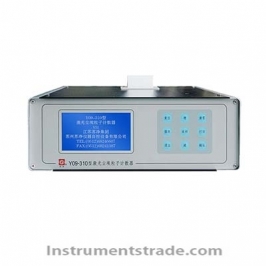
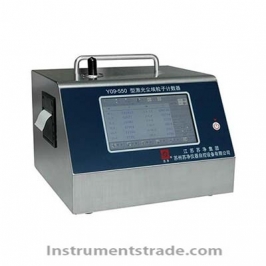
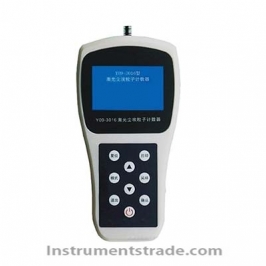
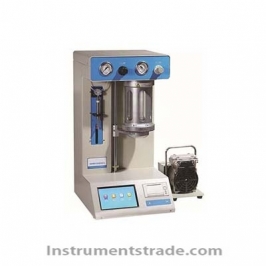
SKJ-A Liquid Particle Detection System Introduction: The SKJ-A (THSKJ-A) liquid particle detection system, launched by Tianjin Tianhe Analytical Instrument Co., Ltd., is a fully automatic, high-precision micron-level particle counting device. It emphasizes batch processing of multiple samples and wide-range detection, specifically designed for efficient quality control in laboratories of the electronics, pharmaceutical, and chemical industries. Typical application areas Pharmaceutical industry: Detection of insoluble particles in injection solutions, eye drops, antibiotics, vaccines, etc. (in accordance with the Chinese Pharmacopoeia). Electronic semiconductors: Particle contamination control for ultrapure water, photoresists, high-purity reagents, and electronic chemicals. Petrochemical industry: determination of contamination level of hydraulic oil, lubricating oil, insulating oil, and aviation kerosene. Food/Cosmetics: Control of particles and impurities in liquid products such as lotion, syrup, and beverages. Special materials: particle size distribution analysis of nanomaterial dispersions, colloids, silica sols, and lithium battery electrolytes. Features: 1. High-performance laser light source and optical energy compensation circuit ensure the testing accuracy of various colorless and colored transparent samples 2. The sample inlet slit and pipeline are made of imported 316L and PTFE materials, which can directly detect organic solvents, oil matrices, and other special solutions with weak acid-base corrosivity 3. High-precision three-dimensional robotic arm, capable of completing the testing of multiple samples in one step automatically, achieving intelligent operation and saving manpower 4. Adopting a high-precision sampling system, it ensures continuous sampling with high accuracy and speed 5. High-performance processor, with nearly ten thousand counting channels, enables high-precision data acquisition 6. Fully automatic calibration improves calibration efficiency and ensures accurate and reliable test data 7. Equipped with an automatic cleaning function, it ensures the accuracy of testing and meets various testing requirements 8. Equipped with permission management and audit tracking functions to ensure data security 9. With RS232 and USB interfaces, it can be externally connected to a computer to store detection results, facilitating data classification and retrieval 10. An RFID scanner can be optionally equipped to automatically identify sample numbers 11. Optional customizable testing accessories such as instrument dust covers and mixers 12. Nearly ten thousand particle sizes can be customized to meet the customized needs of the electronics, semiconductor, energy, and other fields Technical Specifications: Channel setting: 64 particle size channels, with an accuracy of 0.1 μm Particle size range: 0.5~25 μm, 1~150 μm, 2~150 μm, 5~200 μm, 10~500 μm (optional) Counting range: 0~9999999 grains Sampling volume: 0.2~6500 mL (accuracy 0.1 mL) Injection volume error: ≤±3% (5 mL) Sample injection rate: 5~80mL/min Counting accuracy: ≤ specified value ± 20% Relative standard deviation: RSD ≤ 2% (standard particles ≥ 1000 particles/mL) Limit detection concentration: 18000 particles/mL Operating temperature: 10~40℃ Power Supply: AC220 V; 50/60 Hz; ≤80 W
SKJ-A Liquid Particle Detection System Introduction: The SKJ-A (THSKJ-A) liquid particle detection system, launched by Tianjin Tianhe Analytical Instrument Co., Ltd., is a fully automatic, high-precision micron-level particle counting device. It emphasizes batch processing of multiple samples and wide-range detection, specifically designed for efficient quality control in laboratories of the electronics, pharmaceutical, and chemical industries. Typical application areas Pharmaceutical industry: Detection of insoluble particles in injection solutions, eye drops, antibiotics, vaccines, etc. (in accordance with the Chinese Pharmacopoeia). Electronic semiconductors: Particle contamination control for ultrapure water, photoresists, high-purity reagents, and electronic chemicals. Petrochemical industry: determination of contamination level of hydraulic oil, lubricating oil, insulating oil, and aviation kerosene. Food/Cosmetics: Control of particles and impurities in liquid products such as lotion, syrup, and beverages. Special materials: particle size distribution analysis of nanomaterial dispersions, colloids, silica sols, and lithium battery electrolytes.