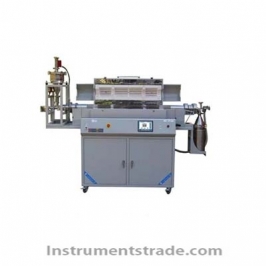
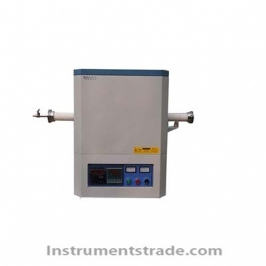
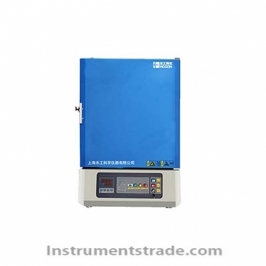
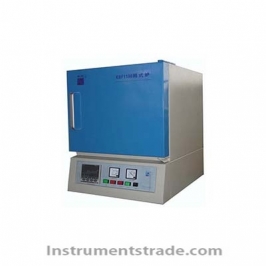
SG glass crystallization electric furnace Introduction: Due to the higher internal energy of glass compared to crystals of the same composition, glass is in a metastable state and tends to spontaneously precipitate crystals under certain conditions. This phenomenon of crystal formation is called crystallization, also known as devitrification or anti vitrification. Measuring the crystallization performance of glass refers to determining the crystallization temperature range, upper and lower limits, and the degree of crystallization of glass within this temperature range. Based on the measurement results, reasonable dissolution, forming, and hot processing systems can be formulated to avoid crystallization and obtain transparent and ideal glass products. This glass crystallization electric furnace uses gradient furnace method to determine the crystallization performance of glass, and is widely used in factories, schools, and research institutions to analyze and test the crystallization performance of non-metallic materials such as glass. It has a guiding role in mastering its production process and forming. Technical parameters: Furnace size: Φ 60 × 1000mm (furnace size can be customized according to customer requirements) Furnace tube material: 99 corundum Maximum furnace temperature: 1400 ℃ Heating element: silicon carbide rod Working temperature gradient range: 400mm 2-point computer program temperature control: room temperature~1400 ℃ Thermocouples for temperature measurement: 2 with S scale for temperature control, 1 for sample temperature measurement Temperature gradient: adjustable at 20 ℃/cm Sample porcelain boat: 99 corundum; Propulsion device: manual Observation hole diameter: Φ 50mm (quartz glass)
Introduction: Due to the higher internal energy of glass compared to crystals of the same composition, glass is in a metastable state and tends to spontaneously precipitate crystals under certain conditions. This phenomenon of crystal formation is called crystallization, also known as devitrification or anti vitrification. Measuring the crystallization performance of glass refers to determining the crystallization temperature range, upper and lower limits, and the degree of crystallization of glass within this temperature range. Based on the measurement results, reasonable dissolution, forming, and hot processing systems can be formulated to avoid crystallization and obtain transparent and ideal glass products. This glass crystallization electric furnace uses gradient furnace method to determine the crystallization performance of glass, and is widely used in factories, schools, and research institutions to analyze and test the crystallization performance of non-metallic materials such as glass. It has a guiding role in mastering its production process and forming.