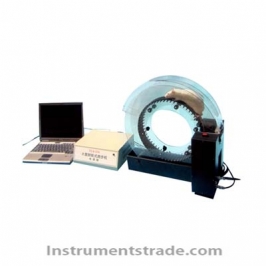
SA222 Passive Avoidance Shuttle Box Introduction: The internal psychological processes of humans and animals cannot be directly observed. Scientists can only infer the processes occurring in the brain based on observable stimulus-response relationships. Research on memory processes in the brain can only be conducted by measuring the performance or reaction time of humans or animals after they learn or perform a certain task, and then measuring their performance or reaction time after a certain interval to assess the encoding form, storage capacity, retention time, and conditions dependent on these processes. The foundation of learning and memory experimental methods is conditioned reflex, from which various methods are derived. The shuttle box test is one of the more commonly used methods. The advantage of this method is its simplicity and ease of implementation. It can observe the effects of drugs on memory processes as well as their impact on academic performance, and it has high sensitivity, making it particularly suitable for drug screening. The shuttle box test and the step-through test are both commonly used experimental methods for conducting conditional memory. The shuttle box test mainly involves establishing a conditioned reflex through sound, light, and electricity, prompting the animal to actively avoid; whereas the step-through test involves passive avoidance through electrical stimulation. Technical Specifications High-quality capacitive 7-inch LCD screen size: 100MM*180MM, resolution: 800*480 Signal detection: The system employs current detection to count the number of electric shocks, effectively addressing a series of issues previously encountered with tube detection, including slow response, blind spots, poor anti-interference capability, and inaccurate signal detection Applicable animals: rats or mice Experimental mode: Dark avoidance mode or shuttle mode Stimulation modules: light stimulation, electrical stimulation, and sound stimulation Experimental channel: Capable of conducting two sets of experiments simultaneously Activity box: activity box for mice and rats, dimensions for mice: 400*250*170MM; dimensions for rats: 620*360*265MM Experimental data: real-time display of animal status, experimental status, status timing, latency period, number of shuttles, active avoidance, passive avoidance, and error count Stimulus mode: sound, light, sound + light Test duration: 1~900MIN Number of cycles: 0~250 times The electrical stimulation intensity ranges from 0.05 to 5 mA, utilizing pulsed current, with an error controlled within 0.01 mA Penalty delay: 0~20S Punishment time: 1~100s Prompt time: 1~100S Interval time: 1~100S Data browsing and printing: The system automatically saves 200 sets of experimental data. Experimenters can browse any experimental data and simultaneously print or upload it to a computer, facilitating users' subsequent data processing. Host dimensions: Length * Width * Height: 220 * 220 * 310MM Weight: 5.8KG Power input: AC100V~240V 50/60HZ, power: 24W
SA222 Passive Avoidance Shuttle Box Introduction: The internal psychological processes of humans and animals cannot be directly observed. Scientists can only infer the processes occurring in the brain based on observable stimulus-response relationships. Research on memory processes in the brain can only be conducted by measuring the performance or reaction time of humans or animals after they learn or perform a certain task, and then measuring their performance or reaction time after a certain interval to assess the encoding form, storage capacity, retention time, and conditions dependent on these processes. The foundation of learning and memory experimental methods is conditioned reflex, from which various methods are derived. The shuttle box test is one of the more commonly used methods. The advantage of this method is its simplicity and ease of implementation. It can observe the effects of drugs on memory processes as well as their impact on academic performance, and it has high sensitivity, making it particularly suitable for drug screening. The shuttle box test and the step-through test are both commonly used experimental methods for conducting conditional memory. The shuttle box test mainly involves establishing a conditioned reflex through sound, light, and electricity, prompting the animal to actively avoid; whereas the step-through test involves passive avoidance through electrical stimulation.