Position: Home > > Lab general equipment > Synthesis / reaction equipment > Reaction kettle > S212 1-5 L Double-Layer Glass Reactor

S212 1-5 L Double-Layer Glass Reactor

Product ID:SYHCfyf031

Price: Please inquire PDF Format
Supply Ability:50 SETS/MON
Port:SHENZHEN
  • Product Introduction
  • Other information
  • Model NumberS212 1-5L
    Brand NameSHHUOTONG
    Payment TermsTT,PAYPAL,Alibaba.com Pay
    S212 1–5 L Double-Layer Glass Reactor
    Product Overview
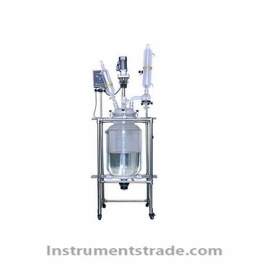
    The S212 1–5 L Double-Layer Glass Reactor is a jacketed laboratory glass reactor designed for chemical synthesis, reaction, mixing, heating, cooling and vacuum applications. Available in 1 L, 2 L, 3 L and 5 L configurations, it combines a borosilicate glass reaction vessel, variable-speed stirring system, PTFE sealing and a stainless steel support frame.
    The reactor uses GG17 borosilicate glass, providing good physical and chemical resistance for laboratory reaction processes. The variable-frequency stirring system provides smooth and reliable operation with high torque and spark-free operation.
    Its double-layer jacket allows heating or cooling media to circulate around the reaction vessel. The jacket is designed to allow the heating or cooling liquid to be completely drained after operation, minimizing residual liquid accumulation.
    The S212 can also be configured according to specific customer requirements for heating, cooling, reaction vessel and lid components.


    Key Features
    • High-quality borosilicate glass: The reaction vessel is made of GG17 borosilicate glass with good physical and chemical properties.
    • Variable-speed stirring: Stirring speed can be adjusted from 0 to 1200 rpm for flexible reaction control.
    • Stable high-torque operation: The variable-frequency drive provides smooth and reliable stirring with high torque.
    • PTFE sealing system: Specialized PTFE sealing components provide excellent sealing performance and support vacuum operation.
    • High vacuum capability: The sealing system can maintain a vacuum level of approximately -0.095 MPa under suitable operating conditions.
    • Wear-debris collection: A dedicated collection groove helps collect sealing material wear debris.
    • Stainless steel frame: The complete support frame uses a robust stainless steel structure, including stainless steel three-way and four-way connectors.
    • Mobile design: Equipped with locking casters for convenient movement and positioning.
    • Low-dead-volume discharge valve: The PTFE discharge valve is designed to minimize or eliminate dead zones and facilitate material discharge.
    • Efficient jacket drainage: Heating or cooling liquid in the reaction jacket can be thoroughly drained after operation to minimize liquid accumulation.
    • Heating and cooling options: Compatible heating or cooling configurations can be supplied according to application requirements.
    • Customizable configuration: The reaction vessel and lid can be customized according to customer requirements.
    • Compact structure: The overall design combines structural strength, practicality and convenient laboratory operation.


    Working Principle
    The S212 Double-Layer Glass Reactor uses a jacketed reaction vessel to provide controlled thermal conditions for laboratory reactions.
    The reaction materials are placed inside the borosilicate glass vessel. A heating or cooling medium is circulated through the outer jacket surrounding the reaction vessel, transferring heat to or from the reaction mixture. This allows the reaction temperature to be controlled without directly contacting the sample with the heating or cooling medium.
    The integrated stirring system uses a variable-frequency motor to rotate the stirring shaft. The stirring speed can be continuously adjusted within the specified range, promoting uniform mixing and improving heat and mass transfer throughout the reaction mixture.
    The PTFE sealing assembly minimizes air leakage between the rotating shaft and reactor vessel, allowing the system to operate under vacuum conditions. The vacuum environment can be used for processes such as low-temperature solvent evaporation, concentration and reactions requiring reduced pressure.


    Technical Specifications
    Parameter S212-1L S212-2L S212-3L S212-5L
    Reaction Vessel Volume 1 L 2 L 3 L 5 L
    Number of Ports 5 5 5 5
    Stirring Speed 0–1200 rpm 0–1200 rpm 0–1200 rpm 0–1200 rpm
    Stirring Shaft Diameter 5 mm 5 mm 5 mm 12 mm
    Stirring Power 60 W 60 W 60 W 60 W
    Voltage/Frequency 220 V / 50 Hz 220 V / 50 Hz 220 V / 50 Hz 220 V / 50 Hz
    Approx. Dimensions 350 × 300 × 1100 mm 550 × 550 × 1200 mm 420 × 350 × 1450 mm 420 × 350 × 1500 mm
     

    Main Components
    Component Description
    Reaction Vessel GG17 borosilicate glass
    Jacket Double-layer structure for heating or cooling medium circulation
    Stirring System Variable-frequency speed control
    Sealing PTFE sealing components
    Discharge Valve Low-dead-volume PTFE valve
    Support Frame Stainless steel
    Connectors Stainless steel three-way and four-way connectors
    Mobility Locking casters
    Reaction Vessel/Lid Customizable according to requirements
     

    Applications
    The S212 Double-Layer Glass Reactor is suitable for laboratory processes involving:
    • Chemical synthesis
    • Organic synthesis
    • Pharmaceutical research
    • Materials research
    • Fine chemical development
    • Solvent evaporation and concentration
    • Mixing and stirring
    • Heating and cooling reactions
    • Vacuum reactions
    • Small-batch process development
    • Laboratory reaction condition optimization


    Application Scenarios
    Chemical Synthesis
    The reactor can be used for small-scale chemical synthesis requiring controlled stirring, heating, cooling or vacuum conditions.
    Pharmaceutical Research
    The glass vessel and customizable configuration make the system suitable for laboratory-scale pharmaceutical and formulation research.
    Vacuum Reaction and Concentration
    The PTFE sealing system and vacuum capability support processes requiring reduced pressure, such as solvent concentration and low-temperature evaporation.
    Heating and Cooling Experiments
    The double-layer jacket allows heating or cooling media to circulate around the reaction vessel, providing controlled thermal conditions.
    Process Development
    The 1–5 L capacity range provides a practical scale for laboratory reaction development, formulation optimization and small-batch process studies.


    S212 vs. Single-Layer Glass Reactor
    Feature S212 Double-Layer Glass Reactor Single-Layer Glass Reactor
    Vessel Structure Double-layer jacketed Single-layer
    Heating/Cooling Jacket circulation External heating/cooling required
    Temperature Control More uniform thermal transfer More dependent on external system
    Stirring Variable speed, 0–1200 rpm Depends on configuration
    Vacuum Operation Supported Depends on sealing configuration
    Sealing PTFE sealing system Varies
    Discharge Valve Low-dead-volume PTFE valve Varies
    Frame Stainless steel Varies
    Mobility Locking casters Depends on design
    Customization Vessel and lid can be customized Depends on model
     

    FAQ
    What capacities are available for the S212 reactor?
    The S212 series is available in 1 L, 2 L, 3 L and 5 L configurations.
    What is the maximum stirring speed?
    The stirring speed can be adjusted from 0 to 1200 rpm.
    What material is the reaction vessel made of?
    The reaction vessel uses GG17 borosilicate glass, which provides good physical and chemical properties for laboratory applications.
    Can the S212 reactor operate under vacuum?
    Yes. The specialized PTFE sealing system provides good sealing performance and can maintain a vacuum level of approximately -0.095 MPa under suitable conditions.
    Can the reactor provide both heating and cooling?
    Yes. The double-layer jacket can be used for circulation of heating or cooling media. Corresponding heating or cooling configurations can be supplied according to customer requirements.
    Is the reaction vessel customizable?
    Yes. The reaction vessel and lid can be customized according to specific customer requirements.
    Does the reactor have a discharge valve?
    Yes. It uses a PTFE discharge valve designed with minimal or no dead volume to facilitate material discharge and reduce residual material.
    Is the reactor easy to move?
    Yes. The stainless steel frame is equipped with locking casters, allowing the reactor to be moved conveniently and securely positioned during operation.
    What is the main application of the S212?
    The S212 is designed for laboratory-scale chemical reactions, synthesis, mixing, heating, cooling, vacuum processes and small-batch process development.


  • FAQ
    What capacities are available for the S212 reactor?
    The S212 series is available in 1 L, 2 L, 3 L and 5 L configurations.
    What is the maximum stirring speed?
    The stirring speed can be adjusted from 0 to 1200 rpm.
    What material is the reaction vessel made of?
    The reaction vessel uses GG17 borosilicate glass, which provides good physical and chemical properties for laboratory applications.
    Can the S212 reactor operate under vacuum?
    Yes. The specialized PTFE sealing system provides good sealing performance and can maintain a vacuum level of approximately -0.095 MPa under suitable conditions.
    Can the reactor provide both heating and cooling?
    Yes. The double-layer jacket can be used for circulation of heating or cooling media. Corresponding heating or cooling configurations can be supplied according to customer requirements.
    Is the reaction vessel customizable?
    Yes. The reaction vessel and lid can be customized according to specific customer requirements.
    Does the reactor have a discharge valve?
    Yes. It uses a PTFE discharge valve designed with minimal or no dead volume to facilitate material discharge and reduce residual material.
    Is the reactor easy to move?
    Yes. The stainless steel frame is equipped with locking casters, allowing the reactor to be moved conveniently and securely positioned during operation.
    What is the main application of the S212?
    The S212 is designed for laboratory-scale chemical reactions, synthesis, mixing, heating, cooling, vacuum processes and small-batch process development.
Products
Analytical instruments
Physical property test
Environmental monitoring and analysis
Lab general equipment
About us
About this website
Our service
Product purchase
Contact Us

Newsletter

Make Sure you dont miss interesting happenings by joining our newsletter program.

Contact Us
+86-18620722006
instruments@instrumentstrade.com