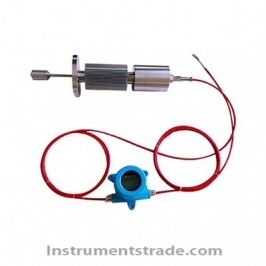
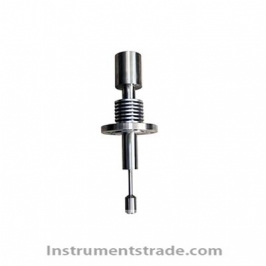
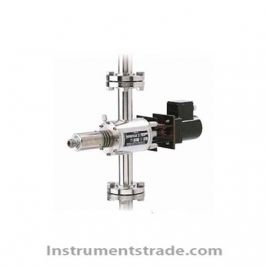
ND portable viscometer Introduction: ND portable viscometer is used in various industries such as petroleum and petrochemical, silicone oil, resin, food, chemical fiber, ink, plastic, paint, coating, optical fiber, latex, solvent, plastic, glass, and various rubber making industries. The measurement principle of ND portable viscometer is that when an object undergoes torsional vibration in a fluid, the amplitude of the object will attenuate due to the action of viscous torque. The degree of attenuation corresponds to the viscous torque received by the object. The energy consumed due to viscous damping is provided by the outside world to maintain the motion state of the object in the state before attenuation. At this time, the viscosity of the fluid and the energy provided by the outside world correspond as follows: η∝ρ E, where η is the viscosity of the fluid to be measured and ρ is the density of the fluid to be measured. The vibration viscometer mainly consists of two parts: sensors and instrument circuits. Technical Specifications: Viscosity range: 0-10000CP Accuracy: ± 0.5% Repeatability: ± 0.3% Temperature measurement range: 0-100 ℃ Temperature accuracy: 0.5% Sensor pressure range: atmospheric pressure Sensor temperature resistance range<120 ℃ Power on signal response time: 60s Material: 316 stainless steel (standard); Optional other materials Processing: Standard: Highly polished with PTFE coating Environmental level: IP68 Power supply: Lithium battery powered 12V DC Standby time: 24 hours Connecting to a computer allows for historical data recording On site viscosity sensor communication interface: RS485 Display mode: LCD screen Display range: 0-9999 (viscosity, temperature)
Introduction: ND portable viscometer is used in various industries such as petroleum and petrochemical, silicone oil, resin, food, chemical fiber, ink, plastic, paint, coating, optical fiber, latex, solvent, plastic, glass, and various rubber making industries. The measurement principle of ND portable viscometer is that when an object undergoes torsional vibration in a fluid, the amplitude of the object will attenuate due to the action of viscous torque. The degree of attenuation corresponds to the viscous torque received by the object. The energy consumed due to viscous damping is provided by the outside world to maintain the motion state of the object in the state before attenuation. At this time, the viscosity of the fluid and the energy provided by the outside world correspond as follows: η∝ρ E, where η is the viscosity of the fluid to be measured and ρ is the density of the fluid to be measured. The vibration viscometer mainly consists of two parts: sensors and instrument circuits.