Position: Home > > Optical instruments and equipment > Electron microscope sample preparation > film coating machine > MSK-SP-04-LD Ultrasonic Spray Pyrolysis Thin Film Coating Machine

MSK-SP-04-LD Ultrasonic Spray Pyrolysis Thin Film Coating Machine

Product ID:GDXZdmji016

Price: Please inquire PDF Format
Supply Ability:50SETS/MON
Port:SHENZHEN
  • Product Introduction
  • Other information
  • Model NumberMSK-SP-04-LD
    Brand NameSYKJ
    Payment TermsTT,PAYPAL,Alibaba.com Pay
    MSK-SP-04-LD Ultrasonic Spray Pyrolysis Thin Film Coating Machine
     
    Product Introduction
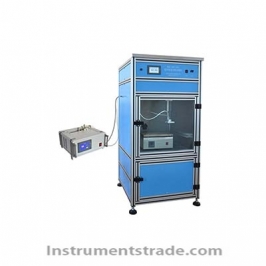
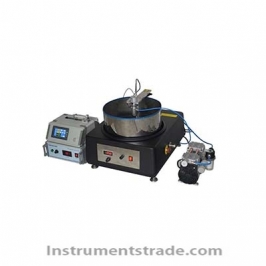
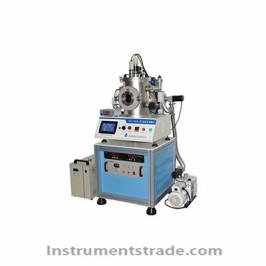
    The MSK-SP-04-LD Ultrasonic Spray Pyrolysis Coating Machine is designed for laboratory thin-film fabrication and materials research. It uses ultrasonic atomization to convert precursor solutions into fine droplets, which are sprayed onto a heated substrate to form functional coatings.
    The system provides controlled solution delivery through a stepper-motor-driven volumetric pump, adjustable spray movement along the X and Y axes, and programmable substrate temperature control up to 500°C. These functions support repeatable coating processes for oxide materials, transparent conductive films, and perovskite solar cell research.


    Performance Features
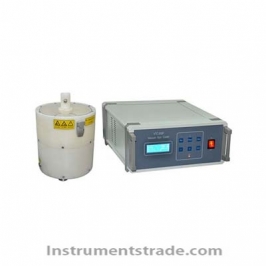
    •  Ultrasonic atomization: A 40 kHz, 130 W ultrasonic atomizer generates fine droplets for spray coating.
    •   Controlled solution delivery: A microprocessor and stepper motor control the volumetric pump to deliver precursor solution.
    •   Adjustable X-Y movement: The spray head travels up to 200 mm along both axes to improve coating coverage and uniformity.
    •  Programmable heating: The substrate temperature can reach 500°C, with a digital temperature controller supporting seven-stage heating and cooling programs.
    •  Flexible solution capacity: Supplied solution containers are available in 50 mL and 250 mL sizes.
    •   Laboratory-scale platform: A 150 × 150 mm substrate stage supports small-scale thin-film preparation.
    •   Broad materials research applications: Suitable for exploring oxide coatings, transparent electrodes, and perovskite-related thin-film processes.


    Working Principle
    The MSK-SP-04-LD uses the spray pyrolysis method to deposit thin films.
    1. Solution delivery: A stepper-motor-controlled volumetric pump feeds the precursor solution to the atomization system.
    2.  Ultrasonic atomization: The 40 kHz ultrasonic atomizer converts the solution into fine droplets.
    3. Spray movement: The spray head moves along the X and Y axes to distribute the droplets over the substrate.
    4.  Thermal deposition: The substrate is heated to the selected temperature. As droplets contact the hot surface, solvent evaporation and thermal decomposition or chemical reactions can form the desired film.
    5. Temperature programming: The digital controller manages programmed heating and cooling stages to suit the experiment.
    Film quality depends on factors such as solution chemistry, droplet characteristics, substrate temperature, spray speed, and deposition conditions.


    Technical Specifications
    Parameter Specification
    Model MSK-SP-04-LD
    Equipment Type Ultrasonic Spray Pyrolysis Thin Film Coating Machine
    Input Power 208–240 V AC, 50/60 Hz
    Installation Power Requirement AC 220 V, 50 Hz, with proper grounding
    Stepper Motor 24 V DC
    Ultrasonic Atomizer Frequency 40 kHz
    Ultrasonic Atomizer Power 130 W
    Solution Container Capacity 50 mL and 250 mL
    Solution Delivery Rate 1–20 mL/s, as specified by the source
    Droplet Size 50 μm, as specified by the source
    Spray Head Travel 200 mm along X and Y axes
    X-Axis Movement Speed 10–800 mm/s
    Y-Axis Movement Speed 1–12 mm/s; air-compressor-driven movement is specified in the source
    Substrate Stage Size 150 × 150 mm
    Maximum Heating Temperature 500°C
    Temperature Controller Digital display with seven-stage programmable heating and cooling
    Overall Dimensions 840 × 920 × 1,400 mm
    Cooling Water Not required
    Compressed Gas Not required according to the installation requirements
    Operating Altitude Below 1,000 m
    Ambient Temperature 25°C ± 15°C
    Relative Humidity 55% RH ± 10% RH
    Installation Footprint Floor-standing; more than 1 m² of floor space required
    Ventilation Required


    Application Scenarios
    •    Oxide thin-film deposition and materials research
    •    Transparent conductive film development
    •    Perovskite solar cell research and coating
    •    Functional coatings for photovoltaic devices
    •    Laboratory-scale preparation of micro- and nanoscale coatings
    •    Research into solution-based thin-film fabrication processes


    Comparison with Conventional Thin-Film Deposition Methods
    Feature MSK-SP-04-LD Ultrasonic Spray Pyrolysis Conventional Spin Coating Vacuum-Based Deposition
    Deposition Approach Atomized solution sprayed onto a heated substrate Liquid spread by substrate rotation Material deposited under vacuum
    Substrate Heating Integrated heating up to 500°C Depends on separate equipment or configuration Depends on deposition technology
    X-Y Spray Movement Available Not typically used Depends on system
    Solution-Based Processing Yes Yes Depends on method
    Typical Research Applications Oxide films, transparent electrodes, perovskite-related coatings Small-area solution-coated films Thin films requiring vacuum processing
    Process Flexibility Adjustable solution delivery, spray movement, and heating program Primarily controlled by solution and spin parameters Depends on deposition process and equipment


    Frequently Asked Questions
    Q1: What is the MSK-SP-04-LD used for?
    It is used for laboratory thin-film deposition, particularly solution-based oxide coatings, transparent electrode research, and perovskite solar cell studies.
    Q2: How does ultrasonic spray pyrolysis work?
    The system atomizes a precursor solution into droplets, sprays them onto a heated substrate, and uses thermal evaporation and reaction processes to form a film.
    Q3: What is the maximum substrate heating temperature?
    The specified maximum heating temperature is 500°C.
    Q4: What is the ultrasonic atomizer specification?
    The system uses a 40 kHz ultrasonic atomizer rated at 130 W.
    Q5: What substrate size can the machine accommodate?
    The substrate stage measures 150 × 150 mm.
    Q6: Can the spray head movement be adjusted?
    Yes. The spray head can move along the X and Y axes, with specified speeds of 10–800 mm/s on X and 1–12 mm/s on Y.
    Q7: Does the machine support programmed heating?
    Yes. Its digital temperature controller supports seven-stage programmable heating and cooling.
    Q8: What installation facilities are required?
    The machine requires a properly grounded AC 220 V, 50 Hz power supply, a floor area exceeding 1 m², and suitable ventilation. The source specifies that cooling water and compressed gas are not required.


  • Frequently Asked Questions
    Q1: What is the MSK-SP-04-LD used for?
    It is used for laboratory thin-film deposition, particularly solution-based oxide coatings, transparent electrode research, and perovskite solar cell studies.
    Q2: How does ultrasonic spray pyrolysis work?
    The system atomizes a precursor solution into droplets, sprays them onto a heated substrate, and uses thermal evaporation and reaction processes to form a film.
    Q3: What is the maximum substrate heating temperature?
    The specified maximum heating temperature is 500°C.
    Q4: What is the ultrasonic atomizer specification?
    The system uses a 40 kHz ultrasonic atomizer rated at 130 W.
    Q5: What substrate size can the machine accommodate?
    The substrate stage measures 150 × 150 mm.
    Q6: Can the spray head movement be adjusted?
    Yes. The spray head can move along the X and Y axes, with specified speeds of 10–800 mm/s on X and 1–12 mm/s on Y.
    Q7: Does the machine support programmed heating?
    Yes. Its digital temperature controller supports seven-stage programmable heating and cooling.
    Q8: What installation facilities are required?
    The machine requires a properly grounded AC 220 V, 50 Hz power supply, a floor area exceeding 1 m², and suitable ventilation. The source specifies that cooling water and compressed gas are not required.
Products
Analytical instruments
Physical property test
Environmental monitoring and analysis
Lab general equipment
About us
About this website
Our service
Product purchase
Contact Us

Newsletter

Make Sure you dont miss interesting happenings by joining our newsletter program.

Contact Us
+86-18620722006
instruments@instrumentstrade.com