Position: Home > > Life science instrument and equipment > Biological engineering equipment > Other biochemical equipment > MODA-9 Composting Biodegradation Analyzer

MODA-9 Composting Biodegradation Analyzer

Product ID:SHGCqtOther011

Price: Please inquire PDF Format
Supply Ability:50 SETS/MON
Port:SHENZHEN
  • Product Introduction
  • Other information
  • Model NumberMODA-9
    Brand NameTUOMOGEN
    Payment TermsTT,PAYPAL,Alibaba.com Pay
    MODA-9 Composting Biodegradation Analyzer
     
    Product Introduction
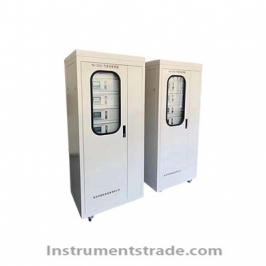
    The MODA-9 Composting Biodegradation Analyzer is designed for evaluating the biodegradability of biodegradable plastics and other bio-based materials under controlled composting conditions. The system provides multiple independent test channels and controlled-temperature reaction columns for laboratory biodegradation studies.
    The instrument uses an active compost environment through which controlled air is passed. During biodegradation, the generated carbon dioxide is collected after removal of ammonia and water, and the amount of released CO₂ is determined from the weight increase of the soda lime absorbent.
    The MODA-9 supports testing according to GB/T 19277.2-2013, GB/T 22047-2008, ISO 14855-2:2018 and ISO 17556-2012.


    Performance Features
    •   Designed for composting biodegradation analysis of biodegradable plastics and bio-based materials.
    •   ≥9 independent test channels for parallel biodegradation testing.
    •   Samples are degraded in active compost under controlled airflow conditions.
    •   Reaction columns can be maintained at a user-defined temperature.
    •   Temperature setting range of 45–65°C.
    •   Temperature control accuracy up to ±0.5°C.
    •   Under ISO 14855-2 conditions, the test temperature is typically maintained at 58°C.
    •   Ammonia and water generated during the process are removed.
    •   Generated CO₂ is absorbed by soda lime (sodium hydroxide-based absorbent).
    •   CO₂ generation is determined from the increase in absorbent weight.
    •   Samples can be periodically weighed during the test.
    •   500 mL reaction columns with pull-out holders for convenient sample handling.
    •   Air-bath heating with PID temperature control.
    •   Dual-fan forced-air convection provides uniform heating.
    •   K-type thermocouple temperature sensing.
    •   Adjustable airflow from 10–90 mL/min.


    Working Principle
    The MODA-9 places the test sample in an active compost matrix inside a controlled reaction column. Air is continuously passed through the compost under controlled flow conditions, providing the oxygen required for aerobic biodegradation.
    As the biodegradable material decomposes, microorganisms convert the organic carbon in the sample into carbon dioxide and other products. Water and ammonia released during the process are removed from the gas stream, while the generated CO₂ is captured by soda lime.
    The amount of CO₂ produced is determined from the increase in mass of the CO₂ absorbent. Periodic sample weighing can also be performed during the test to monitor changes in sample mass.
    The reaction-column temperature is controlled using an air-bath heating system with PID regulation. For testing according to ISO 14855-2, the temperature is typically maintained at 58°C.


    Technical Parameters
    Parameter Specification
    Model MODA-9
    Equipment Type Composting Biodegradation Analyzer
    Number of Channels ≥9
    Temperature Setting Range 45–65°C
    Temperature Accuracy ±0.5°C
    Typical ISO 14855-2 Temperature 58°C
    Reaction Column Volume 500 mL
    Reaction Column Holder Pull-out type
    Maximum Load 30 kg
    Main Heater Power 405 W
    Auxiliary Heater Power 160 W
    Temperature Control Air bath + PID
    Convection Dual-fan forced convection
    Temperature Sensor K-type thermocouple
    Air Pump Power 10 W
    Airflow Adjustment Range 10–90 mL/min
    Total Power 1500 W
    Power Supply Single-phase 100 V AC, 15 A, 50/60 Hz
    Dimensions 1350 × 450 × 1700 mm
    Weight 210 kg
    Ambient Temperature 5–40°C


    Applicable Standards
    The MODA-9 is designed for biodegradation testing according to:
    •   GB/T 19277.2-2013
    •   GB/T 22047-2008
    •   ISO 14855-2:2018
    •   ISO 17556-2012
    These methods support laboratory evaluation of the biodegradability of plastics and other bio-based materials under controlled conditions.


    Application Scenarios
    The MODA-9 Composting Biodegradation Analyzer is suitable for:
    •   Biodegradable plastic research
    •   Bio-based material development
    •   Compostable material evaluation
    •   Polymer biodegradation studies
    •   Packaging material research
    •   Environmental material testing
    •   Material formulation development
    •   University and research laboratories
    •   Quality control and comparative biodegradation studies
    Typical applications include comparing the biodegradation performance of different biodegradable plastics, polymer formulations and bio-based materials under controlled composting conditions.


    Comparison: MODA-9 vs. Conventional Biodegradation Testing
    Feature MODA-9 Composting Biodegradation Analyzer Conventional Manual Testing
    Test Environment Controlled active compost More dependent on manual conditions
    Channels ≥9 Usually fewer/manual
    Temperature Control 45–65°C, PID controlled Manual or less automated
    Airflow 10–90 mL/min adjustable May require separate control
    CO₂ Evaluation Soda lime absorption + mass increase Manual measurement/calculation
    Reaction Columns 500 mL Depends on test setup
    Sample Monitoring Periodic weighing Manual
    Heating Air bath + forced convection Conventional heating
    Temperature Sensor K-type thermocouple Depends on setup
    Parallel Testing Multi-channel Often limited
    Standard Applications GB/T and ISO biodegradation methods Depends on equipment


    FAQ
    1.  What is the MODA-9 Composting Biodegradation Analyzer used for?
    It is used to evaluate the biodegradability of biodegradable plastics and other bio-based materials under controlled composting conditions.
    2. How many test channels does the MODA-9 have?
    The system provides at least 9 test channels for parallel testing.
    3. What temperature range can be set?
    The temperature setting range is 45–65°C, with a temperature accuracy of ±0.5°C.
    4. What temperature is normally used for ISO 14855-2 testing?
    For ISO 14855-2 conditions, the temperature is typically maintained at 58°C.
    5. How is the CO₂ generated during biodegradation measured?
    The released CO₂ is absorbed by soda lime, and the amount of CO₂ is calculated from the increase in weight of the absorbent.
    6. Why is active compost used in the test?
    Active compost provides a controlled biological environment containing microorganisms capable of degrading biodegradable materials under aerobic composting conditions.
    7. Can samples be weighed during the test?
    Yes. The samples can be periodically weighed during the biodegradation process.
    8. What is the reaction column capacity?
    Each reaction column has a volume of 500 mL.
    9. Which standards does the MODA-9 support?
    The system is designed for methods including GB/T 19277.2-2013, GB/T 22047-2008, ISO 14855-2:2018 and ISO 17556-2012.


  • FAQ
    1.  What is the MODA-9 Composting Biodegradation Analyzer used for?
    It is used to evaluate the biodegradability of biodegradable plastics and other bio-based materials under controlled composting conditions.
    2. How many test channels does the MODA-9 have?
    The system provides at least 9 test channels for parallel testing.
    3. What temperature range can be set?
    The temperature setting range is 45–65°C, with a temperature accuracy of ±0.5°C.
    4. What temperature is normally used for ISO 14855-2 testing?
    For ISO 14855-2 conditions, the temperature is typically maintained at 58°C.
    5. How is the CO₂ generated during biodegradation measured?
    The released CO₂ is absorbed by soda lime, and the amount of CO₂ is calculated from the increase in weight of the absorbent.
    6. Why is active compost used in the test?
    Active compost provides a controlled biological environment containing microorganisms capable of degrading biodegradable materials under aerobic composting conditions.
    7. Can samples be weighed during the test?
    Yes. The samples can be periodically weighed during the biodegradation process.
    8. What is the reaction column capacity?
    Each reaction column has a volume of 500 mL.
    9. Which standards does the MODA-9 support?
    The system is designed for methods including GB/T 19277.2-2013, GB/T 22047-2008, ISO 14855-2:2018 and ISO 17556-2012.


Products
Analytical instruments
Physical property test
Environmental monitoring and analysis
Lab general equipment
About us
About this website
Our service
Product purchase
Contact Us

Newsletter

Make Sure you dont miss interesting happenings by joining our newsletter program.

Contact Us
+86-18620722006
instruments@instrumentstrade.com