Position: Home > > Physical property test > Granule/powder analysis instrument > Laser particle size analyzer > LT2100 Series Laser Particle Size Analyzer

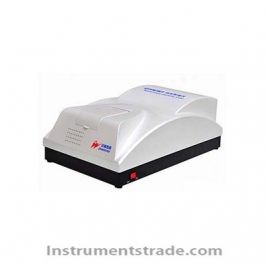
LT2100 Series Laser Particle Size Analyzer

Product ID:WLjg084

Price: Please inquire PDF Format
Supply Ability:50 SETS/MON
Port:SHENZHEN
  • Product Introduction
  • Other information
  • Model NumberLT2100
    Brand NameZHUHAIZHENLI
    Payment TermsTT,PAYPAL,Alibaba.com Pay
    LT2100 Series Laser Particle Size Analyzer
    Product Overview
    The LT2100 Series Laser Particle Size Analyzer is a high-performance particle size measurement system based on laser diffraction and static light scattering technology. It is designed for accurate and efficient particle size distribution analysis of powders, suspensions, and other particulate materials.
    The LT2100 series uses a newly optimized optical system, improved optical models, and advanced inversion algorithms to reduce the influence of Anomalous Change of Airy Disk (ACAD) on particle size analysis results. The system uses a unified particle size analysis mode, eliminating the need for users to select different analysis modes according to particle size.
    The series provides particle size measurement ranges of 0.1–800 μm for LT2100 and 0.05–1200 μm for LT2100 Plus, covering a wide range of laboratory and industrial particle size analysis applications.
    The optical measurement system complies with ISO 13320 requirements for laser diffraction particle size analysis and incorporates multiple patented technologies for optical filtering, diffraction correction, inverse Fourier optical configuration, large-angle detection, liquid-level control, and optical signal stabilization.
     
    Key Features
    • Wide Particle Size Measurement Range
    LT2100 provides a measurement range of 0.1–800 μm, while LT2100 Plus extends the range to 0.05–1200 μm.
    The wide measurement range allows the system to analyze fine powders, micron-scale particles, and relatively coarse particulate materials without changing lenses.
    • Advanced Laser Diffraction Technology
    The system uses laser diffraction/static scattering technology together with optimized optical models and inversion algorithms.
    The full-range Mie theory and Fraunhofer theory can be selected according to analytical requirements, providing a flexible approach for particle size distribution analysis.
    • ACAD Compensation and Correction Technology
    LT2100 incorporates technology for compensating and correcting the Anomalous Change of Airy Disk (ACAD) effect.
    This helps reduce the influence of abnormal Airy disk behavior on particle size calculation and improves the reliability of particle size distribution results.
    • Polarization Filtering Technology
    The patented polarization filtering technology improves optical signal quality and helps suppress unwanted optical interference during measurement.
    • Inverse Fourier Optical Configuration
    The system adopts an oblique-incidence inverse Fourier optical configuration, providing an optimized optical path for wide-range particle size measurement.
    • Large-Angle Detection Array
    The grating-type large-angle detection array technology expands the optical detection capability and supports measurement of fine particles requiring large-angle scattering information.
    • Unified Particle Size Analysis Mode
    LT2100 uses a unified particle size analysis mode, eliminating the need to manually select different analysis modes according to the particle size range.
    This simplifies operation and improves measurement consistency.
    • High-Speed Real-Time Measurement
    The optical measurement system provides a real-time measurement rate of up to 2 kHz, enabling rapid acquisition of measurement data and supporting dynamic observation of particle size changes.
    • Stable Solid-State Laser Source
    The system uses a high-stability semiconductor solid-state laser with automatic temperature stabilization.
    Compared with conventional helium-neon gas lasers, the solid-state laser source avoids long warm-up times and relatively short operating lifetimes, improving overall usability and stability.
    • Automatic Optical Alignment
    LT2100 uses an automatic alignment system to help maintain the correct optical configuration and reduce manual adjustment requirements.
    • No Lens Replacement or Standard Sample Calibration
    The system covers its specified measurement range without requiring lens replacement. It also does not require calibration using standard reference samples for routine operation.
     
    Working Principle
    The LT2100 Series uses the laser diffraction/static light scattering principle for particle size analysis.
    During measurement, a laser beam passes through the dispersed sample. Particles scatter the incident laser light at angles related to their particle size. Generally, larger particles produce stronger scattering at smaller angles, while smaller particles generate relatively larger-angle scattering.
    The optical detection array collects scattered light over a broad angular range. The instrument then applies an appropriate optical model, including Mie or Fraunhofer theory, together with its optimized inversion algorithm to calculate the particle size distribution.
    The LT2100 optical system incorporates polarization filtering, ACAD compensation, inverse Fourier optics, and large-angle detection technologies to improve the quality of the scattering signal and the reliability of particle size calculations.
     
    Technical Specifications
    Main Instrument Specifications
    Parameter LT2100 LT2100 Plus
    Measurement Principle Laser Diffraction / Static Light Scattering Laser Diffraction / Static Light Scattering
    Optical Model Full-Range Mie Theory / Fraunhofer Theory Full-Range Mie Theory / Fraunhofer Theory
    Particle Size Range 0.1–800 μm 0.05–1200 μm
    Sample Introduction 500 mL wet dispersion system 500 mL wet dispersion system
    Pump Centrifugal Pump Centrifugal Pump
    Built-in Ultrasonic Dispersion Yes, dry-burn protection, manual control Yes, dry-burn protection, manual control
    Water Supply / Drainage Manual Manual
    Drive Single Motor Single Motor
    Light Source Semiconductor Solid-State Laser Semiconductor Solid-State Laser
    Optical Alignment Automatic Automatic
    Sample Introduction System Separate Type Separate Type
    Optical System Inverse Fourier Transform Inverse Fourier Transform
    Accuracy Dv50 better than ±0.5% with NIST-traceable latex standard Dv50 better than ±0.5% with NIST-traceable latex standard
    Repeatability Dv50 better than ±0.5% with NIST-traceable latex standard Dv50 better than ±0.5% with NIST-traceable latex standard
    Software SOP Function Available Available
     
    Instrument Dimensions
    Component Dimensions
    Main Unit 510 × 257 × 350 mm
    Sample Introduction Unit 270 × 170 × 340 mm
    Hydrolink SM Manual Wet Dispersion Sample Introduction Unit
    The Hydrolink SM is a manual wet dispersion sample introduction unit designed for laboratory particle size analysis.
     
    Features
    • Standard sample volume up to 500 mL
    • Manual operation with a simple and intuitive control system
    • Built-in high-efficiency ultrasonic disperser with dry-burn protection
    • Effective dispersion and uniform transport of different types of samples
    • Suspended liquid-level sensing
    • Automatic bubble elimination
    • Automatic sample dispersion and cleaning functions
    • Easy-to-use tools for rapid removal and cleaning of the sample cell window
    • Centrifugal pump circulation
    • Single-motor drive system
    The wet dispersion system is suitable for samples that require liquid-phase dispersion before laser diffraction measurement.
     
    Applications
    • Powder particle size analysis
    • Chemical powder analysis
    • Pharmaceutical particle size measurement
    • Food and beverage powder analysis
    • Mineral and geological material analysis
    • Cement and building materials
    • Ceramics and advanced materials
    • Pigments and coatings
    • Battery materials
    • Semiconductor and electronic materials
    • Agricultural chemicals and fertilizers
    • Research and quality control laboratories
     
    Application Scenarios
    Pharmaceutical Particle Size Analysis
    LT2100 can be used to characterize particle size distributions of pharmaceutical powders and suspensions, supporting formulation development and quality control.
    Chemical and Industrial Powders
    The wide measurement range allows analysis of various industrial powders and particulate raw materials, helping manufacturers monitor particle size consistency.
    Mineral and Building Materials
    LT2100 can be applied to particle size analysis of minerals, cement, ceramics, and other inorganic materials.
    Advanced Materials and Battery Materials
    The fine-particle measurement capability of LT2100 Plus, down to 0.05 μm, makes it suitable for research and quality evaluation of fine powders and advanced particulate materials.
    Laboratory Research and Quality Control
    Automatic alignment, SOP functions, rapid measurement, and wet dispersion capabilities make the LT2100 series suitable for routine laboratory particle size testing and standardized quality control procedures.
     
    LT2100 vs. Conventional Laser Particle Size Analyzers
    Feature LT2100 Series Conventional Laser Particle Size Analyzer
    Measurement Principle Laser diffraction / static light scattering Laser diffraction
    Particle Size Range Up to 0.05–1200 μm Depends on model
    ACAD Correction Supported Not always available
    Optical Configuration Inverse Fourier transform Depends on model
    Polarization Filtering Supported Depends on model
    Large-Angle Detection Grating-type large-angle array Depends on optical configuration
    Analysis Mode Unified mode May require mode selection
    Lens Replacement Not required within specified range Required by some systems
    Standard Sample Calibration Not required for routine measurement May be required by some systems
    Optical Alignment Automatic Depends on model
    Real-Time Measurement Rate Up to 2 kHz Depends on model
    Laser Source Temperature-stabilized solid-state laser Depends on model
    Wet Dispersion Hydrolink SM, up to 500 mL Depends on configuration
     
    Advantages of LT2100 Series
    The LT2100 Series combines a wide measurement range, advanced optical configuration, high-speed signal acquisition, and automated optical alignment in a single particle size analysis platform.
    Its ACAD correction technology addresses an important source of error in laser diffraction particle size analysis, while the unified analysis mode simplifies operation. The temperature-stabilized solid-state laser provides a stable optical source without the long warm-up period associated with conventional gas lasers.
    For laboratories requiring high-quality particle size distribution data across a broad range, the LT2100 Plus, with a measurement range of 0.05–1200 μm, provides particularly broad analytical coverage.
     
    FAQ
    What is the LT2100 Series Laser Particle Size Analyzer used for?
    It is used to measure particle size distributions of powders, suspensions, and other particulate materials using laser diffraction and static light scattering technology.
    What is the particle size range of LT2100?
    The standard LT2100 has a particle size measurement range of 0.1–800 μm.
    What is the particle size range of LT2100 Plus?
    The LT2100 Plus provides an extended measurement range of 0.05–1200 μm.
    Does LT2100 use Mie theory or Fraunhofer theory?
    The system supports full-range Mie theory and Fraunhofer theory, allowing the appropriate optical model to be selected according to the characteristics of the sample and analytical requirements.
    Does LT2100 require lens replacement?
    No. Within its specified measurement range, the system does not require lens replacement.
    Does LT2100 require standard sample calibration?
    The system is designed to operate without standard sample calibration for routine particle size measurement.
    What is ACAD correction technology?
    ACAD refers to the Anomalous Change of Airy Disk phenomenon. LT2100 incorporates compensation and correction technology to reduce the influence of this optical effect on particle size analysis results.
    How fast can LT2100 perform measurements?
    The optical measurement system provides a real-time measurement rate of up to 2 kHz, enabling rapid data acquisition.
    What type of laser source does LT2100 use?
    LT2100 uses a temperature-stabilized semiconductor solid-state laser. This avoids the long warm-up period and shorter service life associated with conventional helium-neon gas laser sources.
    Does LT2100 support wet dispersion?
    Yes. The Hydrolink SM manual wet dispersion sample introduction unit provides a standard capacity of up to 500 mL, with a centrifugal pump, built-in ultrasonic dispersion, dry-burn protection, liquid-level sensing, bubble elimination, and cleaning functions.
    What is the accuracy of LT2100 particle size measurement?
    Using an NIST-traceable latex standard, the specified Dv50 accuracy is better than ±0.5%, with repeatability also better than ±0.5%.


  • FAQ
    What is the LT2100 Series Laser Particle Size Analyzer used for?
    It is used to measure particle size distributions of powders, suspensions, and other particulate materials using laser diffraction and static light scattering technology.
    What is the particle size range of LT2100?
    The standard LT2100 has a particle size measurement range of 0.1–800 μm.
    What is the particle size range of LT2100 Plus?
    The LT2100 Plus provides an extended measurement range of 0.05–1200 μm.
    Does LT2100 use Mie theory or Fraunhofer theory?
    The system supports full-range Mie theory and Fraunhofer theory, allowing the appropriate optical model to be selected according to the characteristics of the sample and analytical requirements.
    Does LT2100 require lens replacement?
    No. Within its specified measurement range, the system does not require lens replacement.
    Does LT2100 require standard sample calibration?
    The system is designed to operate without standard sample calibration for routine particle size measurement.
    What is ACAD correction technology?
    ACAD refers to the Anomalous Change of Airy Disk phenomenon. LT2100 incorporates compensation and correction technology to reduce the influence of this optical effect on particle size analysis results.
    How fast can LT2100 perform measurements?
    The optical measurement system provides a real-time measurement rate of up to 2 kHz, enabling rapid data acquisition.
    What type of laser source does LT2100 use?
    LT2100 uses a temperature-stabilized semiconductor solid-state laser. This avoids the long warm-up period and shorter service life associated with conventional helium-neon gas laser sources.
    Does LT2100 support wet dispersion?
    Yes. The Hydrolink SM manual wet dispersion sample introduction unit provides a standard capacity of up to 500 mL, with a centrifugal pump, built-in ultrasonic dispersion, dry-burn protection, liquid-level sensing, bubble elimination, and cleaning functions.
    What is the accuracy of LT2100 particle size measurement?
    Using an NIST-traceable latex standard, the specified Dv50 accuracy is better than ±0.5%, with repeatability also better than ±0.5%.
Products
Analytical instruments
Physical property test
Environmental monitoring and analysis
Lab general equipment
About us
About this website
Our service
Product purchase
Contact Us

Newsletter

Make Sure you dont miss interesting happenings by joining our newsletter program.

Contact Us
+86-18620722006
instruments@instrumentstrade.com