Position: Home > > Measurement instrument > Other measuring/measurement instrument > Rain gauge > JD-05 Standard Rain Gauge

JD-05 Standard Rain Gauge

Product ID:CLQTylj009

Price: Please inquire PDF Format
Supply Ability:50SETS/MON
Port:SHENZHEN
  • Product Introduction
  • Other information
  • Model NumberJD-05
    Brand NameFZNANYU
    Payment TermsTT,PAYPAL,Alibaba.com Pay
    JD-05 Standard Rain Gauge
      
    Product Introduction
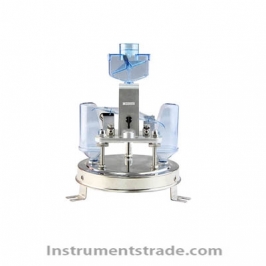
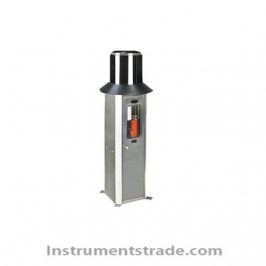
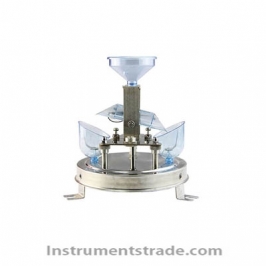
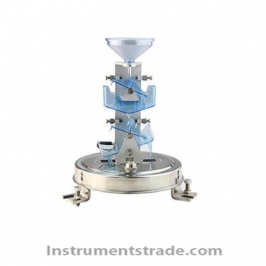
    The JD-05 Standard Rain Gauge is a primary instrument designed for measuring precipitation in hydrological and meteorological monitoring systems. Compliant with the relevant requirements of Chinese national standards GB/T 11832-2002 and GB/T 11831-2002, it provides reliable rainfall measurement for remote monitoring applications.
    The instrument can be integrated with the JND-1 Rainfall Alarm and remote telemetry terminals to support real-time rainfall monitoring and warning functions. It is widely used in hydrological monitoring, heavy rainfall warning, flash flood early warning, and debris flow warning systems.


    Performance Features
    1. Standard Compliance: Meets relevant requirements of GB/T 11832-2002 and GB/T 11831-2002.
    2. Reliable Measurement: Provides a rainfall resolution of 0.5 mm and measurement accuracy of ≤±3%.
    3. Wide Rainfall Intensity Range: Measures rainfall intensities from 0.01 to 4 mm/min, with a maximum allowable intensity of 8 mm/min.
    4. Dual Signal Outputs: Equipped with two reed switch outputs for reliable signal transmission.
    5. System Compatibility: Can be connected to the JND-1 Rainfall Alarm and remote telemetry terminals.
    6. Outdoor Operation: Designed for outdoor environments with temperatures ranging from -10°C to 50°C.


    Working Principle
    The JD-05 Standard Rain Gauge collects precipitation through its receiving funnel and measures rainfall using a tipping-bucket mechanism. As rainwater accumulates, the bucket tips after reaching a predetermined volume, generating an electrical switching signal through the reed switch system.
    Each tipping event corresponds to a fixed amount of rainfall, allowing the connected monitoring or telemetry equipment to calculate and record accumulated precipitation and rainfall intensity.


    Technical Parameters
    Parameter Specification
    Rainfall Receiving Orifice Diameter φ200 mm ±0.60 mm*
    Sharp Edge Angle 40°–45°
    Resolution 0.5 mm
    Measurement Accuracy ≤±3%
    Rainfall Intensity Range 0.01–4 mm/min
    Maximum Allowable Rainfall Intensity 8 mm/min
    Signal Output Two reed switch on/off signal outputs
    Operating Temperature -10°C to 50°C
    Relative Humidity <95% at 40°C
    Applicable Standards GB/T 11832-2002; GB/T 11831-2002
    Note: The original source specifies the receiving orifice as φ20000.60 mm. The table interprets this as φ200 mm ±0.60 mm; please confirm the original manufacturer's specification.


    Application Scenarios
    • Hydrological Monitoring: Measuring rainfall for river basin and water resource monitoring.
    • Heavy Rainfall Warning: Monitoring rainfall intensity to support severe weather warning systems.
    • Flash Flood Early Warning: Providing precipitation data for flash flood monitoring and risk warning.
    •  Debris Flow Warning: Supporting rainfall-based geological disaster monitoring and early warning.
    •  Remote Rainfall Monitoring: Working with telemetry terminals for automatic rainfall data collection and transmission.


    Comparison: JD-05 Standard Rain Gauge vs. Basic Manual Rain Gauges
    Feature JD-05 Standard Rain Gauge Basic Manual Rain Gauge
    Measurement Method Automatic tipping-bucket measurement Manual observation
    Resolution 0.5 mm Depends on scale
    Signal Output Dual reed switch outputs Usually unavailable
    Remote Monitoring Supported with compatible equipment Generally not supported
    Alarm Integration Compatible with rainfall alarm systems Requires additional equipment
    Application Hydrological and automatic monitoring Basic rainfall observation


    Frequently Asked Questions (FAQ)
    Q1: What is the JD-05 Standard Rain Gauge used for?
    It is used to measure precipitation in hydrological monitoring, rainfall warning, flash flood early warning, and debris flow monitoring systems.
    Q2: What is the rainfall measurement resolution?
    The instrument has a rainfall resolution of 0.5 mm.
    Q3: What is the measurement accuracy of the JD-05?
    Its specified measurement accuracy is ≤±3%.
    Q4: What rainfall intensity can it measure?
    The standard measurement range is 0.01–4 mm/min, with a maximum allowable rainfall intensity of 8 mm/min.
    Q5: Does the instrument support remote data transmission?
    Yes. Its two reed switch signal outputs can be connected to compatible remote telemetry terminals for rainfall data collection and transmission.
    Q6: Can the JD-05 work with a rainfall alarm?
    Yes. It can be used with the JND-1 Rainfall Alarm to support rainfall monitoring and warning applications.
    Q7: What are its operating environmental requirements?
    The instrument operates at temperatures from -10°C to 50°C and relative humidity below 95% at 40°C.
     
  • Frequently Asked Questions (FAQ)
    Q1: What is the JD-05 Standard Rain Gauge used for?
    It is used to measure precipitation in hydrological monitoring, rainfall warning, flash flood early warning, and debris flow monitoring systems.
    Q2: What is the rainfall measurement resolution?
    The instrument has a rainfall resolution of 0.5 mm.
    Q3: What is the measurement accuracy of the JD-05?
    Its specified measurement accuracy is ≤±3%.
    Q4: What rainfall intensity can it measure?
    The standard measurement range is 0.01–4 mm/min, with a maximum allowable rainfall intensity of 8 mm/min.
    Q5: Does the instrument support remote data transmission?
    Yes. Its two reed switch signal outputs can be connected to compatible remote telemetry terminals for rainfall data collection and transmission.
    Q6: Can the JD-05 work with a rainfall alarm?
    Yes. It can be used with the JND-1 Rainfall Alarm to support rainfall monitoring and warning applications.
    Q7: What are its operating environmental requirements?
    The instrument operates at temperatures from -10°C to 50°C and relative humidity below 95% at 40°C.
Products
Analytical instruments
Physical property test
Environmental monitoring and analysis
Lab general equipment
About us
About this website
Our service
Product purchase
Contact Us

Newsletter

Make Sure you dont miss interesting happenings by joining our newsletter program.

Contact Us
+86-18620722006
instruments@instrumentstrade.com