Position: Home > > Analytical instruments > Spectroscopy Equipment > ICP-AES/ICP-OES > ICP 7000 Full-Spectrum ICP-OES Spectrometer

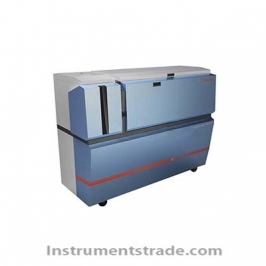
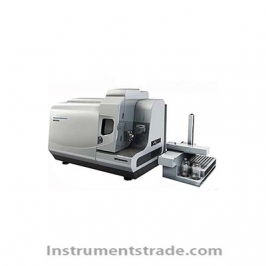
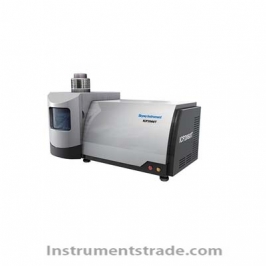
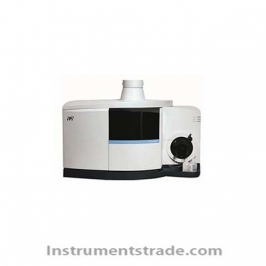
ICP 7000 Full-Spectrum ICP-OES Spectrometer

Product ID:FGdgoh0020

Price: Please inquire PDF Format
Supply Ability:50 SETS/MON
Port:SHENZHEN
  • Product Introduction
  • Other information
  • Model NumberICP 7000
    Brand NameWXCHUANGXIANG
    Payment TermsTT,PAYPAL,Alibaba.com Pay
    ICP 7000 Full-Spectrum ICP-OES Spectrometer
      
    Product Introduction
    The ICP 7000 Full-Spectrum Inductively Coupled Plasma Optical Emission Spectrometer (ICP-OES) is designed for qualitative, semi-quantitative, and quantitative elemental analysis of major, minor, and trace elements in a wide range of samples. With a full-spectrum wavelength range of 165–900 nm and a high-resolution optical system, it enables simultaneous multi-element detection, with detection limits reaching parts-per-billion (ppb) levels for suitable elements and analytical conditions.
    Combining a solid-state radio-frequency (RF) generator, high-precision mass flow controllers, a scientific-grade charge injection device (CID) detector, and intelligent operating software, the ICP 7000 supports reliable elemental analysis with a high degree of automation. It is widely applicable to environmental monitoring, food safety, geology, metallurgy, chemical processing, rare earth analysis, pharmaceuticals, petroleum products, semiconductor materials, and agricultural research.


    Performance Features
    • Full-Spectrum Detection: Covers 165–900 nm for simultaneous measurement of multiple elements in a single exposure.
    •  Scientific-Grade CID Detector: High-resolution detector with a million-pixel-class array for comprehensive spectral acquisition.
    •  Stable Solid-State RF Generator: Provides stable plasma power with water-flow, gas-flow, and overload protection.
    • Automated Peristaltic Pump: Twelve-roller, four-channel design with adjustable speed to accommodate different sample introduction rates, online dilution, and internal standard addition.
    •  High-Performance Optical System: Uses an echelle grating and prism cross-dispersion for high spectral resolution, efficient light throughput, and reduced stray-light interference.
    •  Intelligent Plasma Monitoring: Fiber-optic sensing monitors plasma operation and supports automatic shutdown if an abnormal extinction condition is detected.
    •  Qualitative Analysis Software: Helps identify elements in unknown samples without requiring standards for the initial qualitative screening stage.
    •  Split Sample Introduction System: Separates the spray chamber from the torch to reduce the influence of combustion-chamber temperature changes on nebulization performance.
    •  Precision Gas Flow Control: Mass flow controllers (MFCs) regulate plasma, auxiliary, and carrier gas flows for consistent analytical conditions.
    • Automatic Wavelength Calibration: Software-based wavelength calibration reduces the need for separate calibration solutions.
    •  One-Click Ignition and Automatic Matching: Automates plasma ignition and RF matching to simplify instrument operation.
    • Software-Controlled Operation: Provides real-time status feedback, operating prompts, and automated parameter management.


    Working Principle
    The ICP 7000 uses inductively coupled plasma optical emission spectrometry to determine elemental composition.
    First, a prepared liquid sample is introduced by the peristaltic pump and converted into an aerosol by the nebulizer. The aerosol enters the plasma, where high temperatures excite or ionize the atoms and ions in the sample. As these excited species return to lower energy states, they emit light at characteristic wavelengths.
    The optical system separates the emitted light by wavelength, while the CID detector records the resulting emission spectrum. Qualitative analysis identifies elements from their characteristic spectral lines, while quantitative analysis determines concentrations using calibrated relationships between emission intensity and elemental concentration.
    Full-spectrum acquisition allows multiple elements to be measured simultaneously, making the ICP 7000 suitable for routine multi-element analysis and trace-element testing.


    Technical Parameters
    Parameter Specification
    Model ICP 7000
    Instrument Type Full-Spectrum ICP-OES
    Analytical Technique Inductively Coupled Plasma Optical Emission Spectrometry
    Wavelength Range 165–900 nm
    Detector Type Scientific-grade CID detector
    Detector Resolution Million-pixel-class array
    Elemental Analysis Qualitative, semi-quantitative, and quantitative
    Detection Capability Down to ppb levels for suitable elements and conditions
    Optical System Echelle grating with prism cross-dispersion
    RF Power Supply Solid-state RF generator
    Sample Introduction Peristaltic pump, 12 rollers and 4 channels
    Gas Flow Control High-precision mass flow controllers
    Plasma Monitoring Fiber-optic monitoring with abnormal-extinction protection
    Wavelength Calibration Intelligent automatic calibration
    Plasma Ignition Automatic one-click ignition and matching
    Automation Software-controlled operation and real-time status feedback
    Note: Exact RF power, spectral resolution, repeatability, detection limits by element, sample throughput, and dimensions were not provided. Confirm these specifications with the manufacturer when comparing instruments or preparing a technical procurement document.


    Application Scenarios
    •  Environmental Analysis: Determination of elemental contaminants in water, soil digests, and environmental samples.
    •  Food Safety: Multi-element screening and quantification of mineral elements and trace contaminants in food samples.
    •  Geology and Mineral Exploration: Elemental composition analysis of ores, rocks, and geological samples.
    • Metallurgy and Non-Ferrous Metals: Measurement of major and trace elements in metals, alloys, and metallurgical materials.
    •  Rare Earth Analysis: Multi-element determination in rare earth materials and related products.
    •  Chemical and Pharmaceutical Industries: Elemental impurity testing and raw material analysis using validated sample preparation methods.
    •  Petroleum Products: Elemental analysis of suitable petroleum samples and prepared digests.
    •  Semiconductor Materials: Trace-element analysis of compatible high-purity materials.
    •  Agricultural Research: Elemental determination in soil extracts, fertilizers, and plant digests.


    Comparison: ICP 7000 ICP-OES vs. Conventional Elemental Analysis Methods
    Comparison Factor ICP 7000 ICP-OES Flame Atomic Absorption Spectrometry (FAAS) X-Ray Fluorescence (XRF)
    Analytical Principle Plasma optical emission Atomic absorption Characteristic X-ray fluorescence
    Multi-Element Analysis Simultaneous full-spectrum analysis Commonly sequential analysis Multi-element analysis, depending on instrument and sample
    Wavelength or Spectral Coverage 165–900 nm Element-specific analytical wavelengths Element-dependent X-ray energy range
    Trace Analysis Suitable for trace analysis, depending on element and conditions Suitable for many routine elemental measurements Performance varies with element, matrix, and configuration
    Typical Sample Preparation Often requires digestion or liquid sample preparation Commonly requires liquid samples Can often analyze solids directly
    Best-Suited Applications High-throughput multi-element analysis of prepared samples Routine analysis of selected elements Rapid elemental screening and solid-material analysis


    Frequently Asked Questions (FAQ)

    Q1: What is the ICP 7000 ICP-OES spectrometer used for?
    It measures major, minor, and trace element concentrations in prepared samples for environmental, food, geological, metallurgical, chemical, pharmaceutical, and other laboratory applications.
    Q2: What is the wavelength range of the ICP 7000?
    The specified wavelength range is 165–900 nm, enabling broad-spectrum elemental emission analysis.
    Q3: Can the ICP 7000 analyze multiple elements simultaneously?
    Yes. Its full-spectrum optical system and CID detector enable simultaneous acquisition of emission signals from multiple elements in a single exposure.
    Q4: What is the detection limit of the ICP 7000?
    The product information states that detection limits can reach ppb levels. Actual detection limits depend on the element, sample matrix, spectral interference, preparation method, and operating conditions.
    Q5: Can the ICP 7000 identify unknown elements?
    Its qualitative analysis software can help identify elements in unknown samples without requiring standards for initial screening. Accurate concentration determination generally requires appropriate calibration and analytical quality control.
    Q6: How does automatic wavelength calibration work?
    The instrument uses an intelligent software algorithm to perform wavelength calibration at startup, reducing the need for separate wavelength calibration solutions.
    Q7: What gas flow controls are included?
    High-precision mass flow controllers regulate plasma gas, auxiliary gas, and carrier gas to help maintain stable operating conditions and reproducible measurements.
    Q8: Does the ICP 7000 include plasma safety protection?
    Yes. Its RF power system includes water-flow, gas-flow, and overload protections, while fiber-optic monitoring helps detect abnormal plasma extinction and initiate protective shutdown.
    Q9: What sample types can be analyzed?
    Suitable samples include prepared solutions from water, soil, ores, metals, food, chemicals, petroleum products, and other compatible materials. Sample digestion, dilution, and matrix matching may be required.


  • Frequently Asked Questions (FAQ)
    Q1: What is the ICP 7000 ICP-OES spectrometer used for?
    It measures major, minor, and trace element concentrations in prepared samples for environmental, food, geological, metallurgical, chemical, pharmaceutical, and other laboratory applications.
    Q2: What is the wavelength range of the ICP 7000?
    The specified wavelength range is 165–900 nm, enabling broad-spectrum elemental emission analysis.
    Q3: Can the ICP 7000 analyze multiple elements simultaneously?
    Yes. Its full-spectrum optical system and CID detector enable simultaneous acquisition of emission signals from multiple elements in a single exposure.
    Q4: What is the detection limit of the ICP 7000?
    The product information states that detection limits can reach ppb levels. Actual detection limits depend on the element, sample matrix, spectral interference, preparation method, and operating conditions.
    Q5: Can the ICP 7000 identify unknown elements?
    Its qualitative analysis software can help identify elements in unknown samples without requiring standards for initial screening. Accurate concentration determination generally requires appropriate calibration and analytical quality control.
    Q6: How does automatic wavelength calibration work?
    The instrument uses an intelligent software algorithm to perform wavelength calibration at startup, reducing the need for separate wavelength calibration solutions.
    Q7: What gas flow controls are included?
    High-precision mass flow controllers regulate plasma gas, auxiliary gas, and carrier gas to help maintain stable operating conditions and reproducible measurements.
    Q8: Does the ICP 7000 include plasma safety protection?
    Yes. Its RF power system includes water-flow, gas-flow, and overload protections, while fiber-optic monitoring helps detect abnormal plasma extinction and initiate protective shutdown.
    Q9: What sample types can be analyzed?
    Suitable samples include prepared solutions from water, soil, ores, metals, food, chemicals, petroleum products, and other compatible materials. Sample digestion, dilution, and matrix matching may be required.


Products
Analytical instruments
Physical property test
Environmental monitoring and analysis
Lab general equipment
About us
About this website
Our service
Product purchase
Contact Us

Newsletter

Make Sure you dont miss interesting happenings by joining our newsletter program.

Contact Us
+86-18620722006
instruments@instrumentstrade.com